
A few weeks ago, news broke that Rene Redzepi, the Danish chef and co-founder of Noma, has a long and documented history of being abusive, physically and verbally, to his staff. He screamed at, publicly shamed and humiliated, punched, and even jabbed with a barbecue fork his employees. For anyone familiar with the intensity of the restaurant industry – be it from FX’s The Bear, Anthony Bourdain’s Kitchen Confidential, or personal experience – this was about as surprising as a fork being found in a kitchen. Working in a professional kitchen is difficult and grueling work, far outside the norms of a typical occupation, and chefs live hard. A kitchen is run like the military – it’s literally called a brigade – and the strict hierarchy is a breeding ground for what amounts to exploitation. With the pressure and costs of being one of the best restaurants in the world, that fervour compounds. Noma, since opening in 2004, has been named the best restaurant in the world five times (placing inside the top five another five times) and has held three Michelin stars since 2021.
This scene from The Bear illustrates the abusive culture that permeates elite restaurants and the toll that it takes on its chefs
Redzepi has been at the forefront of modernist/haute cuisine since his time spent at the legendary El Bulli (Spain) and French Laundry (California). There’s a lot of similarities between New Nordic and California cuisine, with the emphasis on local, seasonal, and sustainable ingredients. The roots of this go all the way back to Alice Waters’s Chez Panisse and her slow food movement of the 1970s. Redzepi took this philosophy even further with his dedication to foraging and presentation, as one of my favorite Tweets ever pokes fun at.

Though this is a joke, I’m quoting directly from the New York Times expose when I say,
Unpaid interns worked 16-hour days, performing tasks like picking herbs and cleaning pine cones to adorn Mr. Redzepi’s celebrated New Nordic dishes.
and,
Ben, a chef in Australia, who worked at Noma in 2012, said that punishing all the employees for one person’s mistake was routine. “He just went down the line and punched us in the chest” while yelling expletives into their faces, said the chef, who asked that his surname not be used because he feared retaliation. “Even the interns who had been upstairs picking elderflowers.”
Picking elderflowers and cleaning pine cones is kind of funny (and very Waldorf), but being abused and working 16 hours a day unpaid is not. So why am I talking about a chef who makes food that looks more like a science project than a meal, with its strange foams and squeeze bottles of liquid in various hues?

There’s a common thread of visionaries being so singularly focused on pursuing their dream that they neglect, use, and mistreat everyone around them in the pursuit of that thing. I’m not excusing Redzepi’s behavior, I’m trying to understand where it comes from. When texting about the Noma news with Alanna (my only friend who would know what Noma is), I wrote,
A lot of the time the most creative geniuses are assholes
Miles Davis legendary asshole
Alanna wrote back,
kanye
Exactly. As Kanye himself said, “name one genius that ain’t crazy.” While “crazy” doesn’t quite carry the same weight as “insane, abusive, narcissistic, etc,” the point is the same. People who are so obsessed with one thing that it consumes their entire life – they spend every waking moment either doing or thinking about the thing, they eat, sleep, and breath that thing – I think they struggle to relate to people who aren’t like that. That thing could be playing a sport, or an instrument, writing, cooking, painting, anything. And when someone they’re involved with doesn’t seem to have the same dedication or drive, they might lash out at that person. Or use that person to work towards achieving their goals. Or both.
For some people, being an asshole because of your dedication to that one thing is glorified. Think of Michael Jordan, or Kobe Bryant. The fact that Jordan gave his teammate Steve Kerr a black eye, or Kobe allegedly made Jeremy Lin cry – stories like these fuel the legends. It’s a part of their uncompromising quest for greatness. We laud them for it, but would critique the same behavior in an ordinary, un-great individual.
Enter Marty Supreme. The new-ish film directed by Josh Safdie (perhaps you saw 2019’s Uncut Gems with Adam Sandler) starring Timothee Chalamet wrestles with exactly this archetype. Chalamet plays Marty Mauser (based on a real guy named Marty Reisman), a table tennis player who is, by his own proclamation, the best in the world. We see Marty, in his quest for fame and glory, lie, steal, and con his way around the world.
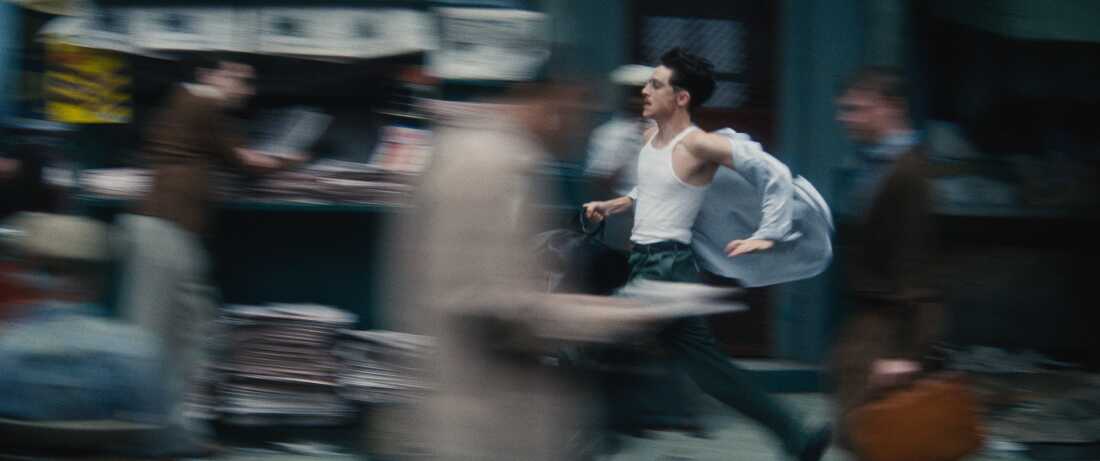
The promotion for the picture arguably started over a year ago, when Chalamet said “I’m in pursuit of greatness” as he accepted the Screen Actors Guild award for Best Actor for his depiction of Bob Dylan in A Complete Unknown (a good performance in a pedestrian music biopic – can we stop making those, by the way? Once you see Walk Hard (2007) with John C. Reilly, you can’t take music biopics seriously anymore). The trailer came out in August, and I besmirched the seemingly stunt castings of Tyler, the Creator (for our older readers, a creative force unto himself primarily as a rapper but also a fashion designer and actor), and Kevin O’Leary aka Mr. Wonderful. For the media blitz, we saw celebrities, from the NBA stars that Chalamet worships like Steph Curry and Anthony Edwards to delightfully random ones like Ringo Starr and Bill Nye, don the Marty Supreme windbreaker.


Chalamet busted out some gospel with the viral video machine that is Druski (who I saw open for J. Cole, oddly enough). Acknowledging the rumors that he was secretly the Liverpool rapper EsDeeKid, he hopped on a track with him (definitely not the worst rapping performed by an actor). The blimp. I could go on and on. For some people it was obnoxious. Even me, a Chalamet enjoyer, found it to be a little much. But remember that this is an indie movie (while A24 isn’t indie in terms of scale, it’s the place to go for artsy/ambitious/non-commercial/non-typical films) about a ping pong player. Arguably, the aggressive marketing campaign was necessary to get asses in seats.

For months, I watched the promotion for the movie unfold. Once it was released stateside on Christmas, I had to sit through weeks of Internet discourse and friends telling me that the movie was “made for me.” And then I finally went to see it when it was released this past weekend. I was worried that it wouldn’t live up to the hype. But I was like a kid in a candy store. I laughed, gasped, and teared up at the end. I thought it was one of the best movies of the year (along with One Battle After Another) and that Timmy’s performance was up there with Leo’s for one of the best of the year as well.
My only frame of reference for a Safdie movie was the aforementioned Uncut Gems. While Uncut Gems is incredible, especially for the Sandler performance, watching it is like having a two-hour panic attack. Both Sandler’s Howard Ratner and Chalamet’s Marty Mauser are selfish guys, chasing their dreams at any cost as their world implodes around them. While it doesn’t exactly work out for Marty, it works out even less for Howie. But compared to Gems, Marty is more like a roller coaster – stressful at times, but with downtime that allows you to catch your breath, and ultimately an absolute blast. Both movies also feature, let’s say, intimate opening sequences: Gems starts with a precious jewel and ends up in Sandler’s colon, while Marty sees an egg being fertilized and then turning into a ping pong ball.


Turns out I needn’t have worried about Tyler, the Creator, and Kevin O’Leary. I was concerned that, much like A$AP Rocky, they wouldn’t be able hold their own opposite someone of Chalamet’s caliber. They were both great. Part of Safdie’s genius is the ability to cast ordinary people, non-actors, and get good performances out of them. For instance, NBA Hall-of-Famer Kevin Garnett played a major role in Uncut Gems – and he was excellent. One of the minor characters in Marty Supreme was Dion, a friend of Marty’s, portrayed by Luke Manley, a non-actor Internet personality who rose to fame for his creative insulting of Trae Young during the 2021 Knicks vs. Hawks playoff series. Other non-actors include authors, radio show hosts, David Mamet, and a real professional ping pong player as Marty’s Japanese nemesis Koto Endo.
The world that Marty occupies is strikingly similar to the one portrayed in the work of the celebrated novelist Philip Roth. I read Roth’s short story Goodbye, Columbus a few summers ago, and it deals with class and Jewish identity in the early 1950s. A working-class Newark librarian, Neil, falls for an affluent suburban girl, Brenda. Though both characters are Jewish, Neil, with his Costanza-esque family, is a total fish out of water in Brenda’s country club world. Marty’s world in the Lower East Side is geographically concentrated and insular – he lives in the same tenement building as Rachel (Odessa A’Zion), his childhood friend who is cheating on her husband with him. His ping pong prowess and self-created celebrity allows him to transcend this and enter the gilded gentile world of the Rockwells. Kay Stone (Gwyneth Paltrow), an actress married to the ink baron Milton Rockwell (Kevin O’Leary) begins a sexual relationship with Marty, and Milton becomes Marty’s benefactor and foil. Marty uses the older, wealthy couple, and they use him. He steals jewelry from Kay and attempts to pawn it before realizing that it’s worthless costume jewelry. From him, Kay gets sex, a way to get back at her husband that she despises, and affirmation. Milton uses Marty to promote his pens, and Marty uses Milton to get to Japan.


My two friends who accompanied me had this to say: Will from London says “it makes Americans look like animals” and Criddle from Mississippi says “it was disgusting but I loved it.” While I disagree about it being disgusting, seeing it in Japan certainly gave it an additional layer of cultural context, with the climactic scene being a showdown in Japan between a brash American and a silent Japanese. I would love to know what Japanese people thought of the movie (these online amateur reviews praise Timmy’s performance but aren’t thrilled with his character’s personality), but after the lights came on in the theater, everyone else filed out silently so I didn’t even get to eavesdrop on anyone’s initial musings. The movie definitely spoke to me. To be honest, I’m envious of those strivers I mentioned earlier – people like Redzepi, Kanye, Jordan, and Marty – they have an all-consuming passion and unlimited drive to pursue it. Yes, they hurt people as they pursue their dream. To clarify, you shouldn’t hurt people. But what I’m envious of is their obsession and dedication. I wish something like that consumed me. I have interests and hobbies, but nothing that captivates me in such a way. But I’m still young, maybe I’ll find it.
The music was an interesting choice. With the movie set in the early 1950s, you would expect such names like Fats Domino and Perry Como. But the use of 80s synth-pop from the likes of Tears for Fears and Peter Gabriel. The aforementioned opening sequence is set to “Forever Young” by Alphaville while the final needledrop is “Everybody Wants To Rule the World.” To me, the connection I made between the 50s and the 80s was sociopolitical. Reaganism in many ways sought to bring the attitude of the 50s back, championing consumerism, the nuclear family, and white-picket fence suburbs. John Hughes movies, which almost all revolve around white upper-middle-class teenagers coming of age in the suburbs of Chicago, are emblematic of this. My friend Henry observed to me over FaceTime that the futuristic new wave sound communicates how Marty is a man ahead of his time. The fact that table tennis would become an Olympic sport for the 1988 Seoul summer games is certainly not a coincidence. My friend Mete, with his penchant for amateur film study, foisted upon me an academic piece about “hauntology” – the idea that the present is haunted by lost futures that did not come to pass.
From the end of World War II up until the 1990s, electronic music—whether produced by highculture composers such as Pierre Schaeffer or Karlheinz Stockhausen or by synthpop groups and dance-music producers—had been synonymous with a sense of the future, so much so that film and television would habitually turn to electronic music when it wanted to invoke the future. But by 2005, electronica was no longer capable of evoking a future that felt strange or dissonant. If electronic music was ‘‘futuristic,’’ it was in the same sense that fonts are ‘‘gothic’’—the futuristic now connoted a settled set of concepts, affects, and associations.
There’s an alternate future where table tennis does take off in the States with Marty as the face of the sport. But that didn’t come to pass, and we have to reckon with the version of the future we’ve been dealt. Marty represents the sea of unrecognized souls who strove to be the best at their one thing that they obsess over – and failed. Their stories usually aren’t told.
The choice to make table tennis the focus of the movie is telling. It exists in a gray space between a legitimate sport and a silly game, or at least it did in the early 1950s. For Marty and his ping-ponging compatriots, it’s life and death. But for an outsider like Kevin O’Leary’s Milton Rockwell, it’s something adjacent to vaudeville, as he tells Marty to his face (a remark that also highlights the divide between gentile and Jew, as Jews played a major role in the vaudeville scene back in the day).

Marty presents himself as the best player in the world, and gets an opportunity to prove himself on the organized and internationally-sanctioned competitive stage. But his temper, hubris, and ego get the better of him, and he’s shunted off to the side into novelty acts, including with the Harlem Globetrotters. While the real-life Marty toured with the Globetrotters, the use of the Globetrotters exemplifies this marginalization. Back in the days of a mostly-segregated NBA, the Globetrotters were a way for Black basketball players to make a living. The Globetrotters of yore even beat George Mikan and the Lakers. Early in the film, Marty expresses dismay that such great athletes are resigned to a circus act. Of course, when he has no choice but to join them, he has to change his tune.

Some of my favorite scenes:
- Marty showboating in his match against Bela Kletzki by hitting the ball behind his back, between his legs, kicking it, and blowing it in the air
- The flashack of Kletzki in Auschwitz covering himself in honey and having his bunkmaters lick it off him (holy shit moment #1)
- Marty giving his mom a chunk of the pyramid (“we built that” – awesome)
- The bathtub falling through the ceiling and onto the mobster’s arm (holy shit moment #2)
- Marty and Wally (Tyler, the Creator) hustling hayseeds at the Jersey bowling alley (I thought ghostriding the whip originated in Oakland by the likes of Too $hort and E-40, but apparently Wally invented it in 1952) and the subsequent gas station confrontation
- Rockwell spanking Marty (best spanking scene in a movie since Bobby D spanked Leo in Killers of the Flower Moon? Has to be)
- Marty playing Endo in the promotional match staged by Rockwell in Japan
- The ending scene with the “Everybody Wants to Rule the World”

Much of the criticism I’ve seen of the movie, the marketing campaign, or Chalamet himself, can be boiled down into a simple expression: “I didn’t like his personality.” In a really annoying New York Times opinion piece (which is saying something, because that NYT opinion section ragebaits me on a daily basis with insufferable snobbery and whiny neoliberalism from the likes of Bret Stephens), the author bemoans how we thought Chalamet was a sweet and sensitive artsy young man, but actually he’s a toxic Bernie bro who likes sports, not ballet, and this amounts to betrayal. While I can’t defend being Kardashian-adjacent, Chalamet is being his authentic self, even if it might be a Larry David-esque self-caricature. And unsurprisingly, as a young man from New York City, he likes basketball and hip hop.

I think no matter which way you slice it, Marty Supreme is a sports movie. Which leads me to my next point – it’s the best sports movie since… Creed (2015)? At least? We’ve had a dearth of sports movies in the past decade (Jordan Peele’s newest movie, Him, is about a quarterback – I didn’t see it and it was widely panned). A recent ESPN article tallied the top sports movies of the 21st century, and the top three were The Blind Side (2009), Remember the Titans (2000), and Talladega Nights (2006), in that order. Coming it at #4 was… Happy Gilmore 2 (2025). Yikes. Truly a puzzling list. I would probably have Creed and Moneyball (2011) in there, as well as Hustle (2022) with Adam Sandler. Another Denzel movie, The Hurricane (1999), would be in there if it came out one year later. 42 (2013) and I, Tonya (2017) are good movies, although like The Blind Side and Remember the Titans, I haven’t seen them since I was a kid. Marty Supreme is somewhere in my Top 3 sports movies of the 21st century, along with Moneyball and Creed.
I went to see it again, by myself, in Shinjuku. On my second watch, I noticed that Marty is always saying “I love you” to the people in his life, almost the way someone might say sorry. He says it as a defensive mechanism, when he feels the people in his life are disappointed or mad at him. But he doesn’t really mean it until the end, when he visits Rachel in the hospital.

It was nominated for nine Oscars, and won exactly zero. That doesn’t bother me too much, as Sinners and One Battle were more than deserving (although I didn’t think Michael B. Jordan’s performance was better than Timmy’s, or Leo’s, or even Plemons’s).
Marty Supreme. Worth the wait.


Leave a Reply