
Some sort of music video or movie plays in 360p on a TV at the front of the bus, its fuzzy pixels and squawking noises distract from the colorful world rolling by outside. The clouds darken with the thought of rain as we bounce along towards the Singapore-Malaysia border. Despite the unnecessary distraction – a constant in our modern digital world – the bus is a welcome sanctuary from the heat. If you’ve never experienced a tropical heat, it’s hard to explain to you. Mother Nature grabs you by your shoulders and smacks you across the face with a towel soaked in hot molasses, leaving you with an ever-shimmering face, to wipe your brow is a fool’s errand. On this same island 200 years ago, Brits clad in khaki and goofy pith helmets died of malaria. Today Singapore is a glittering futuristic metropolis that sometimes feels fake, like Disneyland or The Truman Show, but the heat remains. Lee Kuan Yew himself said that air conditioning was the most important invention of the 20th century and that Singapore would not exist without it. And when you stumble into the walk-in freezer-like bliss of a shopping mall or subway station with your shirt soaked with sweat, you agree with him emphatically.
My beloved family is here to visit me for my spring break. After showing them around Singapore for a few days, we’re off to Melaka, followed by Langkawi. We roll into the border checkpoint with the TV shrieking. Hop off the bus with passports in hand, and we cycle through the automated turnstiles, a microcosm of Singapore’s modernity. Step right up, insert your passport, and you’re through in 60 seconds flat. Sure beats waiting in line for the privilege of being eyeballed and interrogated by an unfriendly stranger, who probably, understandably, hates their job. Over the water to the tip of the largest continent, the water a gleaming aquamarine. But as soon I sit back down, the bus stops again and we’re off with all our luggage – though I have just my trusty backpack. I get my passport stamped by a Malaysian man who is friendly enough, but I can tell I’m not in Singapore anymore – the building is hot and stuffy with a few lazy fans that push the air and assorted flying insects around. Put my backpack through the scanner, and I’m back on the bus, back to the annoying Tamil musical – I’m a staunch cultural relativist, but holy shit it’s incessant. The contrast between leaving Singapore and entering Malaysia is a reminder that Singapore is the exception in Southeast Asia, not the norm. In some ways, Singapore feels fake. The inscrutable infrastructure, lack of crime, and relative lack of mosquitoes set it apart from its neighbors. Singapore and its government – a benevolent surveillance state with the facade of a democracy – are the product of unique circumstances. As the bus pushed north, though I was leaving behind some creature comforts, I anticipated my imminent adventure vacation.
We idle in line at a toll booth, what feels like the third one since we crossed the border not 20 minutes ago. The screen is frozen in black and white, but similar music drones from the bus stereo. The landscape is vast, hilly, and remarkably uncluttered. Palm trees dominate the hillside, occasionally broken up by an electrical tower, low-slung building, or billboard. Before I know it, we’re unceremoniously dumped at a bus stop on the outskirts of town. After a quick cab ride, we arrive at our guest house, located right in the heart of the historic Melaka city center. A sign inside proclaims the hotel to be closed the entire month of February for the New Year.
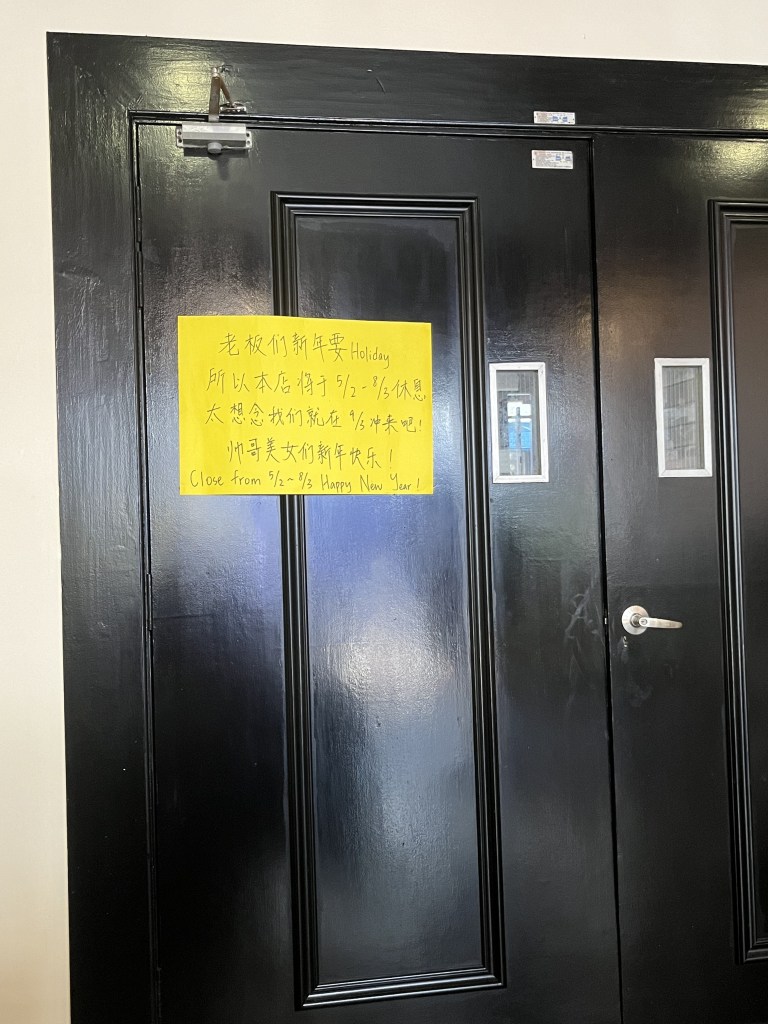
The hotel appears to be abandoned, as we receive no answer to our apprehensive cries of “Hello?” I set off on a solo expedition up the stairs, with the plan to see if I could find any unlocked doors. Maybe we could squat in the closed hotel for the night if push came to shove. The first two doors I tried were indeed locked. As I grasped the handle of the third and turned, the door swung open. But before I could begin congratulating myself for my own visionary genius, I noticed that the hotel room was in fact occupied by a family, including an old man in a towel sitting on the bed. I promptly recused myself, mortified. As I practically sprinted back down the stairs, I found my family conversing with someone, perhaps an employee. Apparently, the guest house was open for business with “self-check-in,” while the hotel (which bears the same name and exists in the same narrow building) is closed. So we were able to get to our room with no problem, and I was only slightly traumatized.
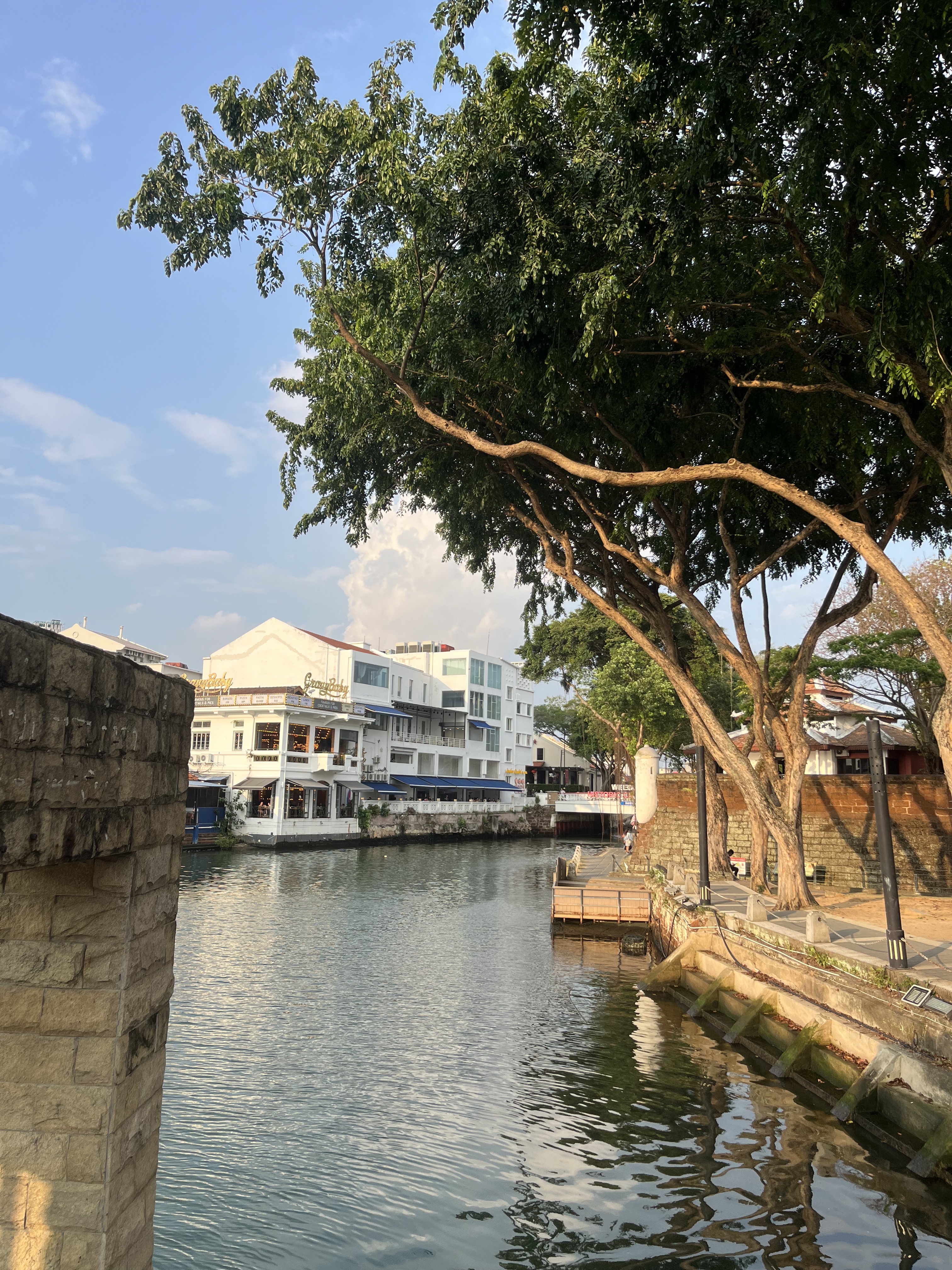


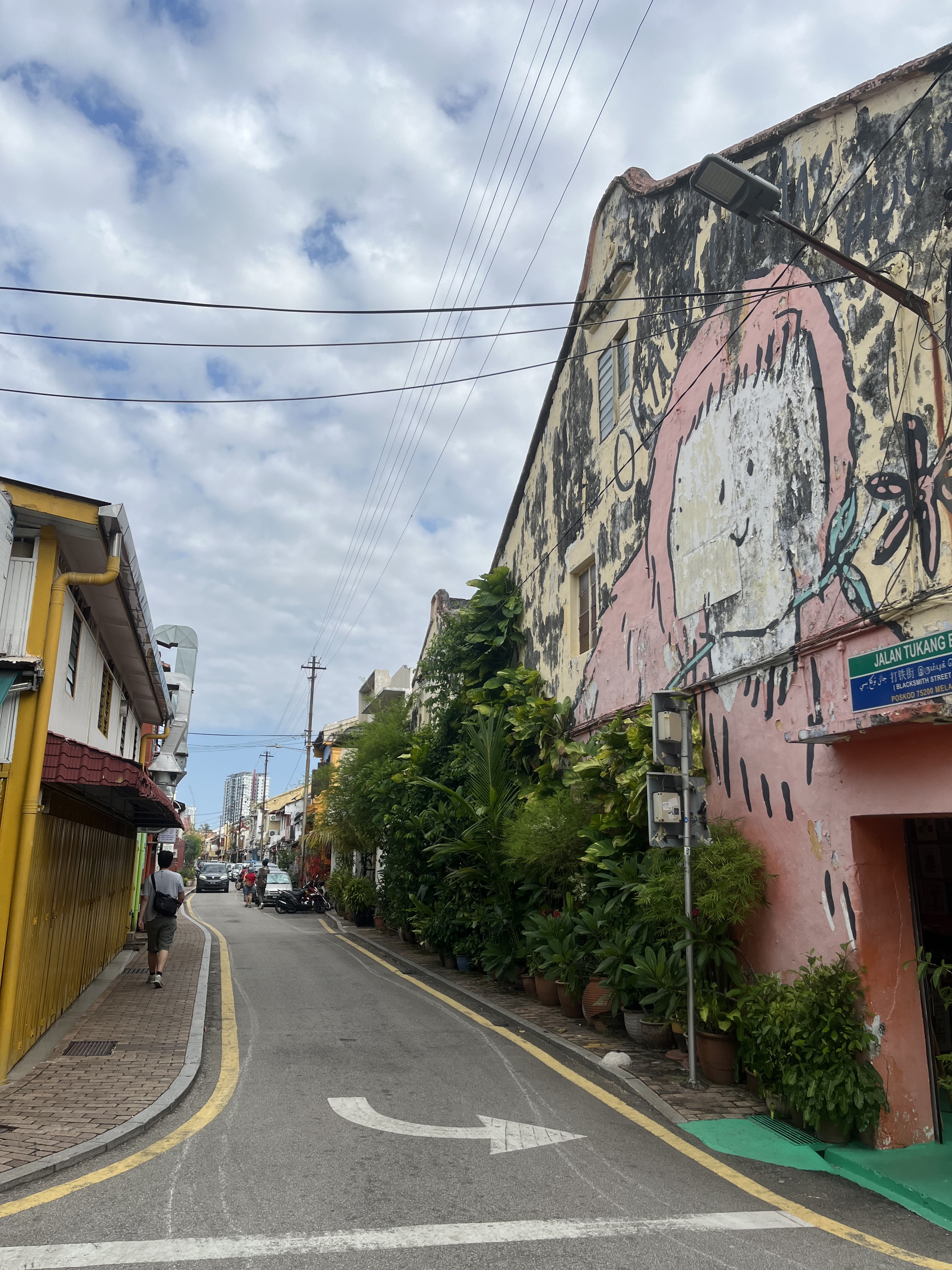
Melaka (or Malacca, whichever you prefer) is an interesting place. After being colonized by the Portuguese in the early 1500s, it was also controlled by the Dutch and the British in the 400+ years before independence. And like Singapore, there are substantial Chinese and South Indian communities centuries old. Unlike Singapore, it is like the rest of Southeast Asia: air conditioning is an infrequent luxury, often enjoyed sparingly when ducking into a convenience store. Delectable smells of food or incense mingle with the foul odor of garbage festering in the hot sun or an open sewer. But the colonial Hot Potato situation is unique, as far as I know. The UNESCO-protected old town is chock full of Dutch-built buildings and Portuguese ruins look down on the city from the hilltop.

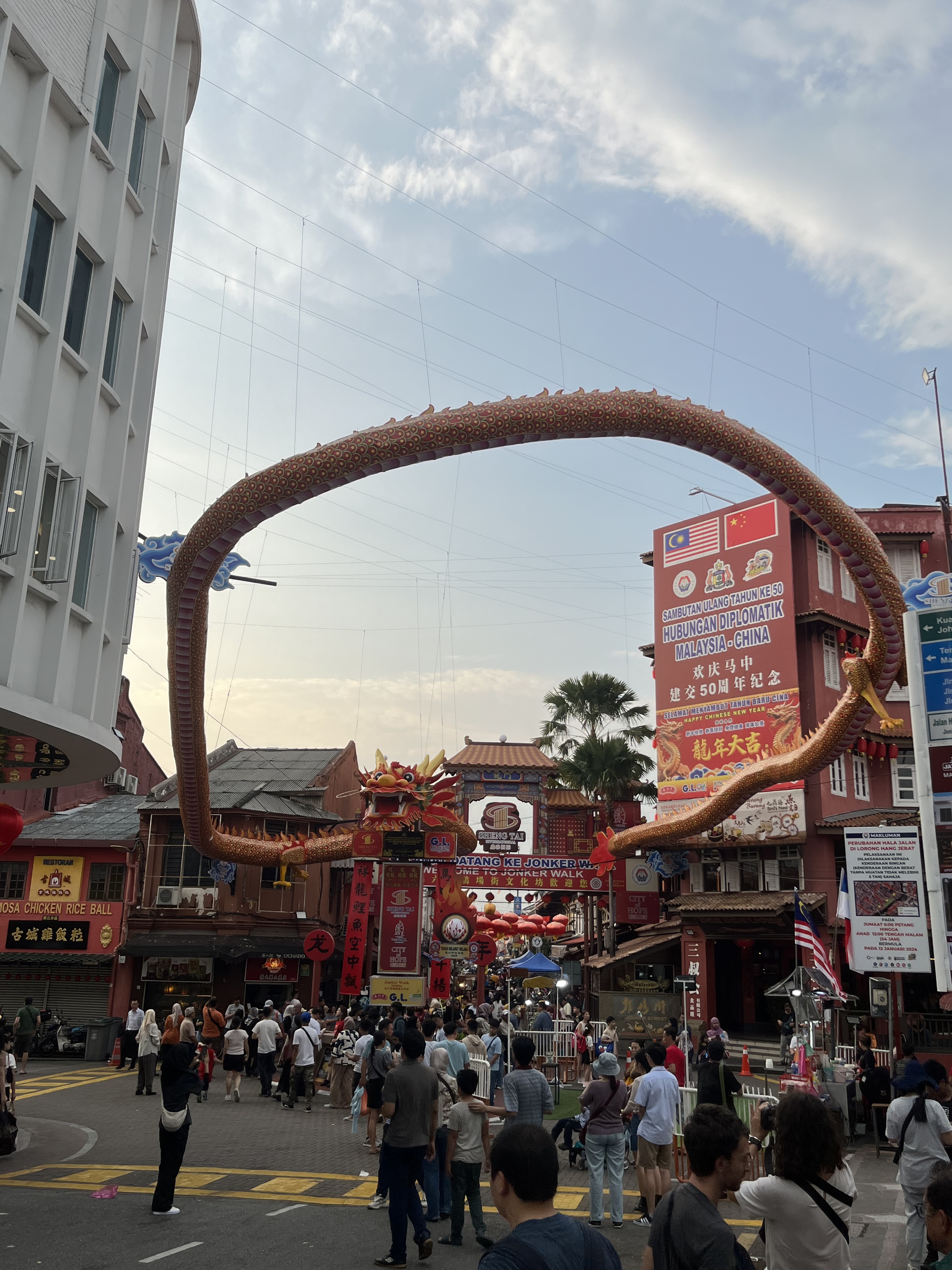
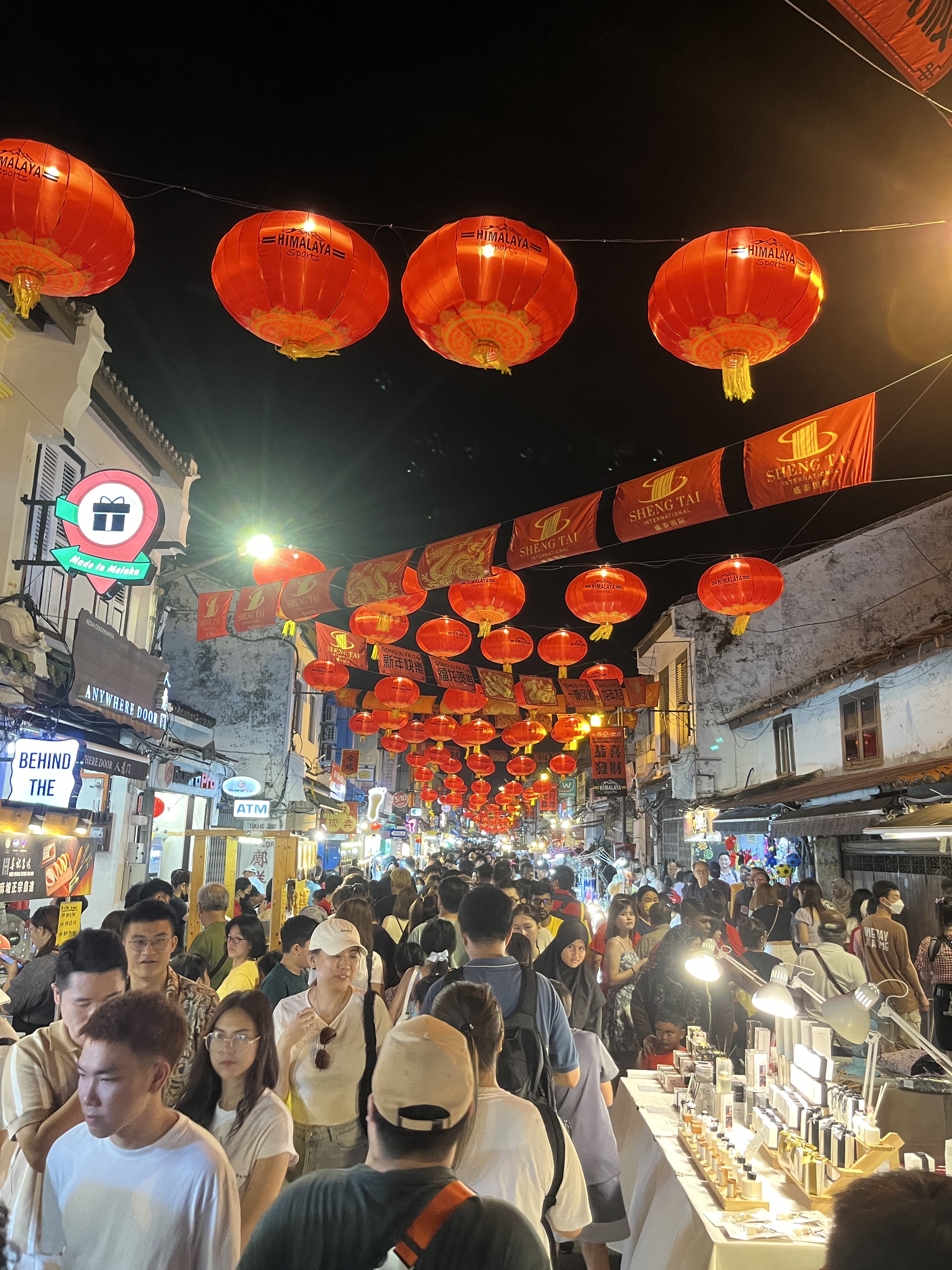
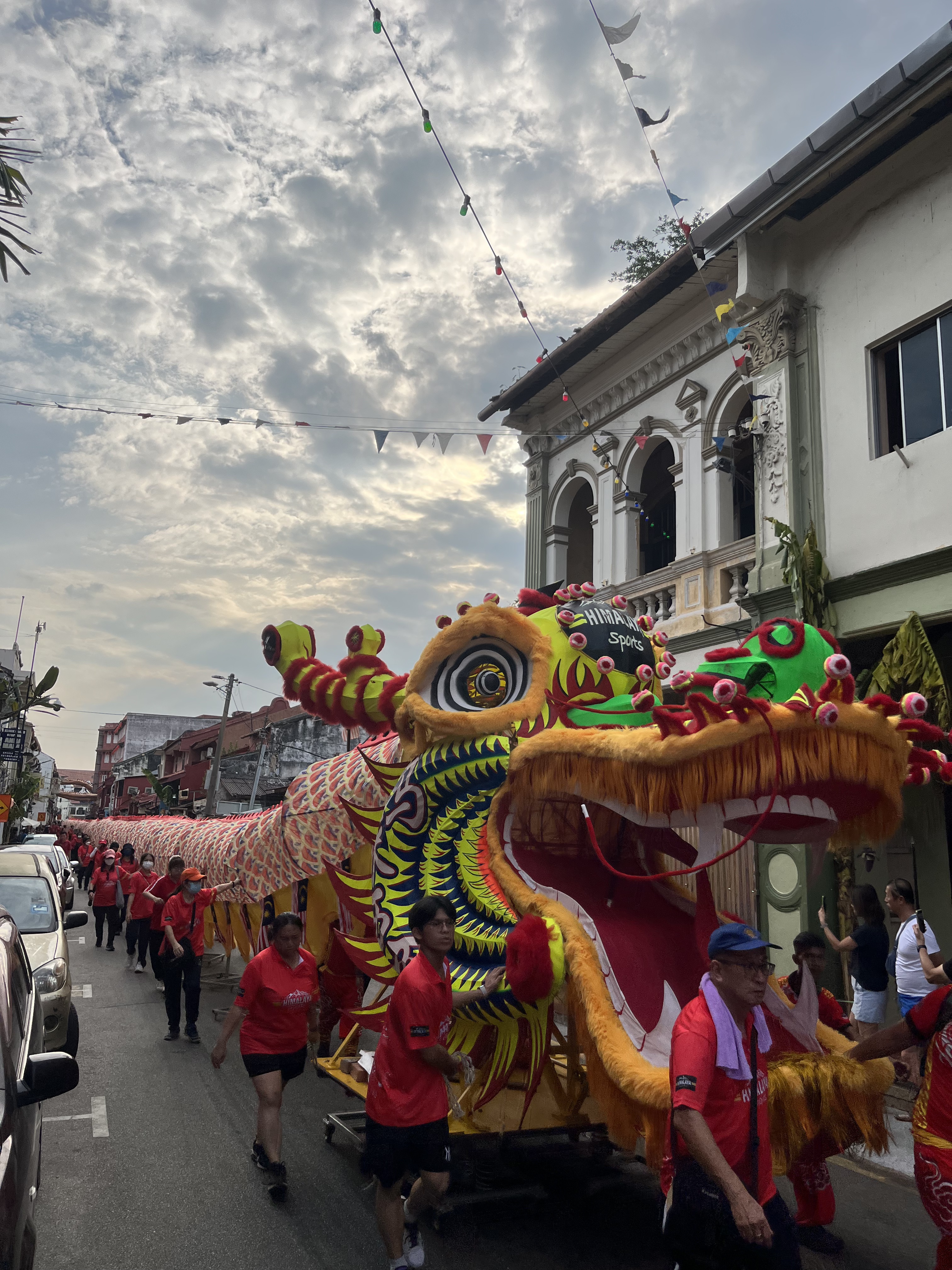
The main drag through Chinatown bears a Dutch name – Jonker Street – but is festooned with red lights and a massive dragon that soars overhead in honor of the ongoing Lunar New Year.
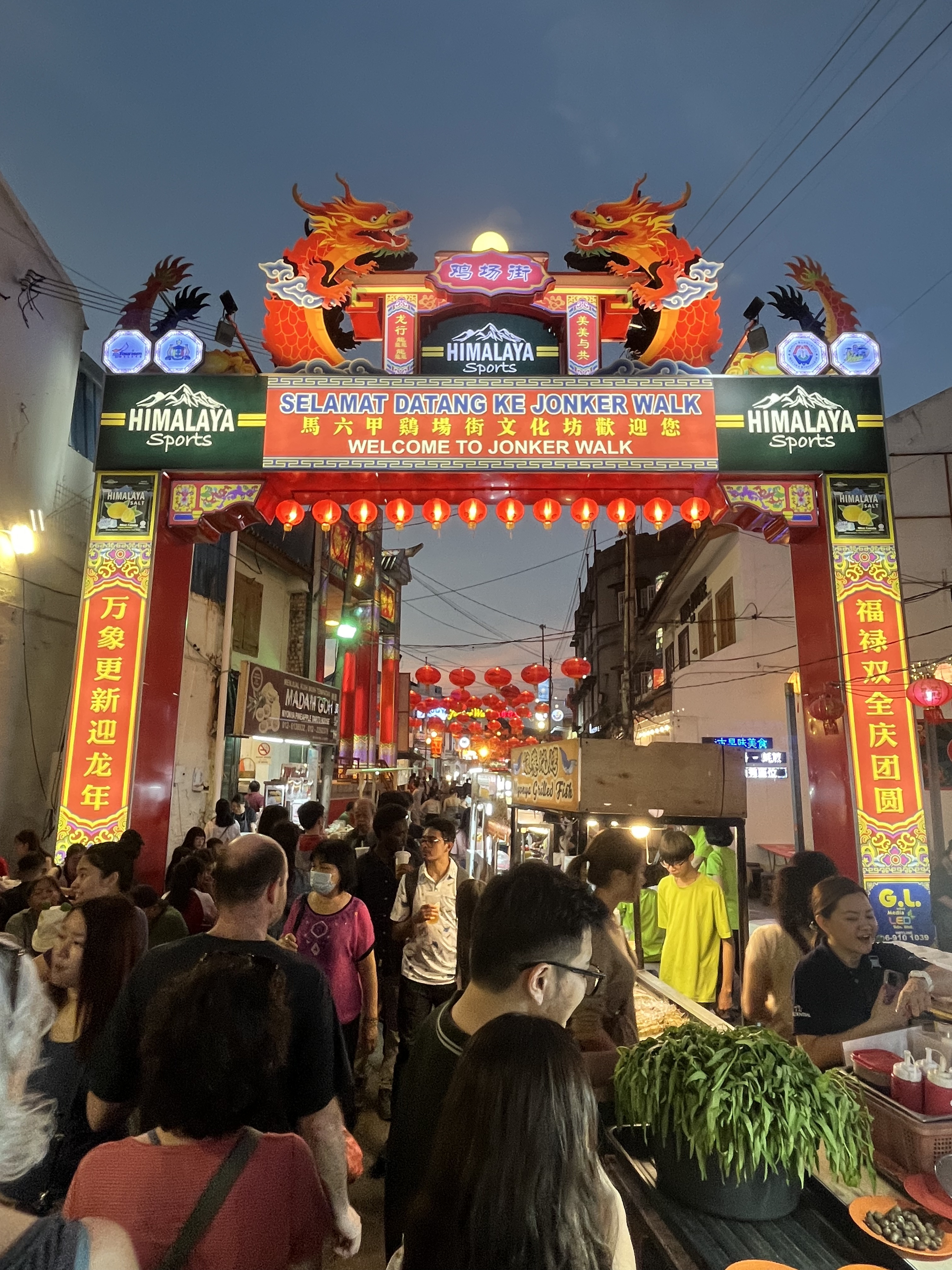
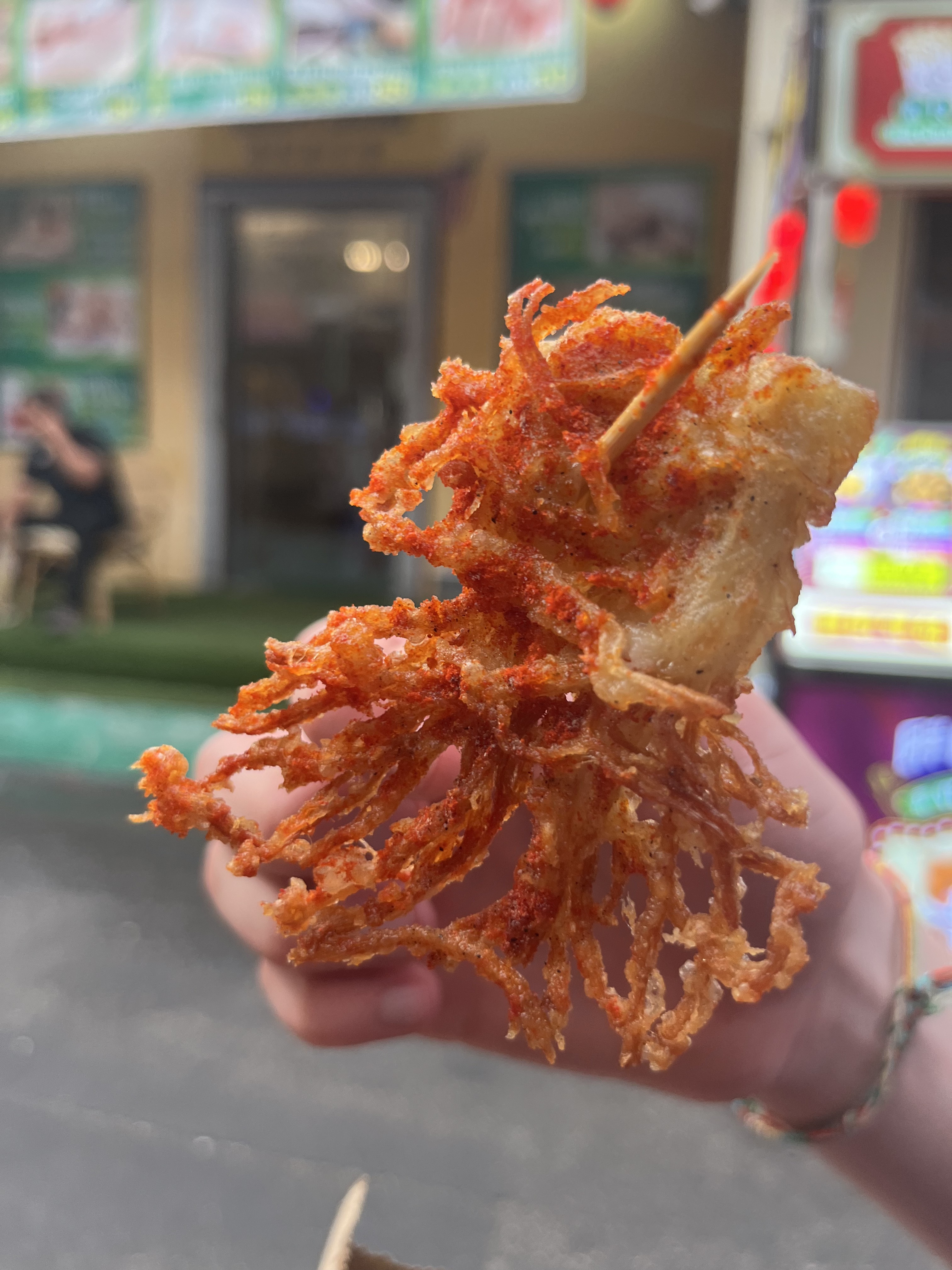
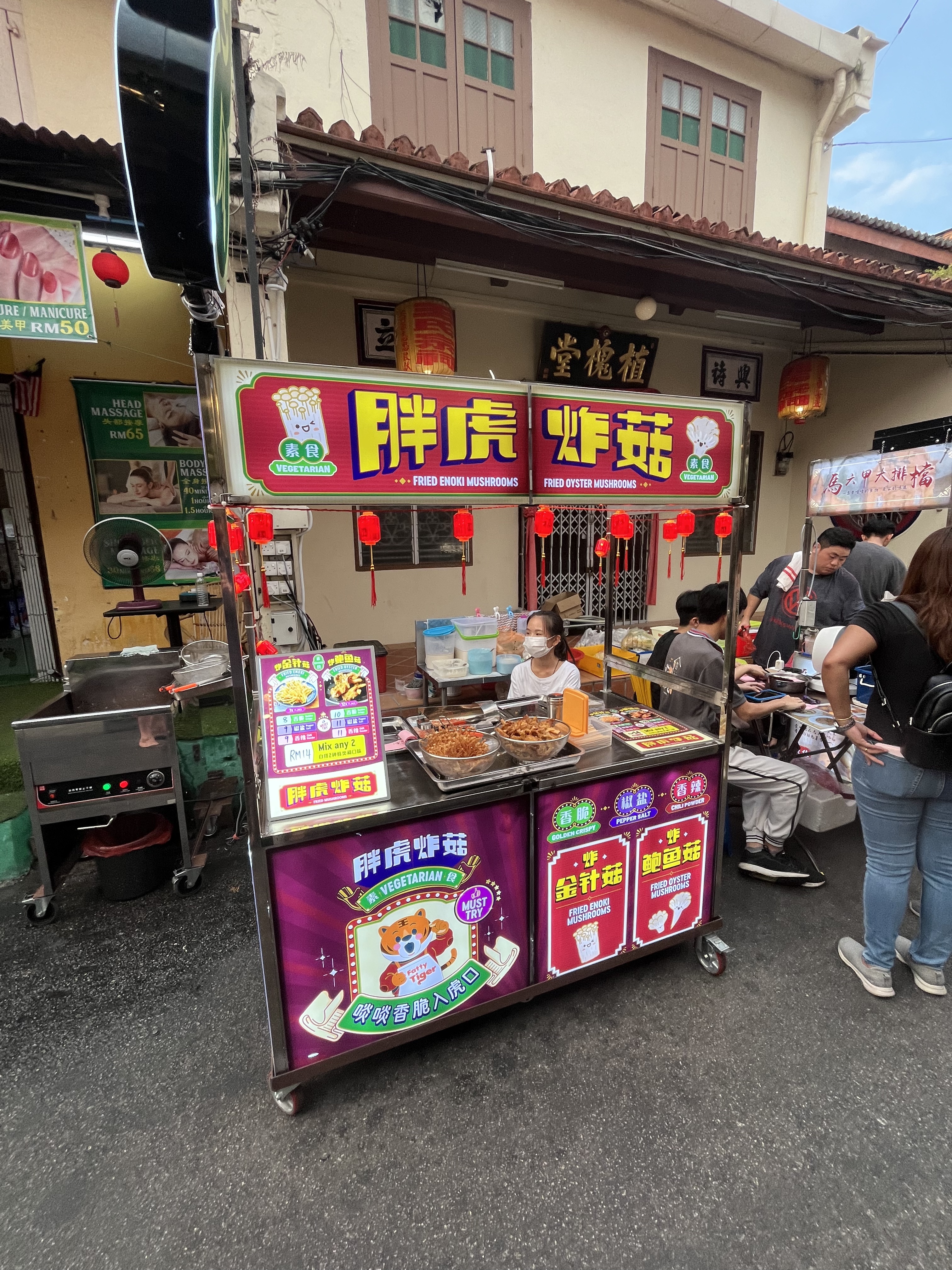
On the weekends, Jonker becomes a packed night market: a ubiquitous feature of Southeast Asia. A slow procession along the street packed with stalls selling everything your heart could desire. Crammed in like sweaty sardines with tourists from all over the world, one slowly meanders down the avenue, noshing. A fresh mango smoothie, cool and luxurious as it slides down your gullet. Fried enoki mushrooms, crispy as French fries with more natural umami than any pitiful truffle oil could hope to provide – though I posit that the addition of Old Bay would take them to astronomical heights.
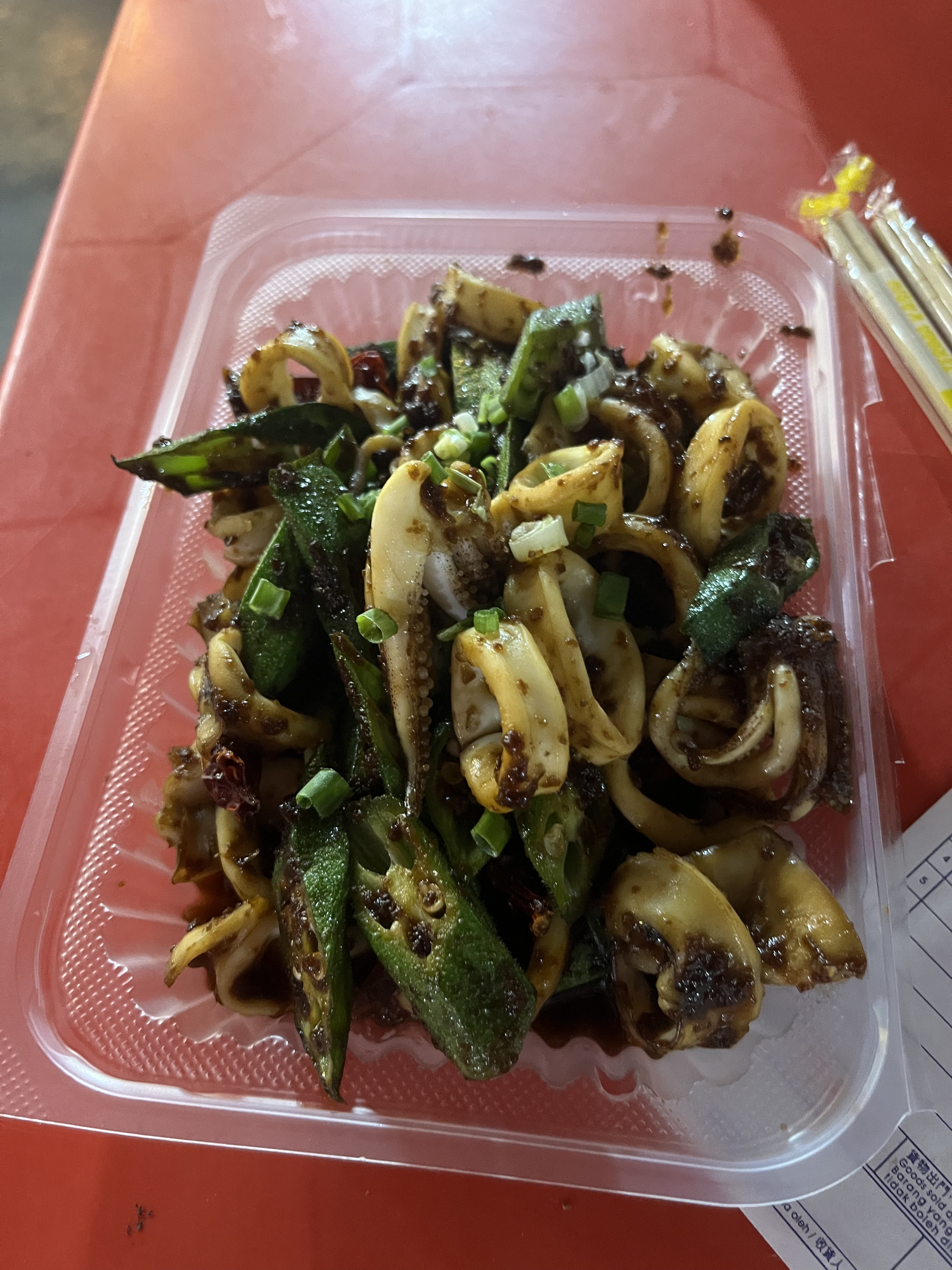
So many more options are tempting: fried quail egg on a stick, grilled scallops with garlic, mango with sticky rice, and more. Cruelly, I am limited by a finite amount of cash as we haven’t been able to locate an ATM that will cooperate. We park ourselves at a plastic table and order some seafood. Suddenly, fireworks explode overhead, loud as cannon fire and kaleidoscope-esque in their visual delights. Debris rained down on our squid – that was a surprise.
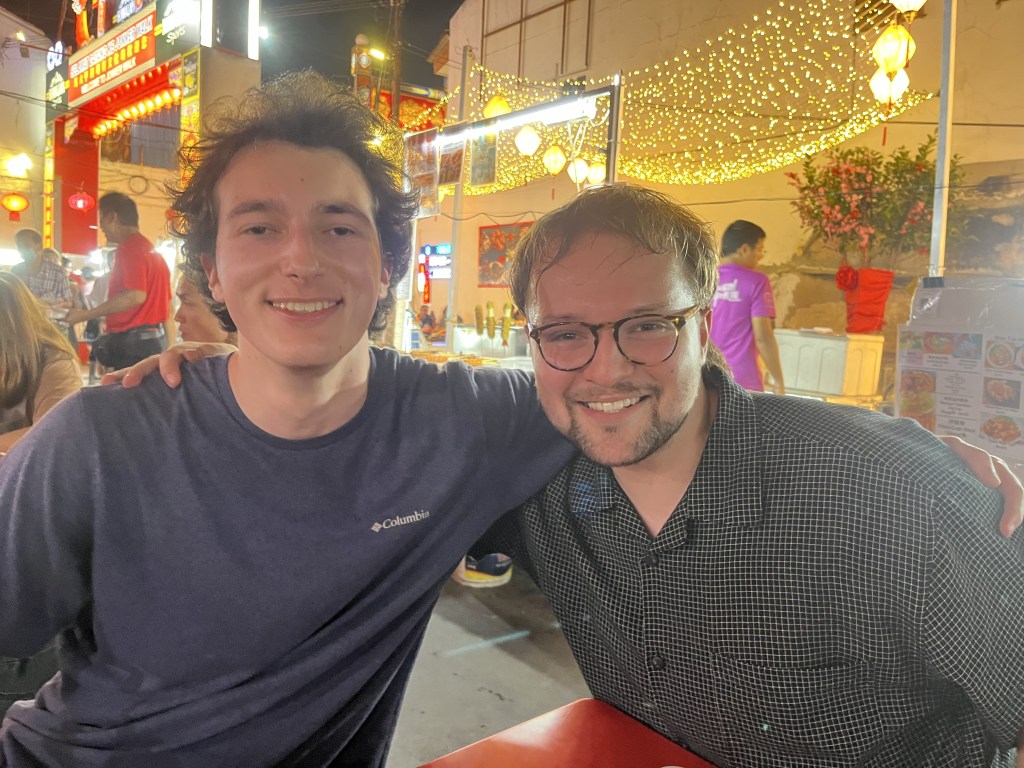
I’m not just camped for dinner, I’m also waiting for an unlikely companion. Simon, a friend of mine from high school, happens coincidentally to be in Melaka at the same time as me. He finds our table, and after my mom grills him with some questions about his fascinating study abroad program, we set off into the night in search of a bar. We sit by the river, and over Sprite and soju, catch up. From Model United Nations in Eugene, sophomore year – six 15-year-old boys crammed into one hotel room and left to roam around the University of Oregon campus with minimal adult supervision – somehow we are here sharing a drink on the other side of the world. We call it a night around midnight – Simon inexplicably has school the next day, which is Saturday – but not before vowing to meet again in Chiang Mai in roughly two months.
The following afternoon, the four of us had a hankering for a banana leaf lunch. Banana leaf is a traditional South Indian way of eating – rice with curries, dals, and other mysterious goodness – served on top of the eponymous banana leaf. We found a spot in Little India, where we walked in and were seated, the only non-Indians in the place. There’s something reassuring and affirming about being the only white people in a packed restaurant. Perhaps it is a sense that the food must be delicious, sealed with a firm stamp of authenticity. Or maybe it’s the satisfaction that I’ve escaped the well-worn path of tourists outlined by the Lonely Planet and TripAdvisor.

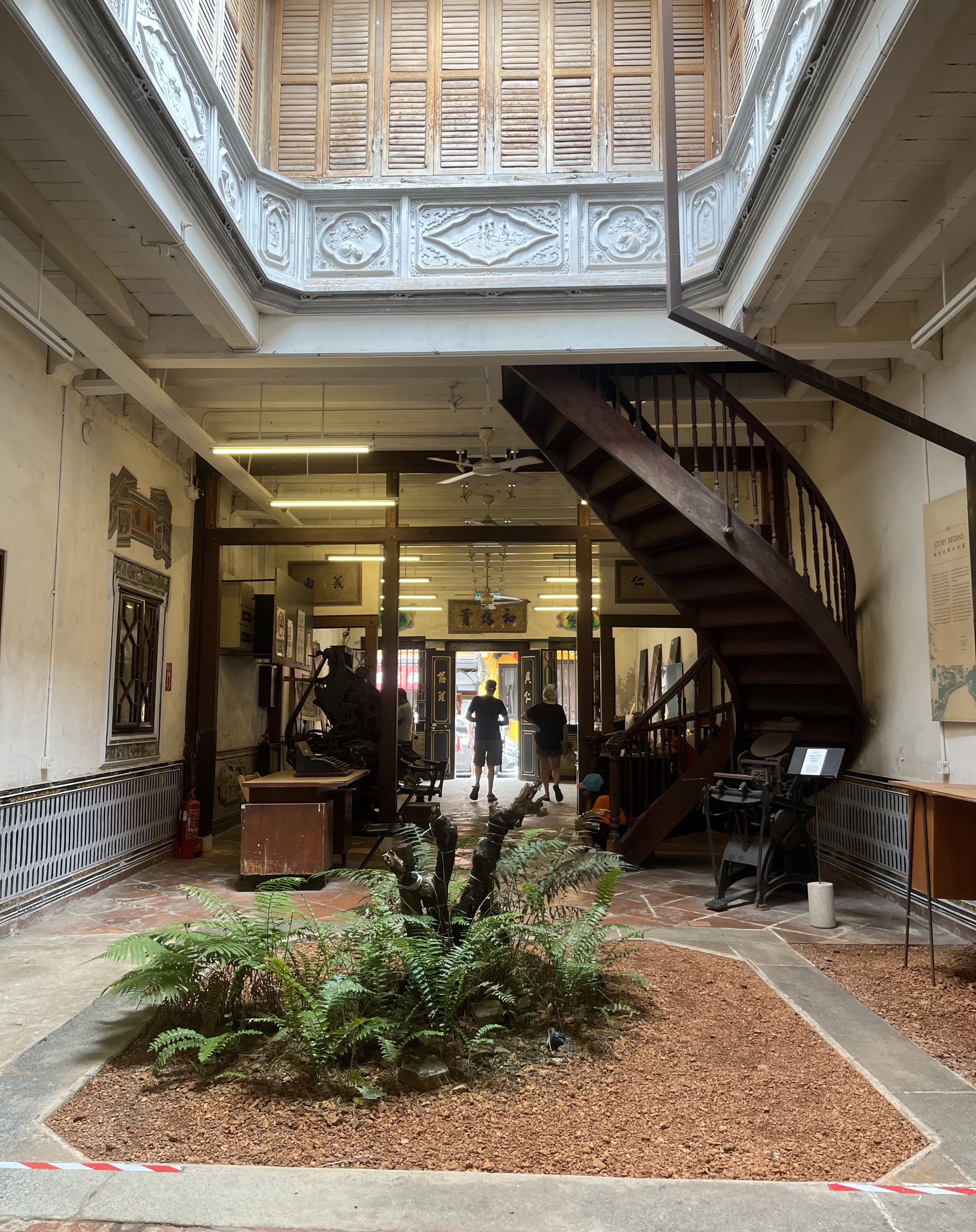
Unrelated: some cool buildings
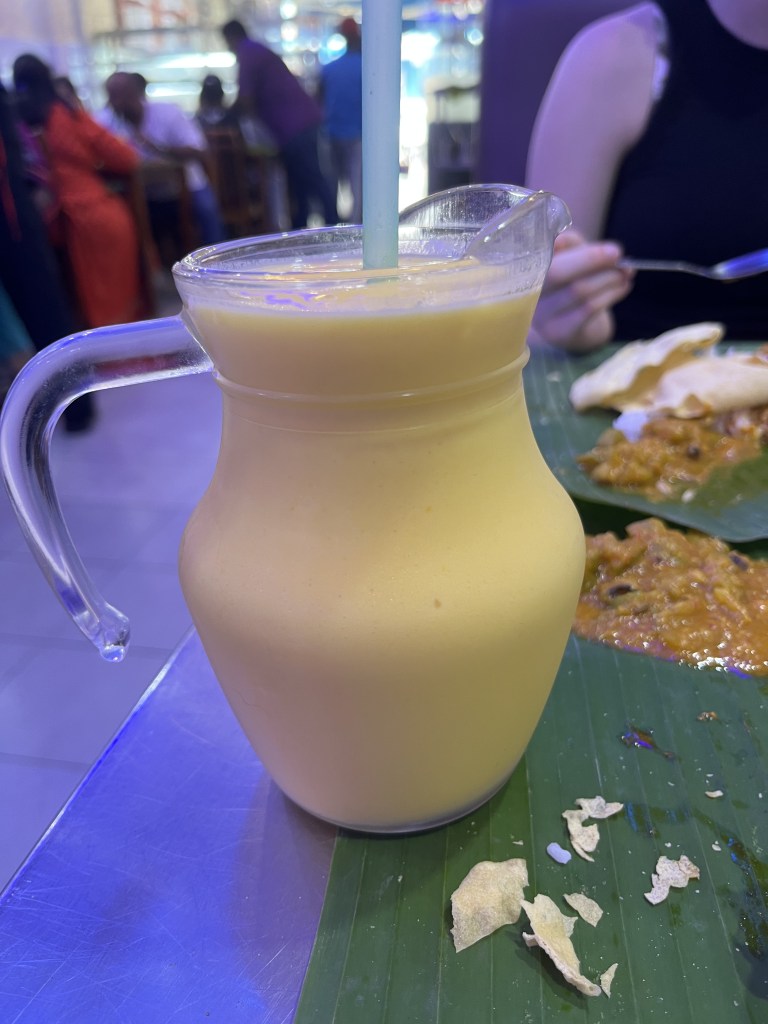
A generous scoop of rice hits our banana leaf plates/placements, along with some papadam – a paper-thin crispy cracker seasoned with spices – and three unidentifiable curries one orange (with eggplant/zucchini), one green (full of stewed leafy greens), and one white (onion/potato). Our rice was then adorned with a few different types of dals served from shiny tiffins. We also ordered a few types of chicken curry. We dug in, albeit with spoons rather than our hands – the typical style of eating – but our hands didn’t feel so clean after clambering around Portuguese ruins from the 16th century.

The food was delicious and packed a decent heat, so I was happy to see a veritable jug of mango lassi hit our table to put out the fire. This was the best lassi I’ve had in a while – the ones from the Indian spot around the corner from campus taste more like a smoothie or milkshake and lack the tanginess from the yogurt.
We stuffed ourselves silly and the bill was less than RM 100 ($20) for everything.
Dinner was at our family-run Peranakan establishment. Peranakan is a unique culture, the product of centuries-old mixing between Malaysians and Chinese. As our menus explained, the Emperor of China once betrothed his daughter to the Sultan of Melaka, in the name of pursuing economic and political harmony. She brought a 500-person entourage who married locals and thus Peranakan was born. Peranakan culture really only exists in this region of Southeast Asia known as the Straits, which includes Singapore, Melaka, and Penang. Our food was bursting with lemongrass, ginger, and garlic.
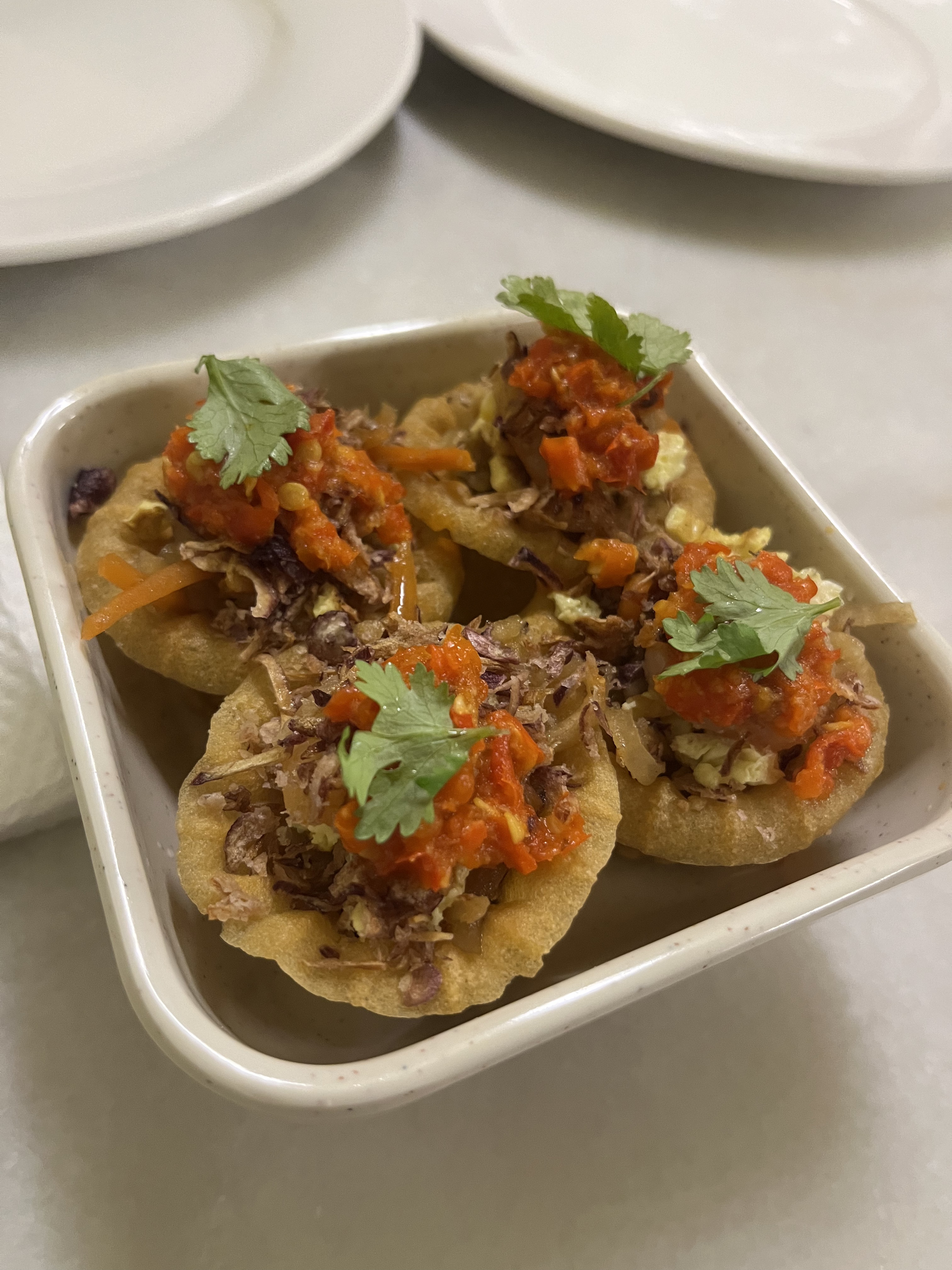
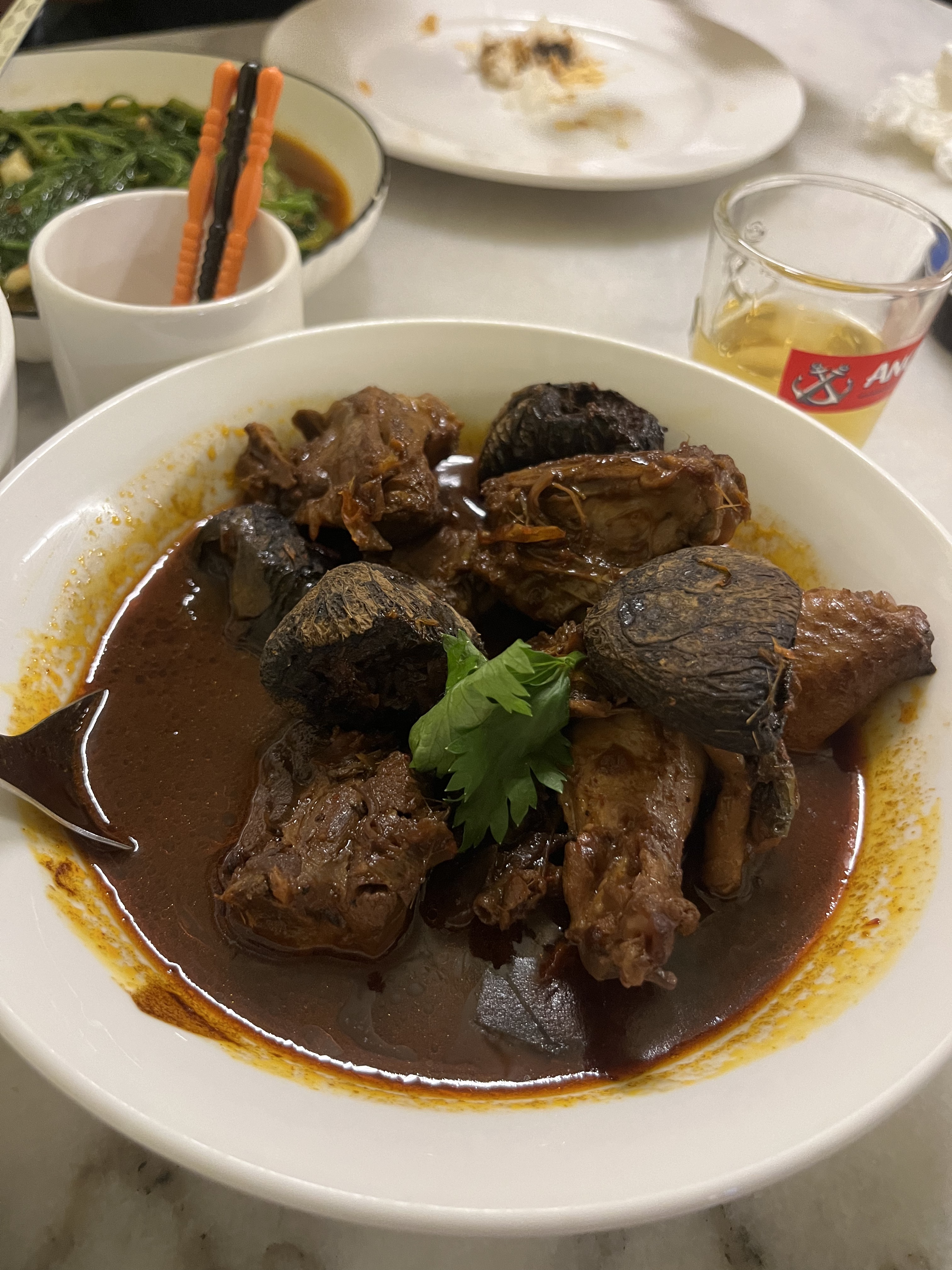

We sampled a chicken curry seasoned with nuts from the pangium tree – poisonous when raw, but when cooked yields a dark paste that tastes of mushrooms. Another dish was silken tofu in a soy-based sauce smothered in what seemed to be caramelized onions. This got me thinking about the possibilities of caramelized onions in Asian cuisine – like what about a ramen broth that starts with caramelized onions? What about a French onion ramen? Much to think about… After a mango sticky rice procured from the night market we retired, falling asleep to the cacophony of the new Lunar New Year celebrations.

We decided to leave Melaka a day early. It was cool, but it didn’t seem like there was a ton to do. And since we were flying to Langkawi out of Kuala Lumpur, we headed to KL for a day to check out the night market. Our mode of transportation this time was a Grab – Southeast Asia’s answer to Uber. And though it seemed unlikely to me for a two-hour drive – imagine taking an Uber from DC to Philly – a driver showed up when we called. We flew up the highway in a glorified golf cart.
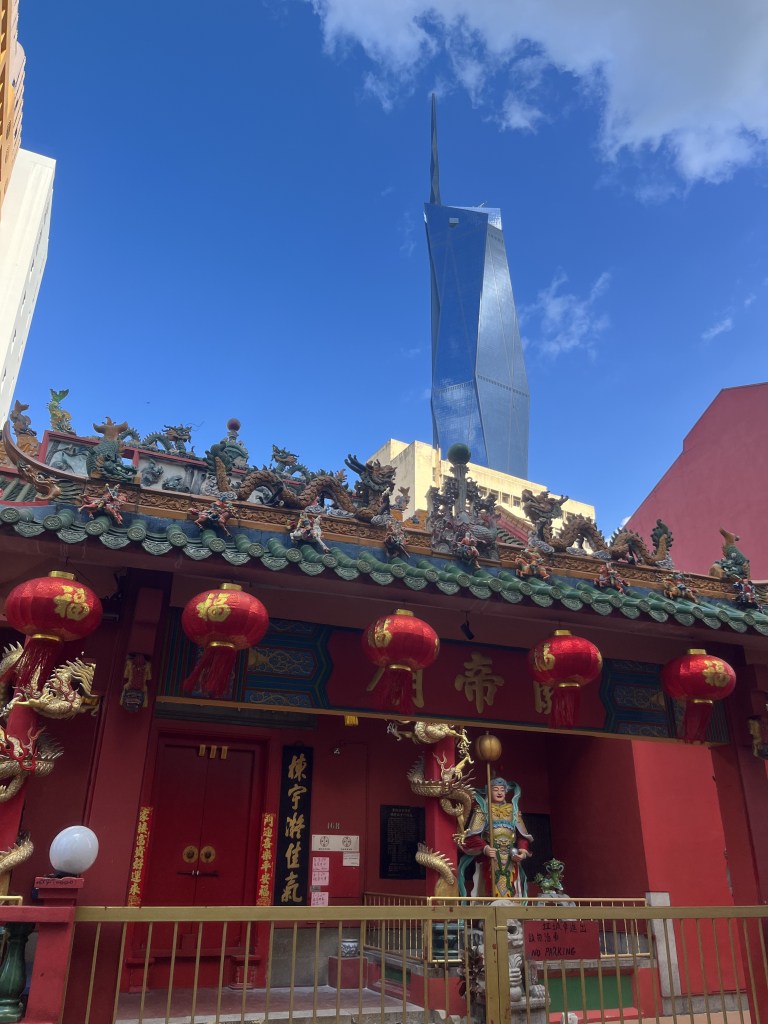
Kuala Lumpur impressed me in certain aspects. Our hotel was just blocks away from a gleaming subway station: Something I certainly did not remember from my previous visit some seven years ago. Attached to the Bukit Bintang station was an aggressively air-conditioned mall that rivaled Singapore. There was even a hawker center in the basement where we had a delicious lunch. However, I was unimpressed by the famous night market: just as crowded as Jonker Street and significantly fewer options. But given KL’s surprising public transportation system – including a monorail line and an airport express line – it might be worth another trip.
When we landed in Langkawi, we got a face full of bright sun. After briefly stumbling around aimlessly on the tarmac, we found the sanctuary of the small but sufficient airport. we pushed past the touts hawking rental cars – more on that later – and hopped in a Grab to our hotel. The first sight of our hotel – set in a villa style with individual houses – took my breath away. Intricately carved wooden archways soared gracefully above beautifully tiled floors. Brightly colored batik patterns adorned pillows and curtains.
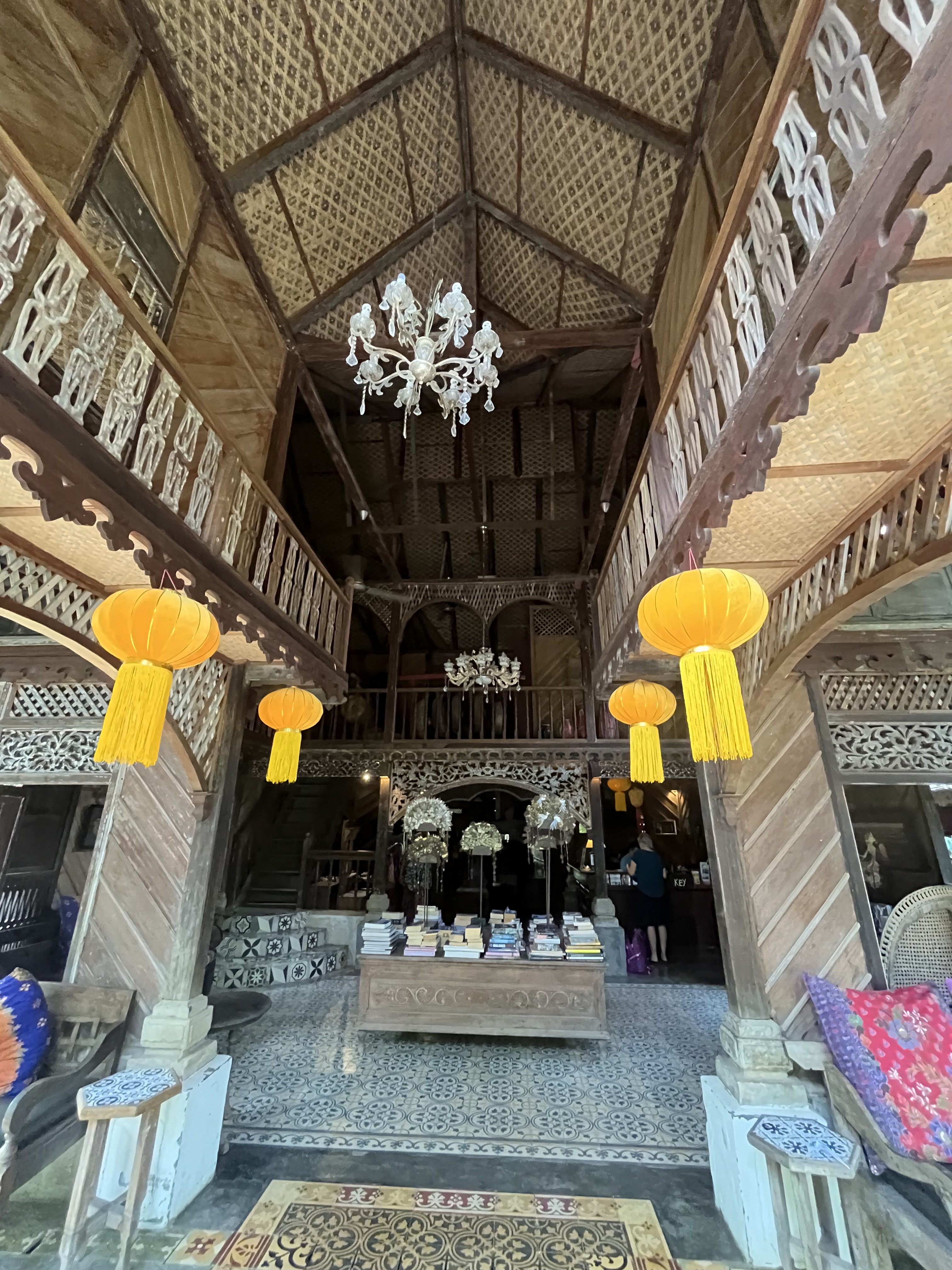
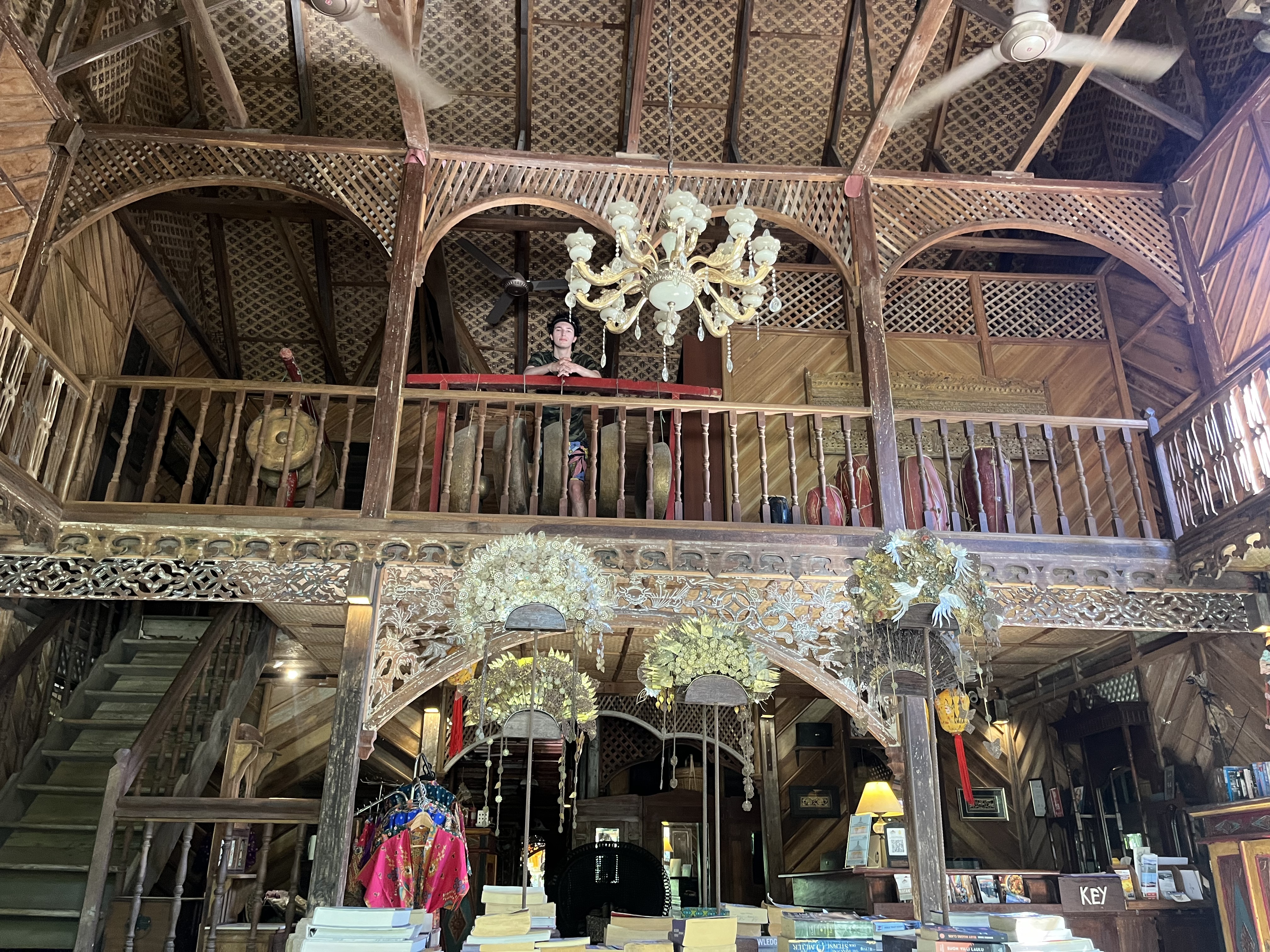
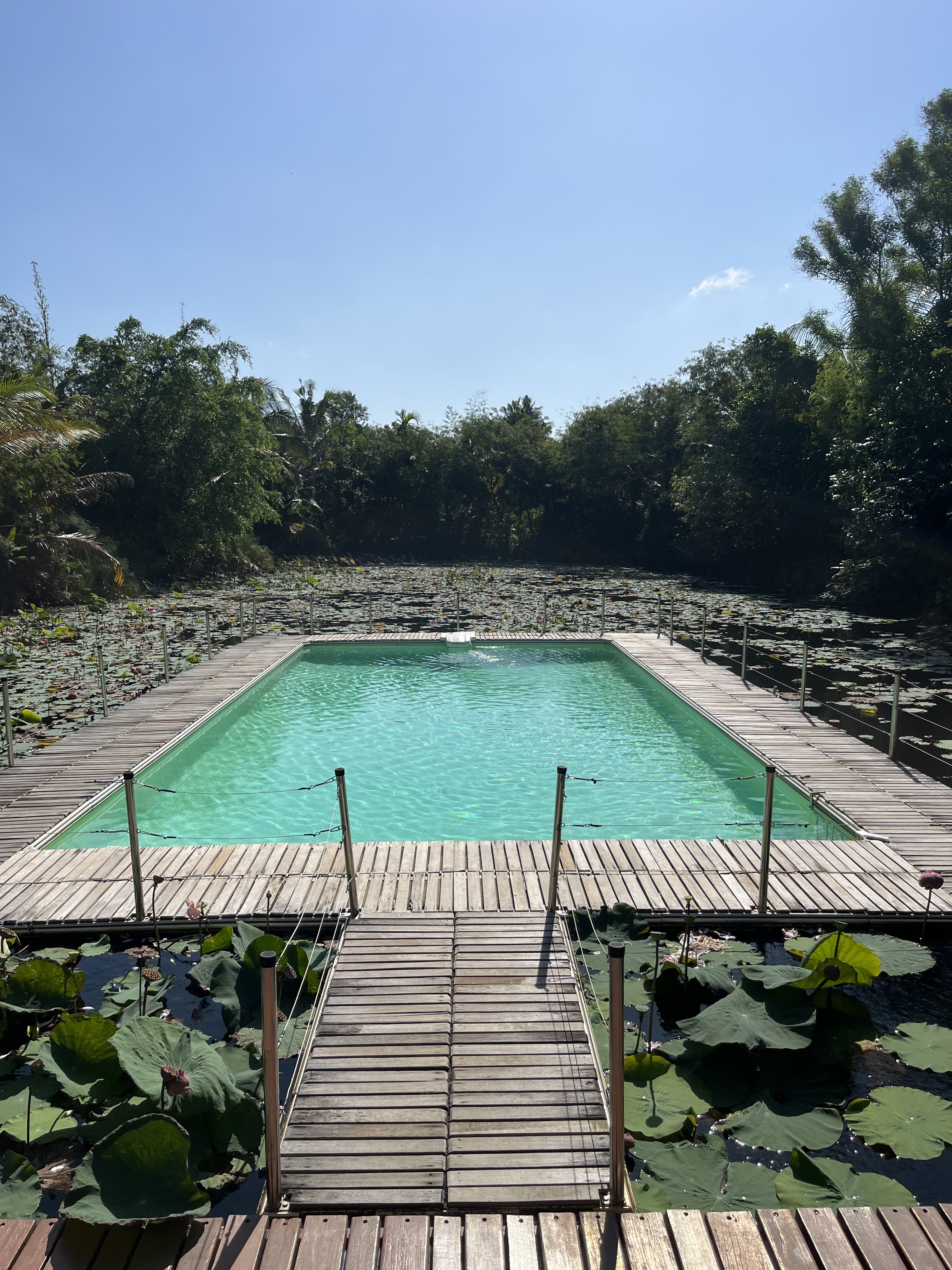
A few cats roamed the stone pathways connecting the bungalows to the main open-air forums. In the reception area, delicate balconies – the kind that cowboys would crash through after being shot in an Old West saloon – looked down upon us. And the piece de resistance: a swimming pool suspended in a pond festooned with lotuses.
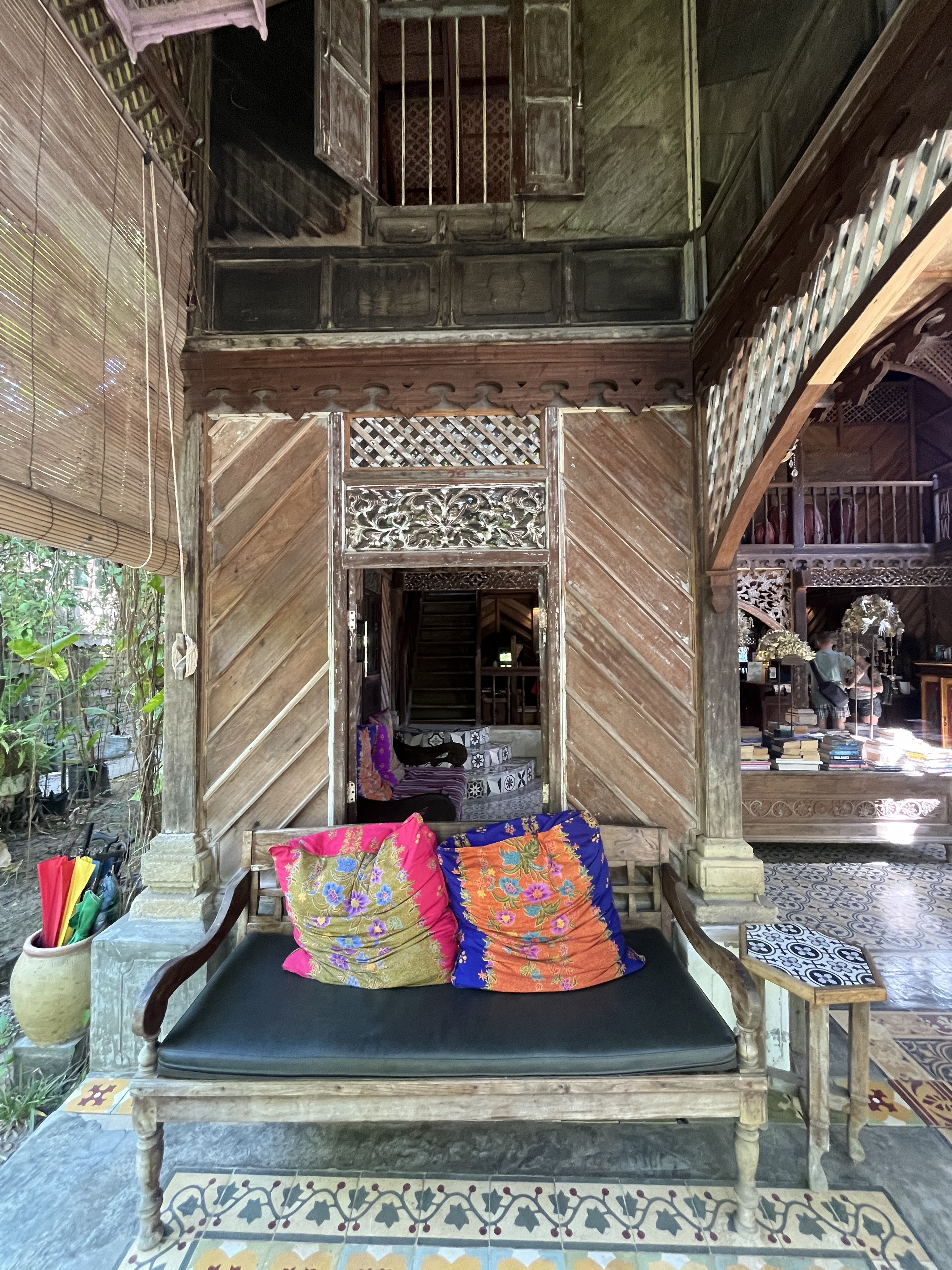
We had our own little wooden house, and a crucial mosquito net hung above my bed – to be deployed later. The manager told us that all the buildings in the compound were well over a century old, and they had been carefully disassembled, transported, and reconstructed from elsewhere in Malaysia. It was paradise: except for the mosquitoes, cockroaches, and other insects in our house – and the fact that they served the thinnest, most transparent, dishwater coffee I have had maybe in my entire- albeit brief – coffee-drinking career.
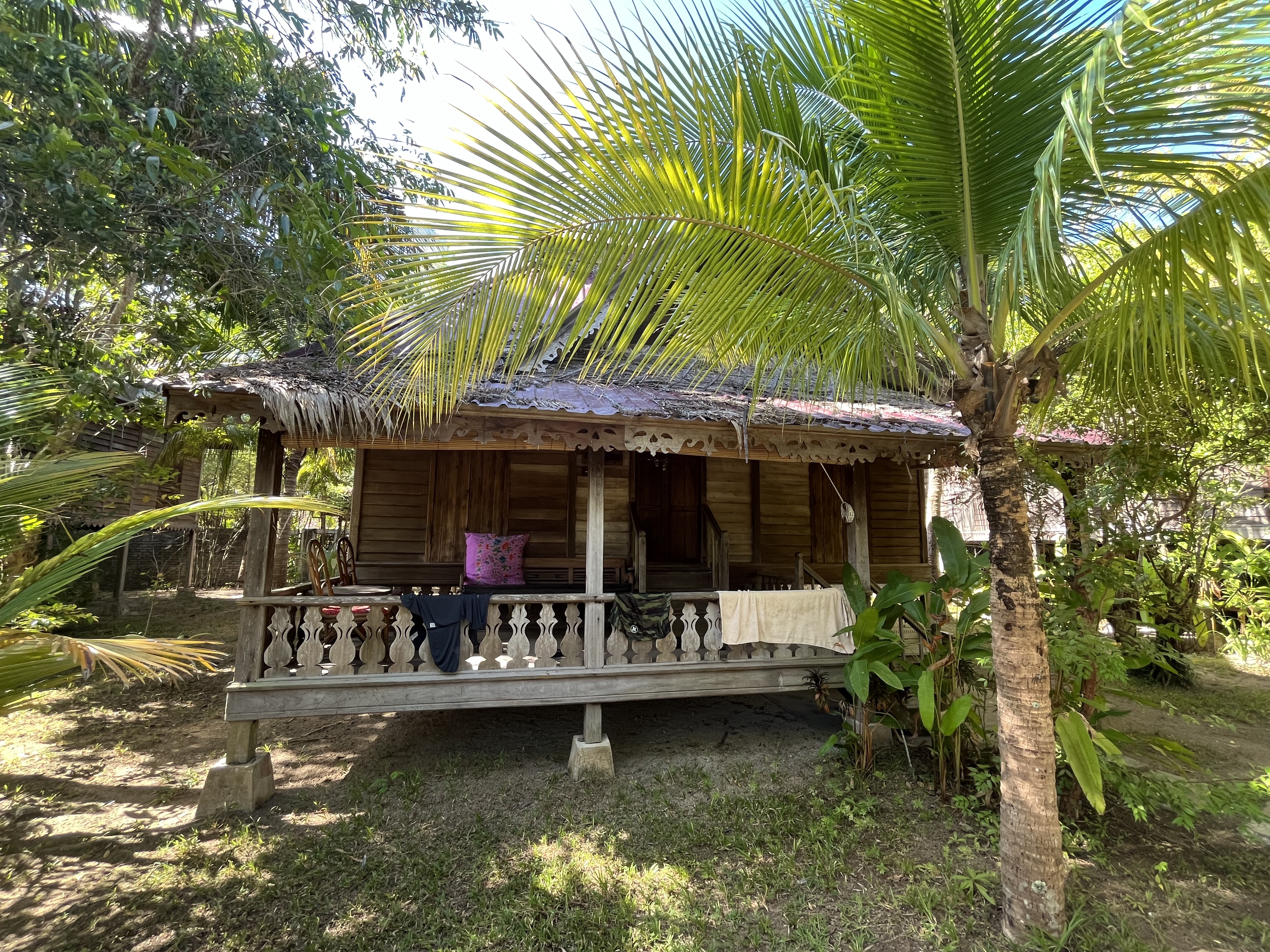
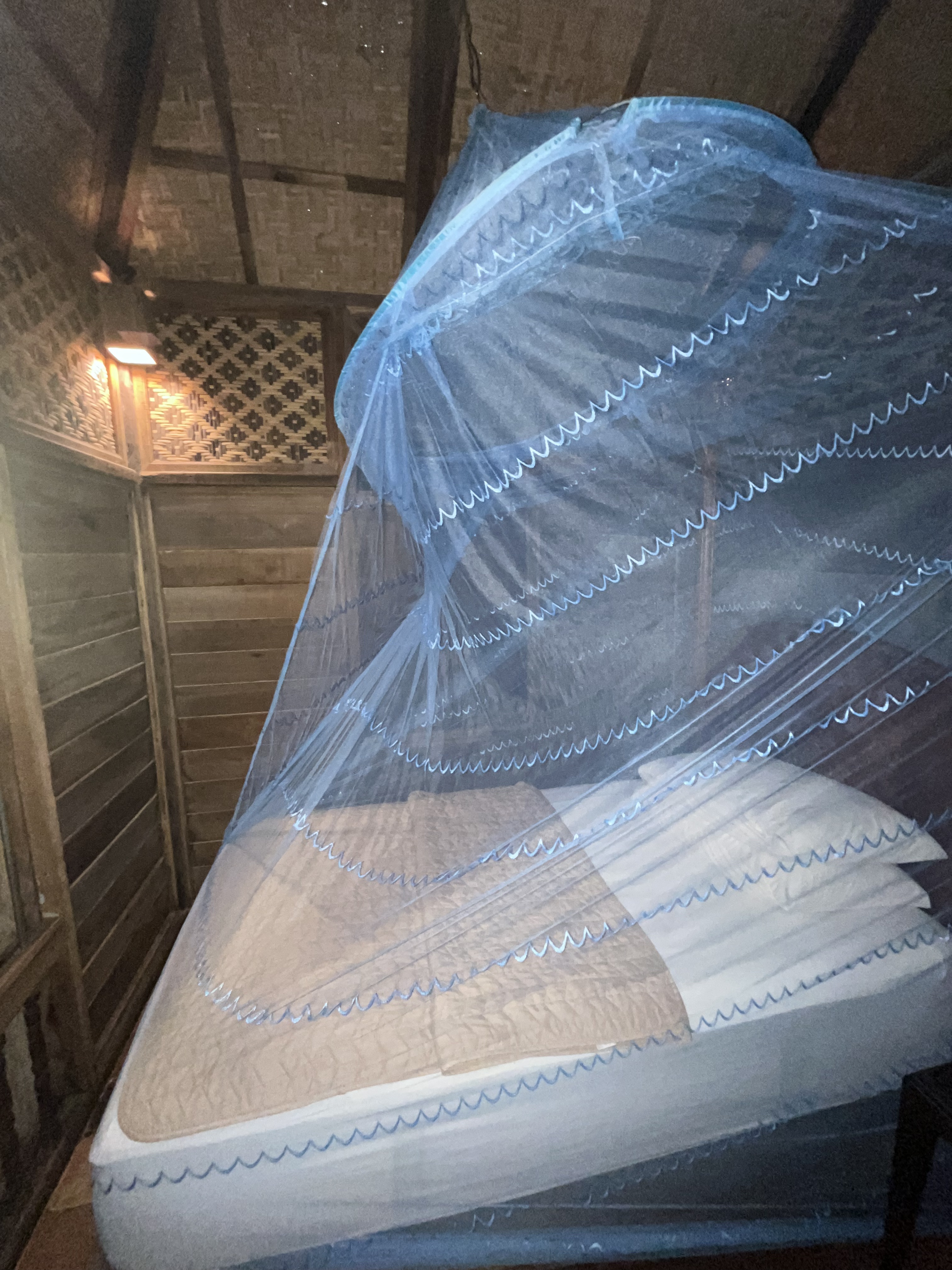

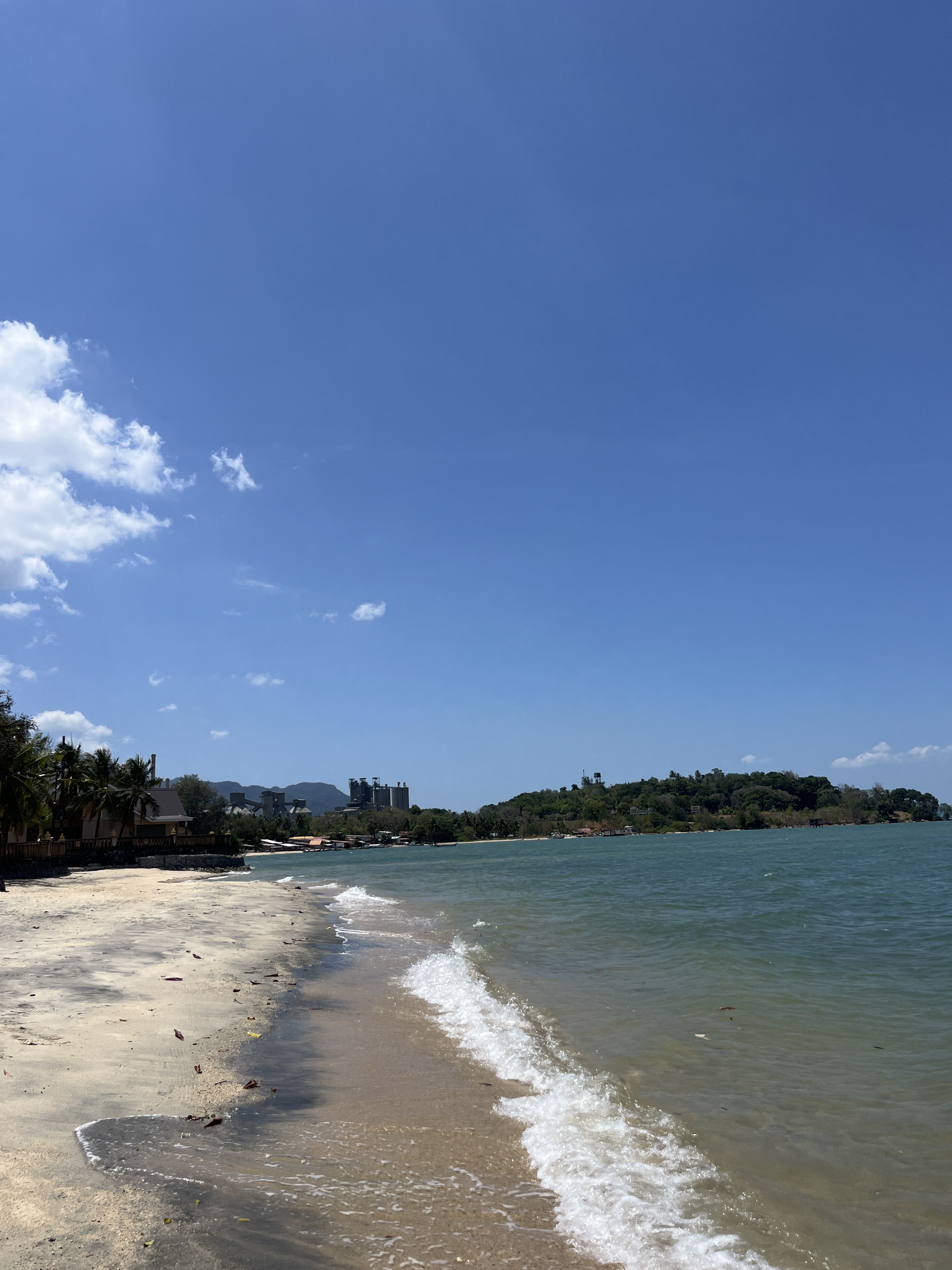
I guess I was expecting Langkawi to be more like Bali, mobbed with tourists and developed around them. But it was actually more on the slightly broken down/undeveloped side – although the signs of further development were everywhere, with countless construction sites and advertisements promising luxurious country clubs. There were plenty of tourists, despite it being the tail end of the dry season. The dry season meant the much-lauded waterfall hikes that we read about in the Lonely Planet were unavailable, much to my chagrin. It was also jellyfish season, and Langkawi is home to the box jellyfish, which when mature are one of the most venomous creatures on the planet. While that was certainly scary – and we did see a few beached jellyfish, big translucent blobs of death – when the sun is beating down and you’re on a picturesque beach, you throw caution to the winds and take a dip anyway. (You know something statistically more dangerous (probably) than swimming in jellyfish-infested waters that we do everyday? Getting into a car!)
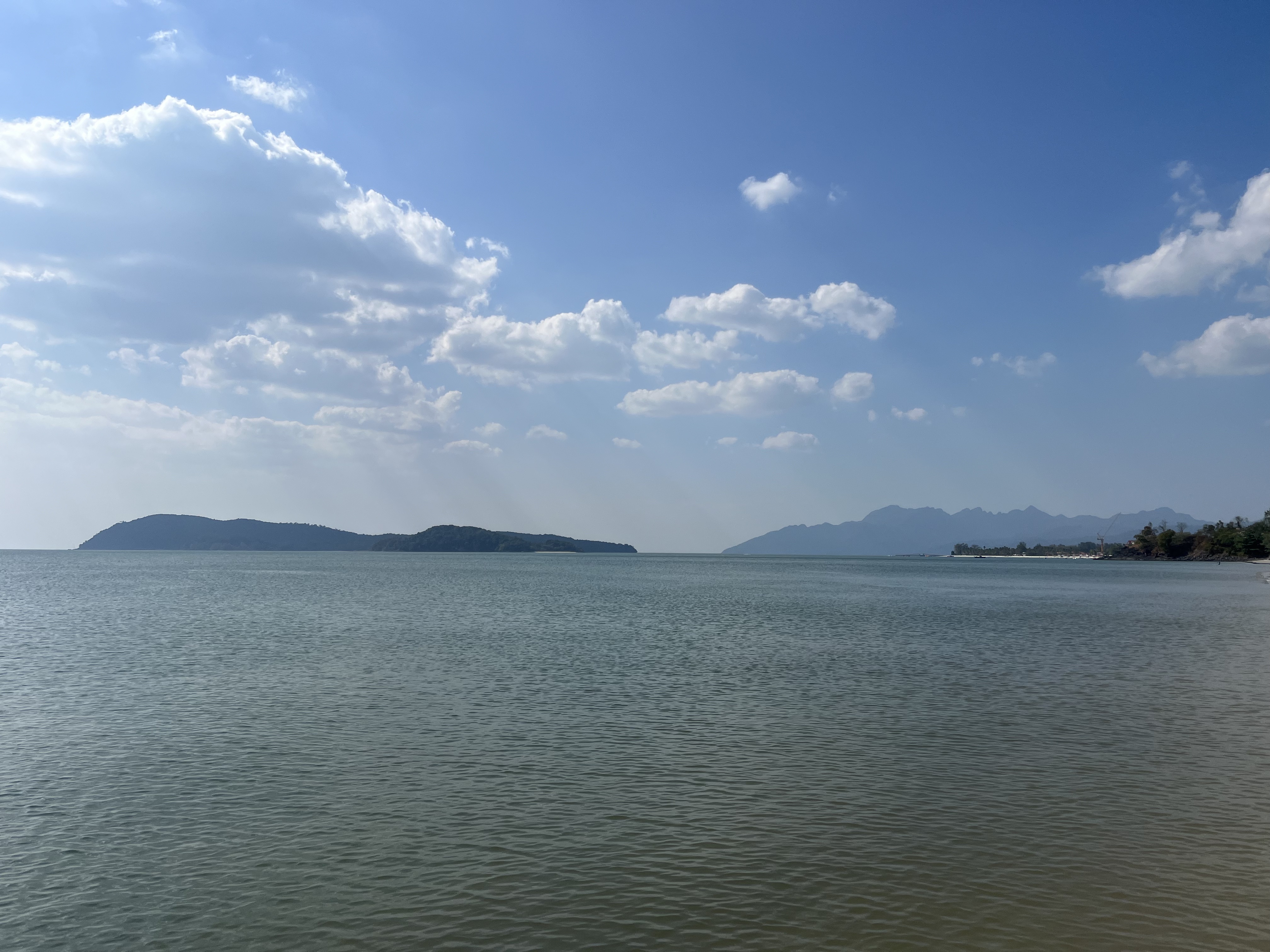
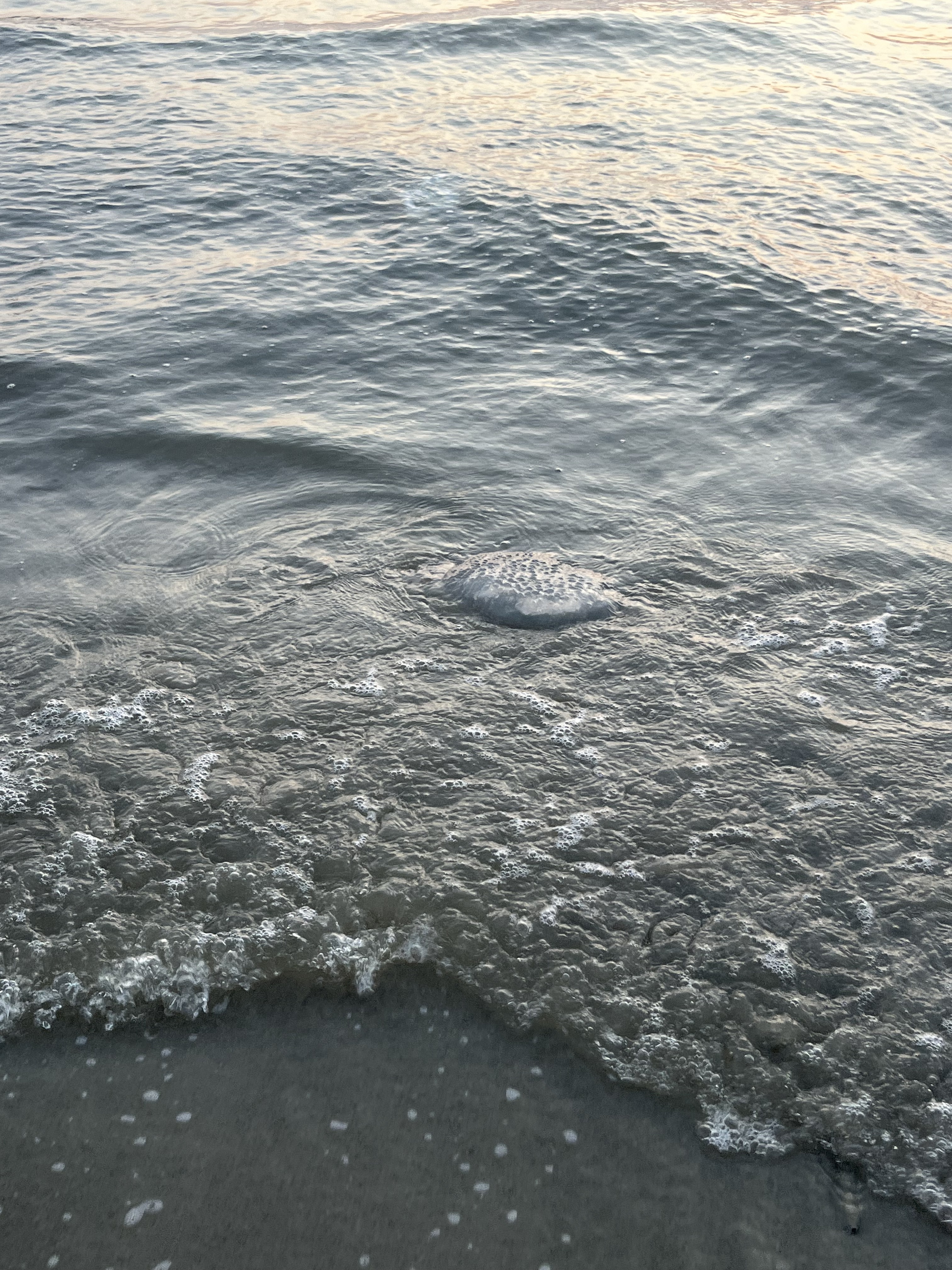
You can see the jellyfish on the right
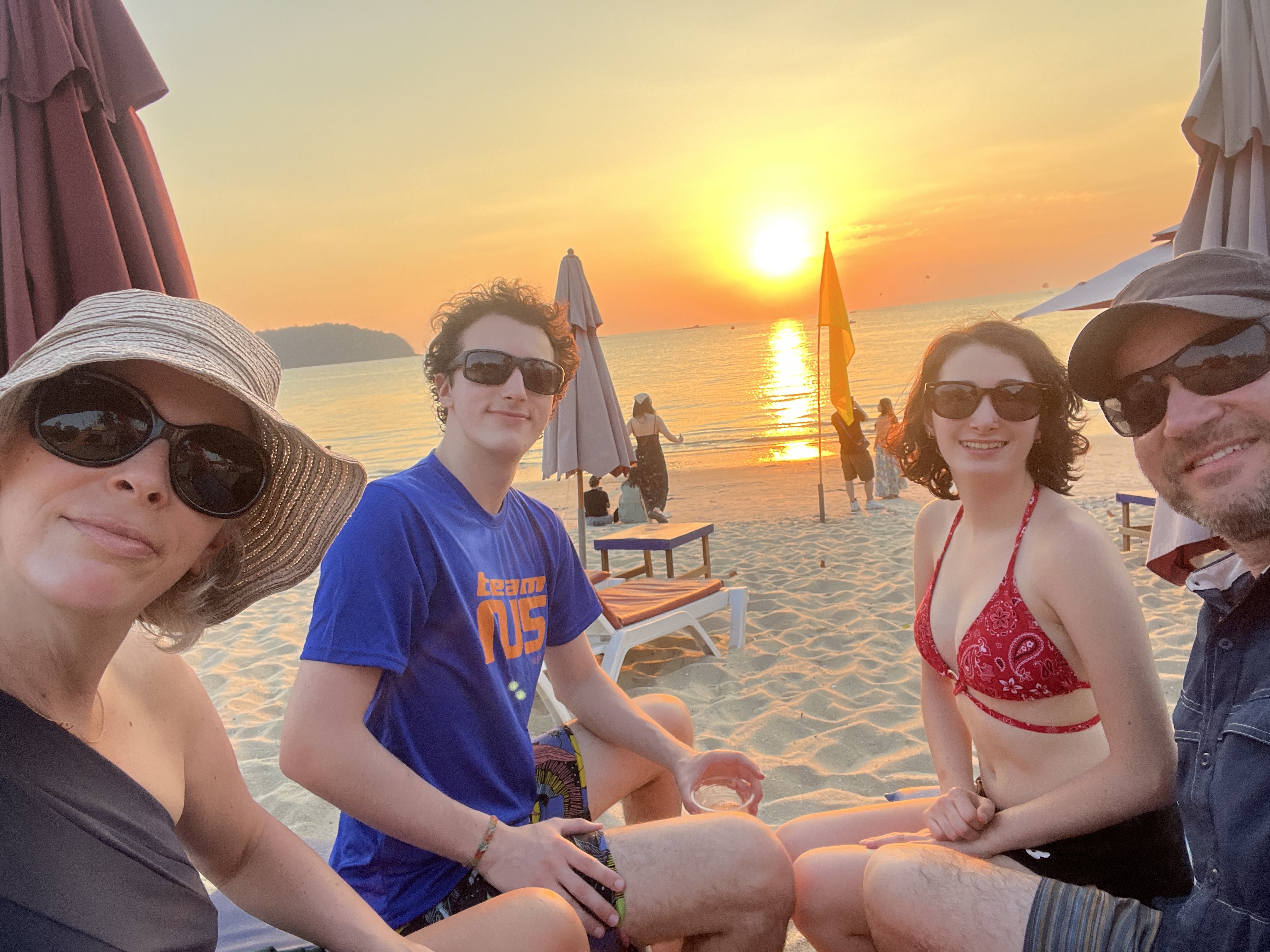
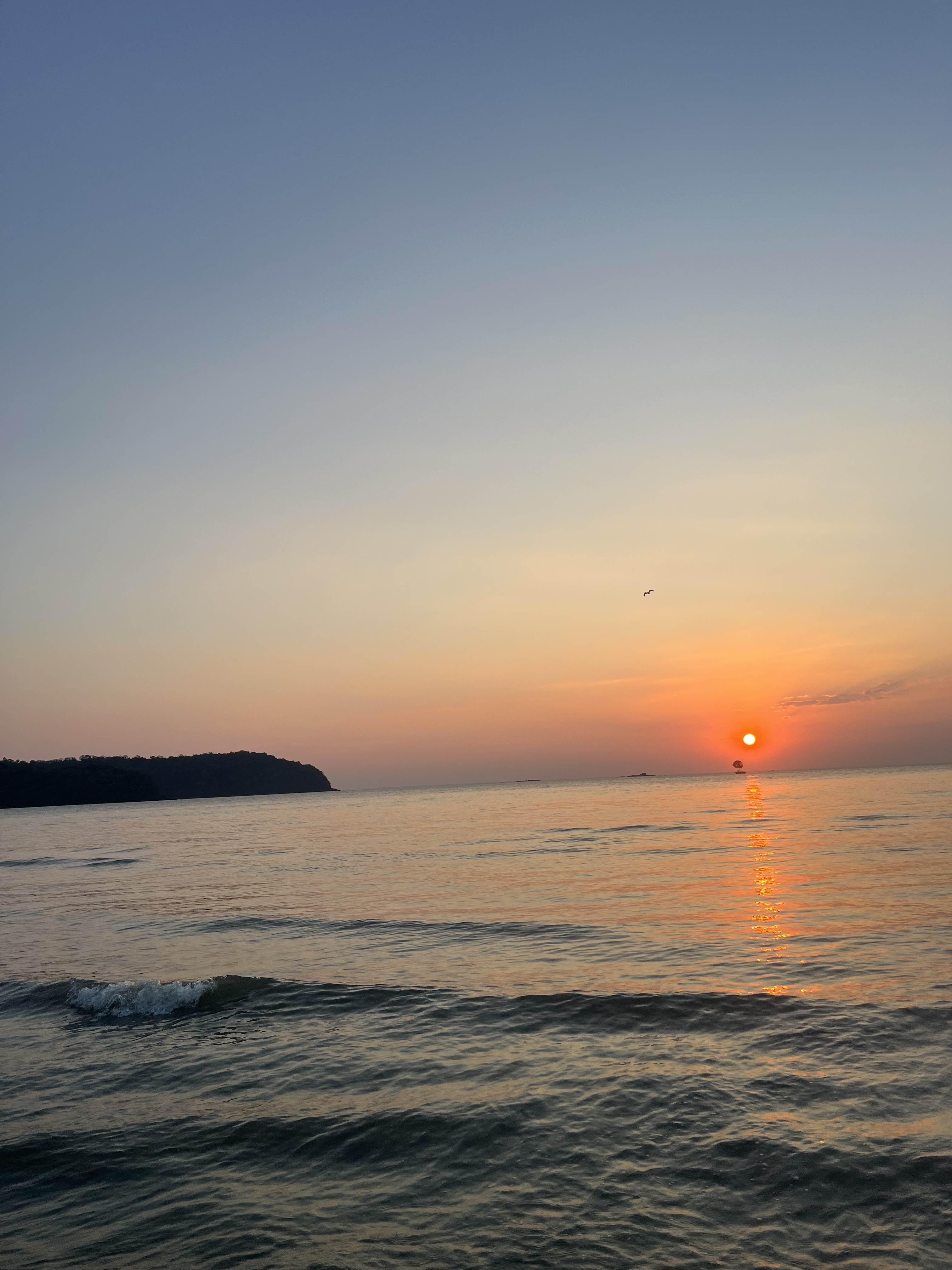
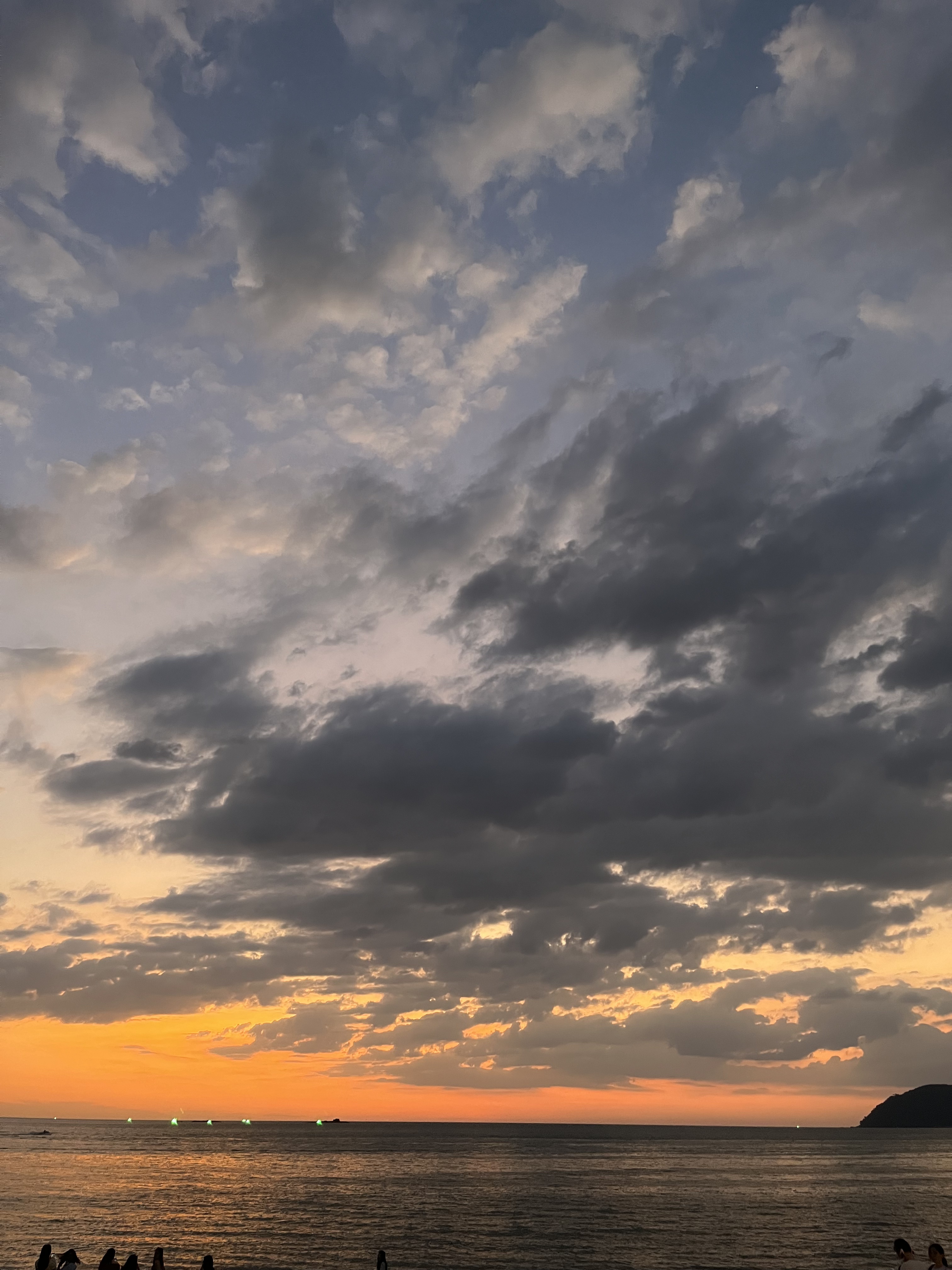
On our first day in Langkawi, we watched the sunset on the beach and then hit up a local seafood restaurant that was recommended by the guy we rented beach chairs from.
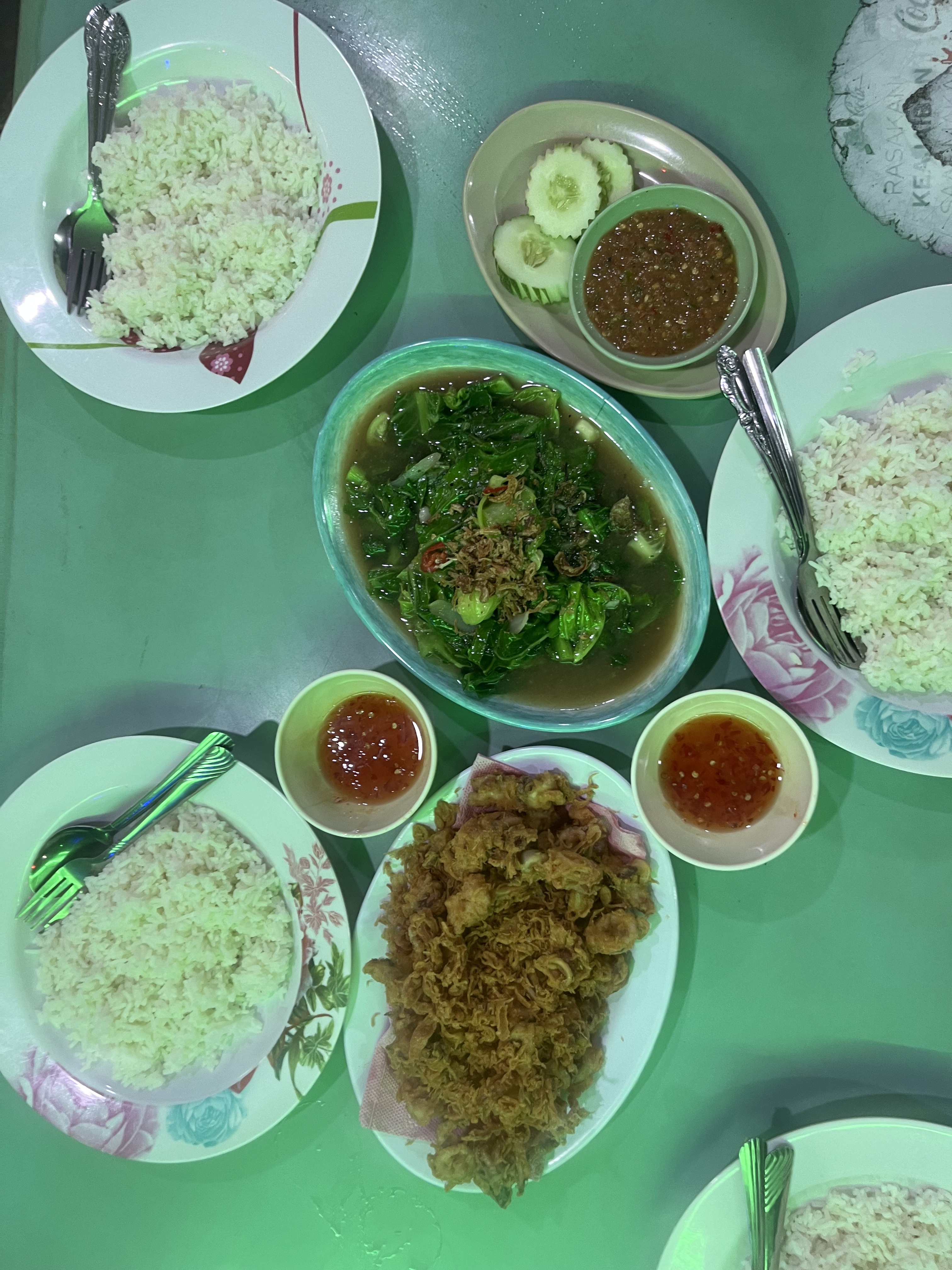

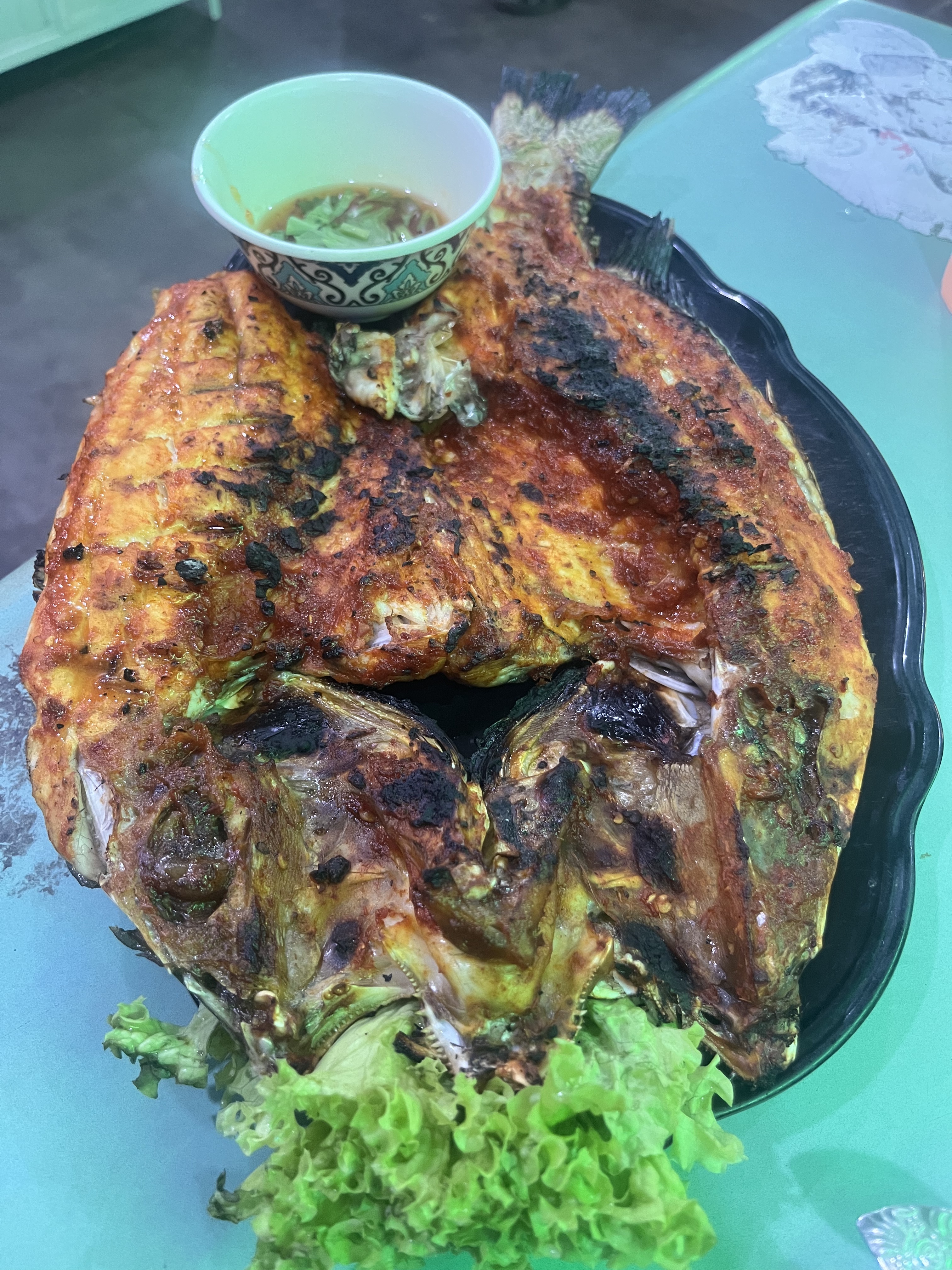

Dinner was fried calamari, some sort of veggies, a Chinese-style shrimp stir-fry, a whole barbecued fish, and mango with sticky rice – about $33 in all
When we tried to start our second day, we realized that Grabs didn’t really want to come out to our hotel; not terribly surprising when you factor in the skinny, bumpy, unpaved roads that lead to it. So where did we go? Right back to the airport to rent a car, good thing it was only a ten-minute drive from the hotel. After the fastest car rental process in recent memory, we were the proud owners of a Perodua (a Malaysian car brand) for the next two days. And for just RM200 (about $40), it seemed like a bargain. We cruised around the small island for a while before our scheduled boat tour in the afternoon.
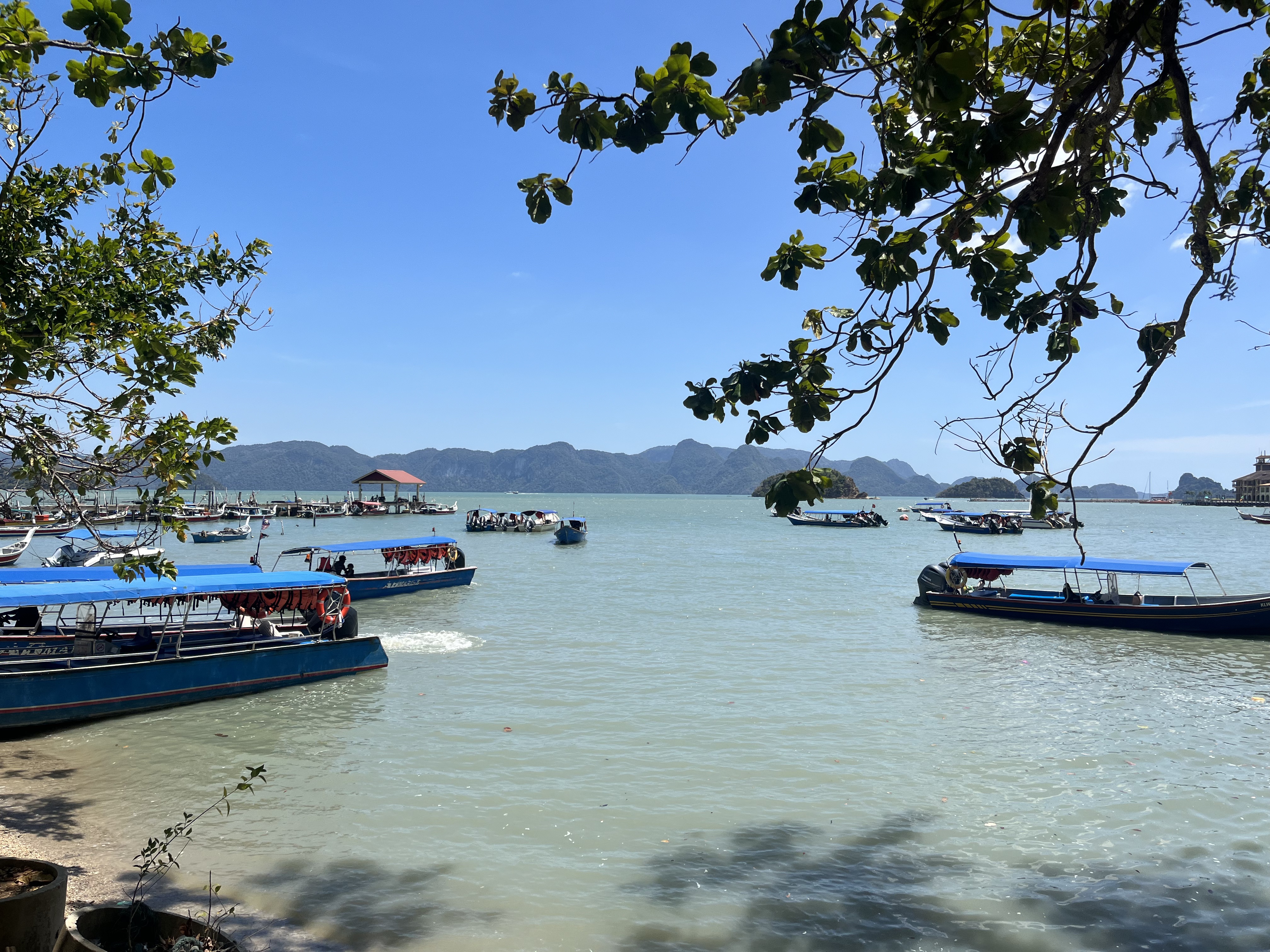
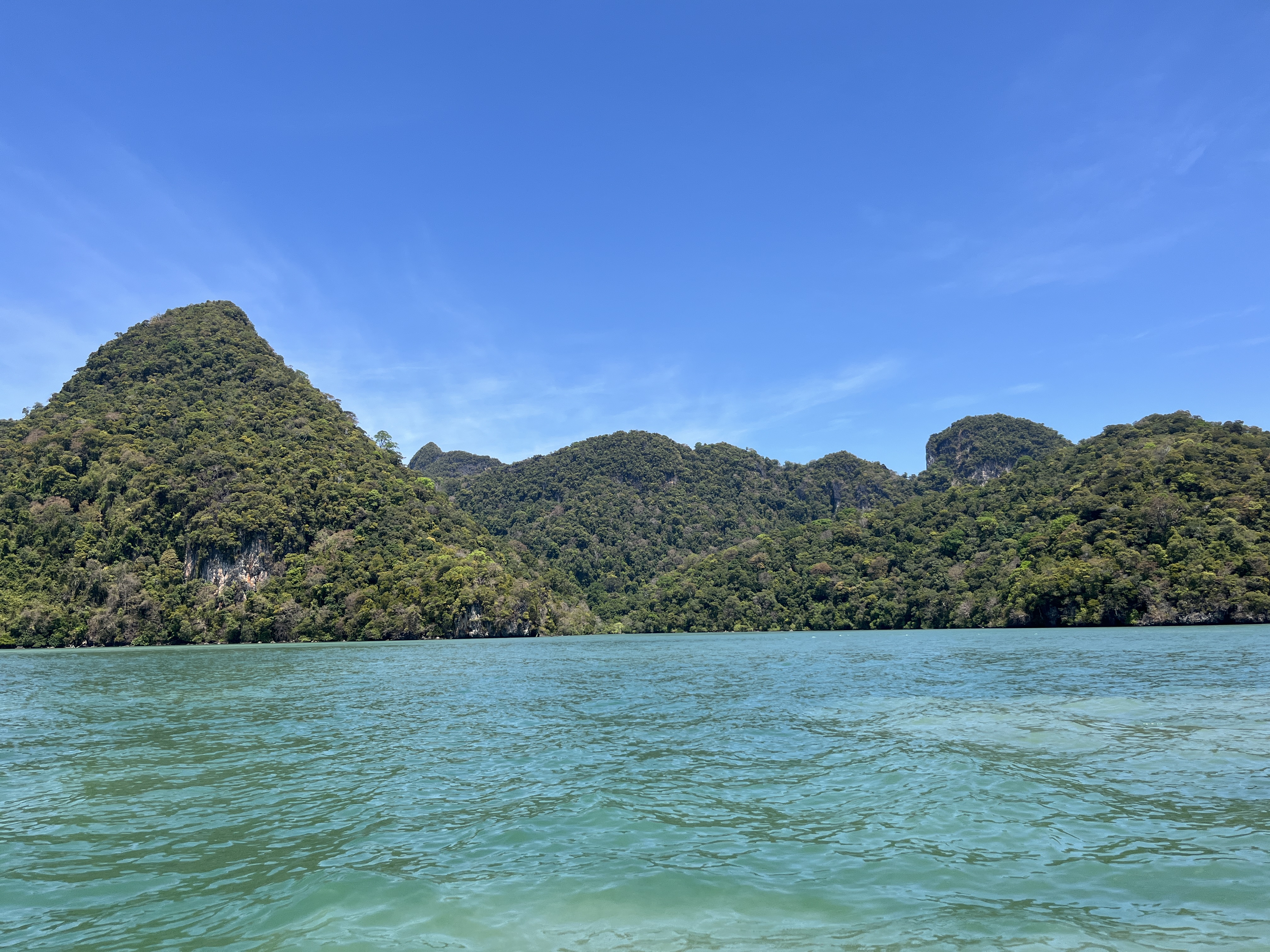
Langkawi is an archipelago, and we were able to see some of the surrounding islands via a small, water taxi-style craft. One island famously bears a resemblance to a pregnant woman lying down. On another island, there was a freshwater lake where we rented kayaks and tooled around briefly.

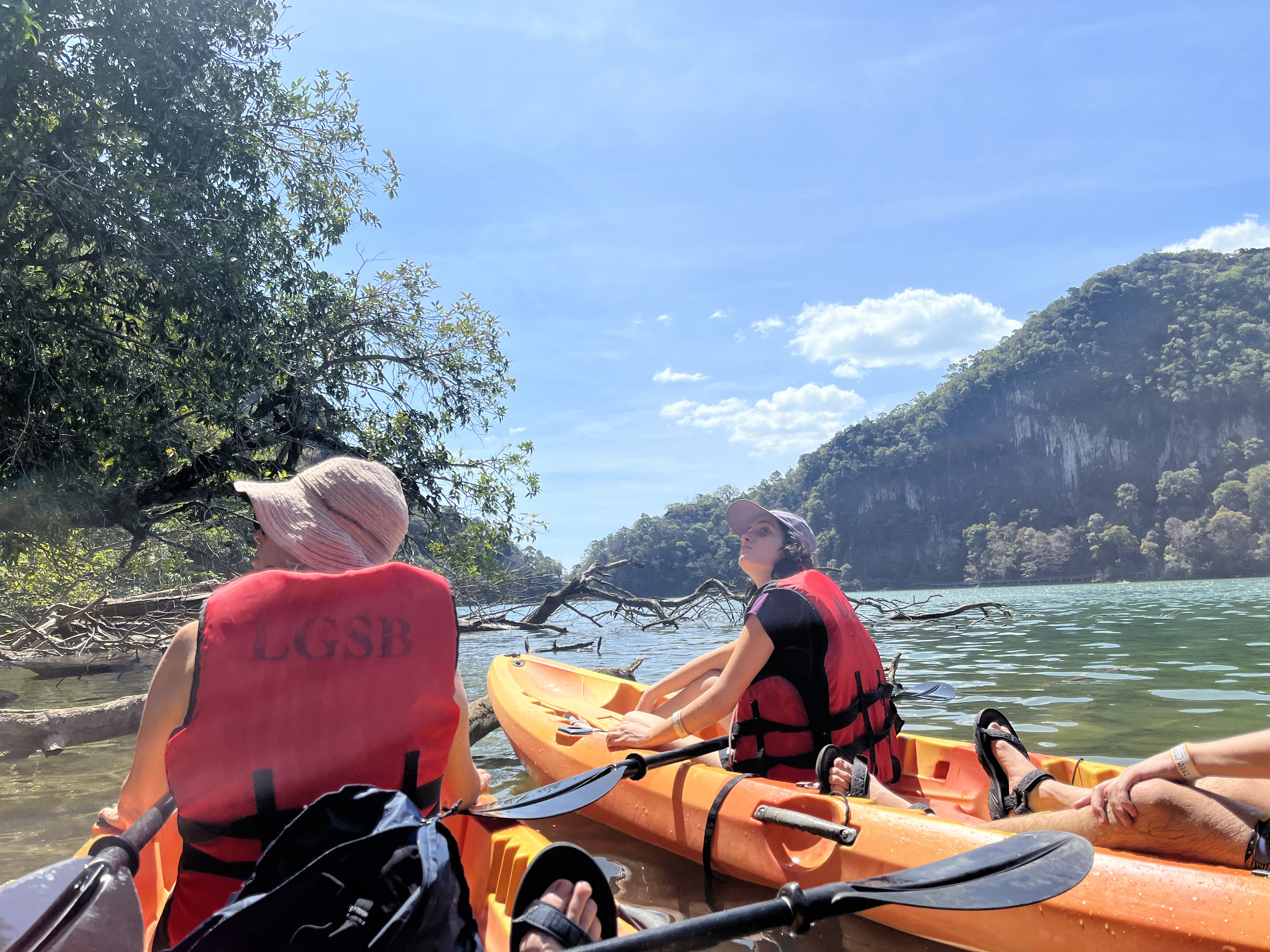

Jo hitched a ride after failing to get back in the kayak following a dip, while Doug looks like the Grim Reaper on vacation
As I lay on the beach, I observed what appeared to be two tourist couples. While the men were just wearing regular bathing suits, the women were wearing burkinis with Covid masks – presumably to cover their faces. Langkawi seemed to have a lot of tourists from the Arab world – perhaps because it offers a tropical island vacation chock full of halal restaurants. While I remain a cultural relativist, it seemed deeply unfair that the men could wear exactly what I was wearing, while the women had to wear these long, heavy, soggy full-body bathing costumes. These women also struck a sharp contrast to Malaysian women, locals and domestic tourists alike. Malaysia is a Muslim-majority country, and most women wear the hijab, but they appear relatively liberated. Malaysian women work and drive and go places without male supervision. But what do I know? All I can do is relay what I have observed.
On our last day, we drove to the Sky Bridge, where for a relatively exorbitant price, you can ride in a cable car up to a mountain and walk across a suspension bridge. And despite the hordes of tourists, the views are breathtaking.

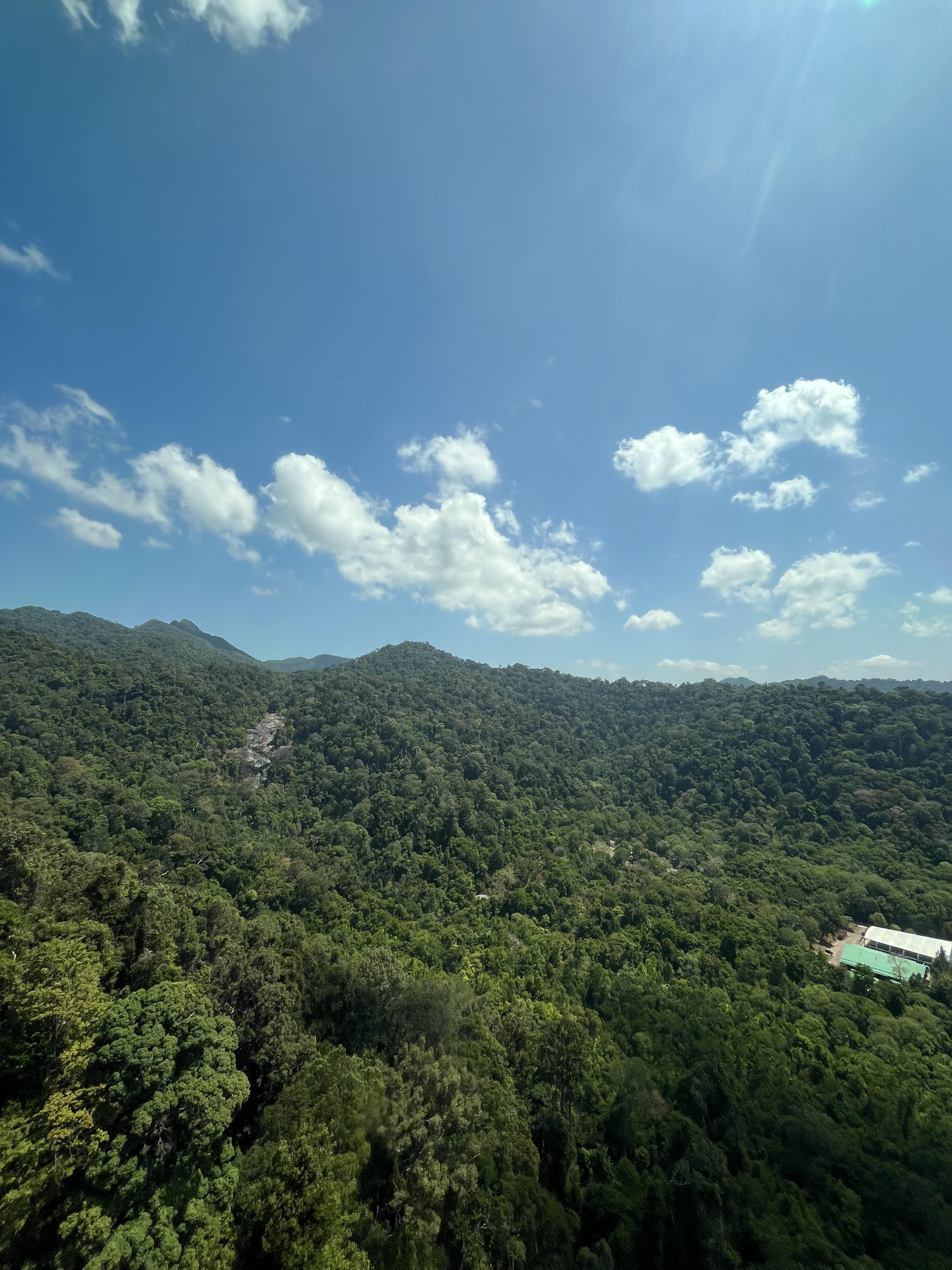

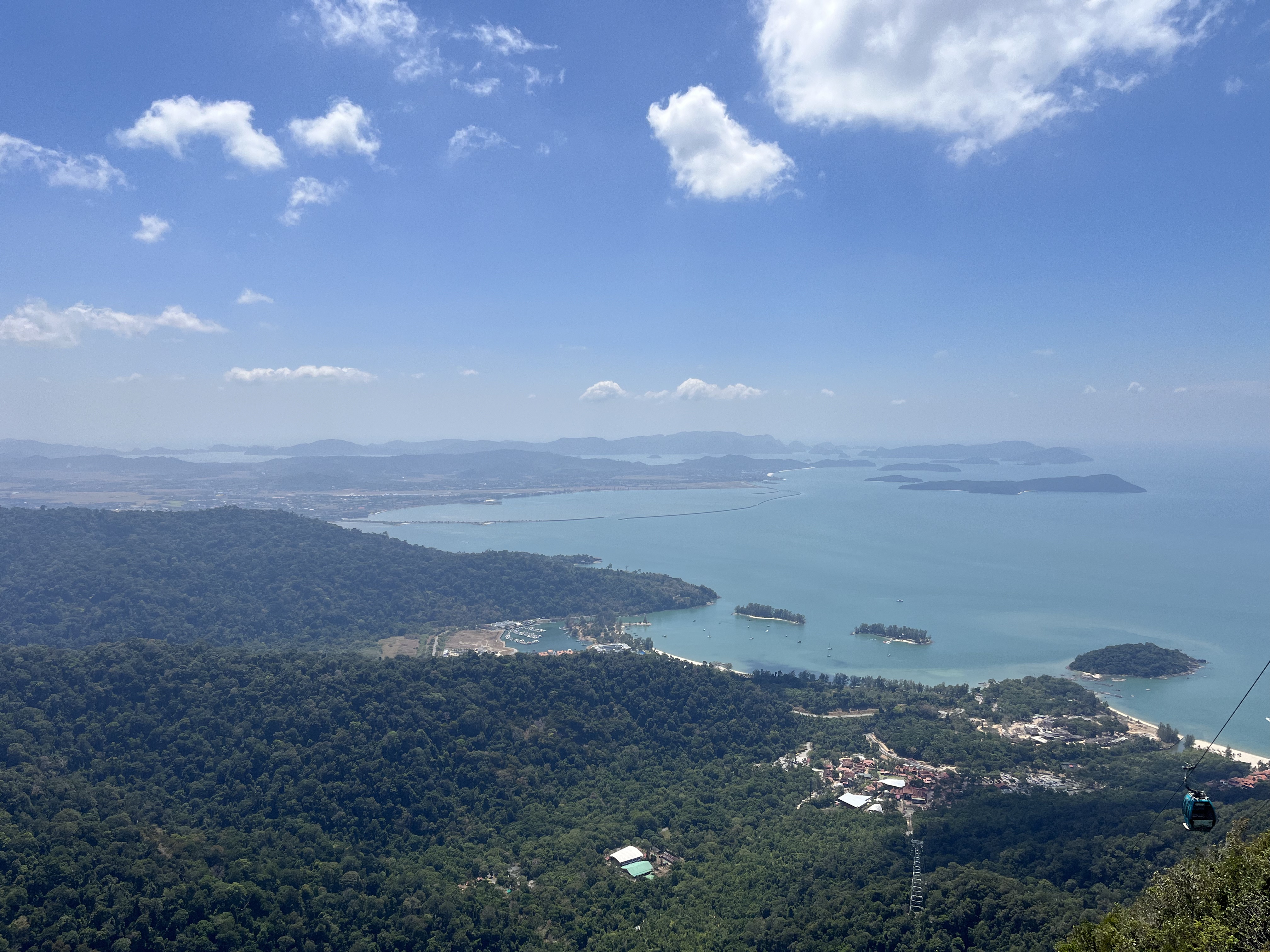
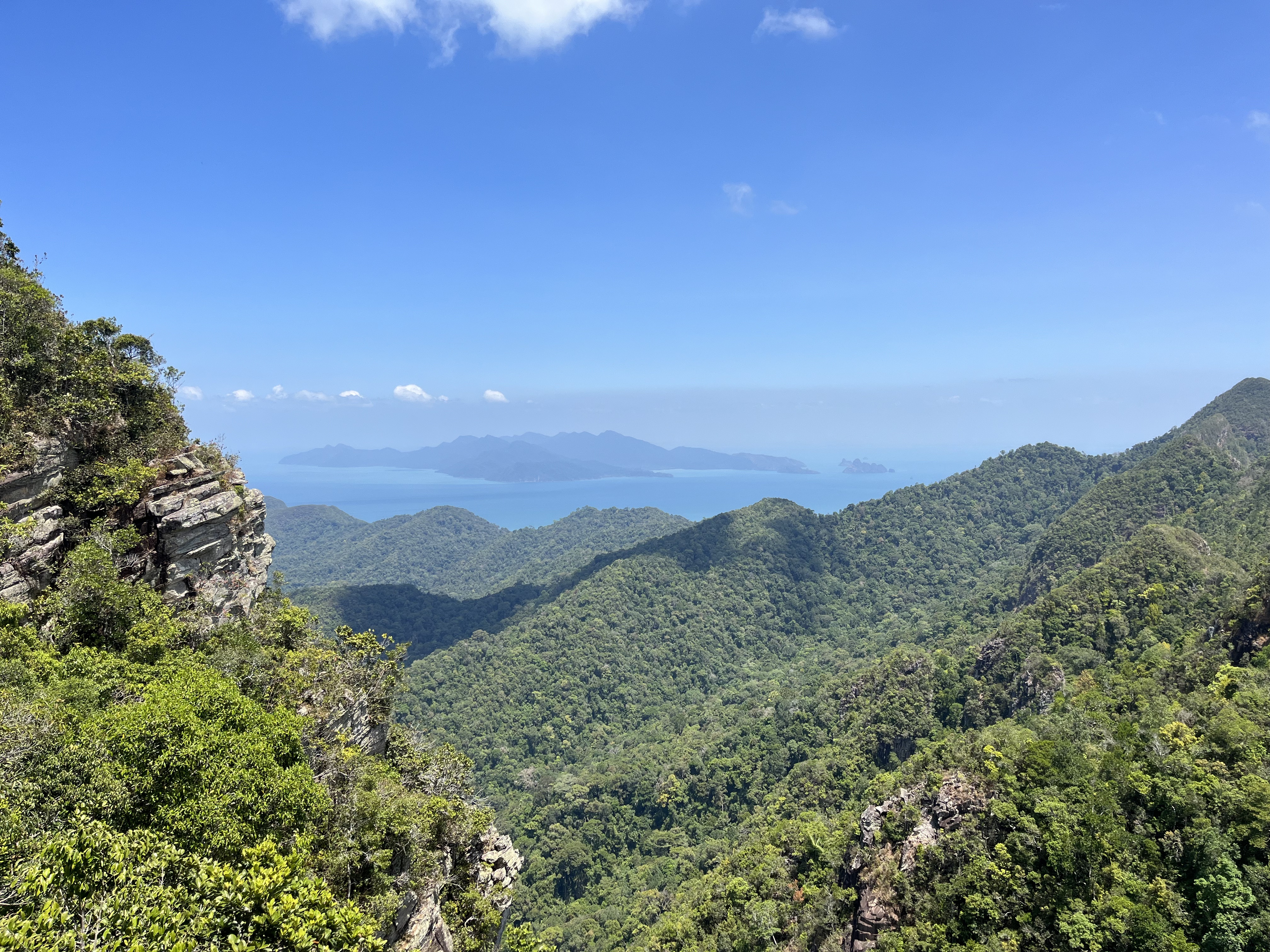
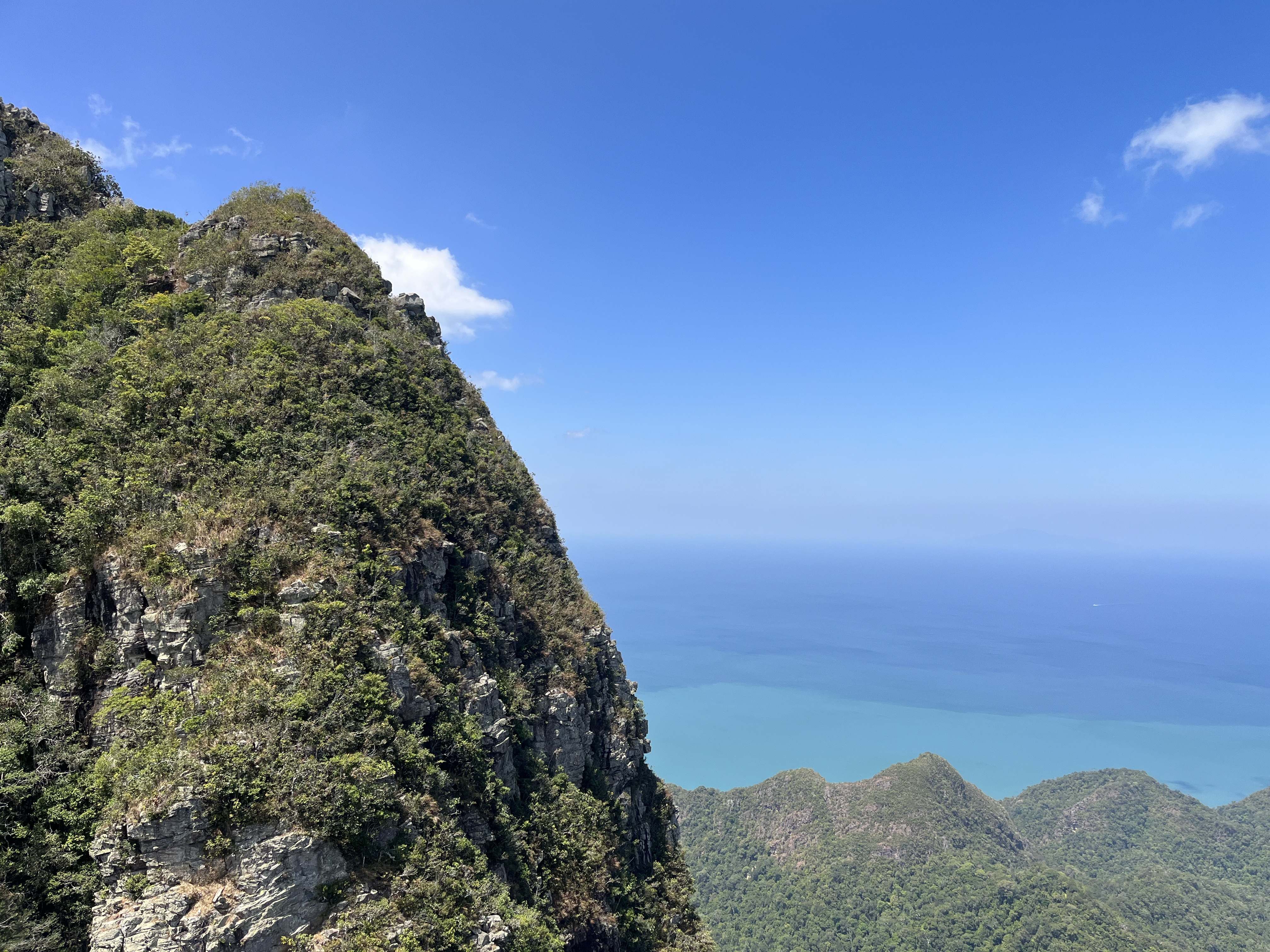
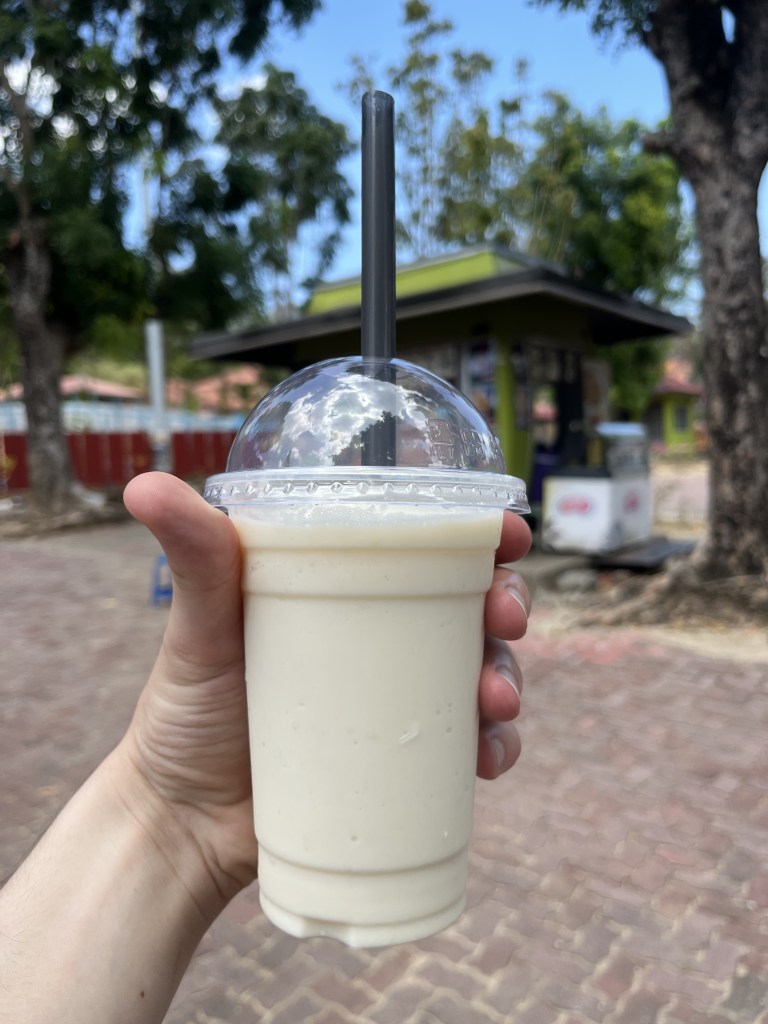
After photobombing in countless pictures of monkeys, I treat myself to an ice-cold coconut shake at the bottom of the mountain. It’s slightly salty, very addictive, and gives me a wicked brain freeze.
We spend the rest of the day hopping from beach to beach. Some are deserted and some are packed with Eurotrash (no offense to any European readers). I enjoy some rojak – a salad of various fruits and vegetables smothered in a sticky, sweet, and spicy sauce – while gazing at the gorgeous ocean.


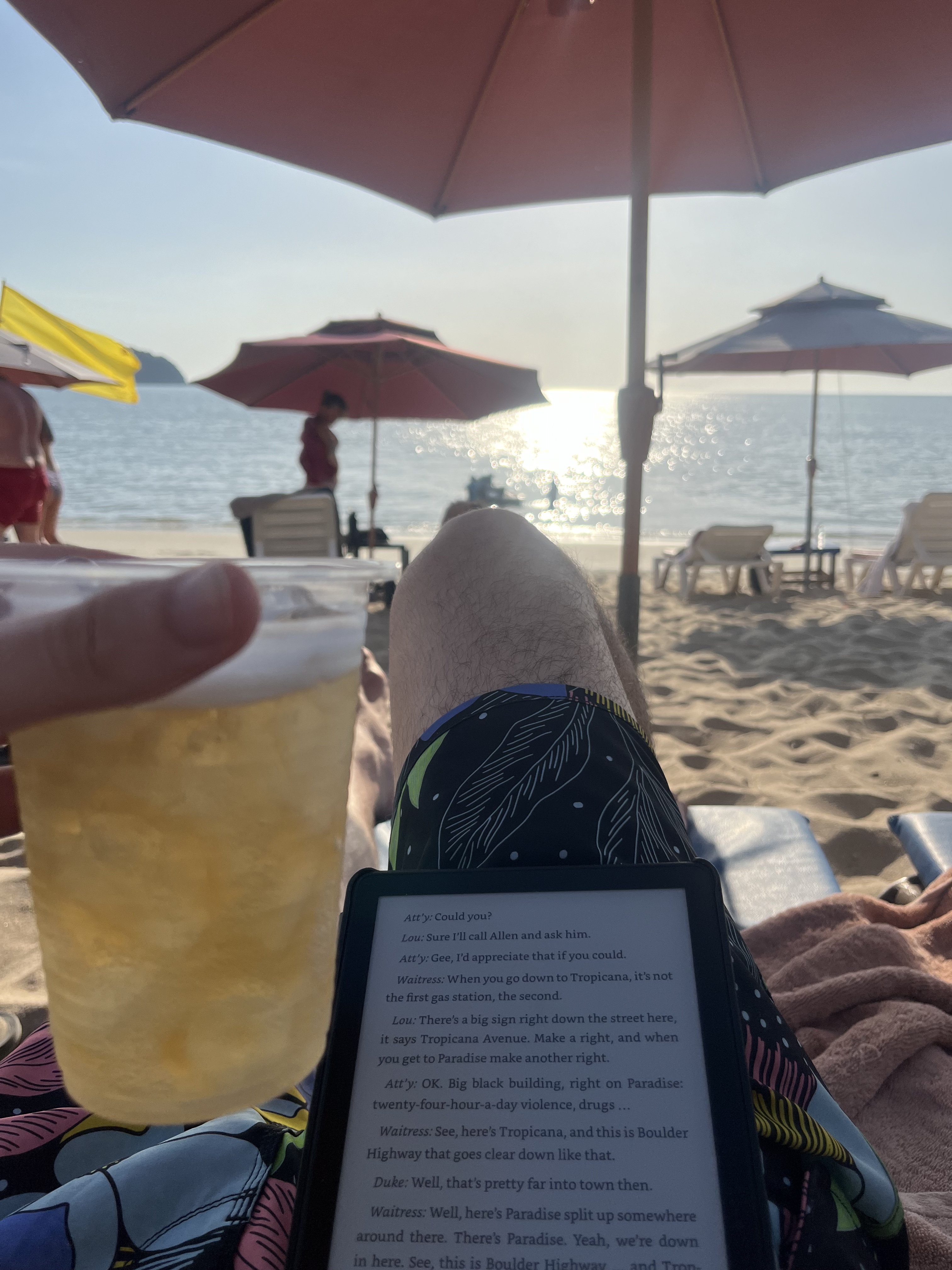
We ended up at the same beach as the first day to watch the sunset, parked in the same chairs, and drinking the same light beer on ice. I finished Fear and Loathing in Las Vegas, which will serve as inspiration for my upcoming trip to Thailand (joking).
The next night I bid a tearful goodbye to my family back in Singapore. While I’m now slightly grown up and have done some traveling without them, I still love traveling with them. It’s where it all began after all, with adolescent adventures across the Pacific. They truly made me who I am today: an intrepid, curious traveler who has a lifetime of adventure ahead of him.
Until next time.


 Eat It
Leave a reply to ripcityramblers Cancel reply