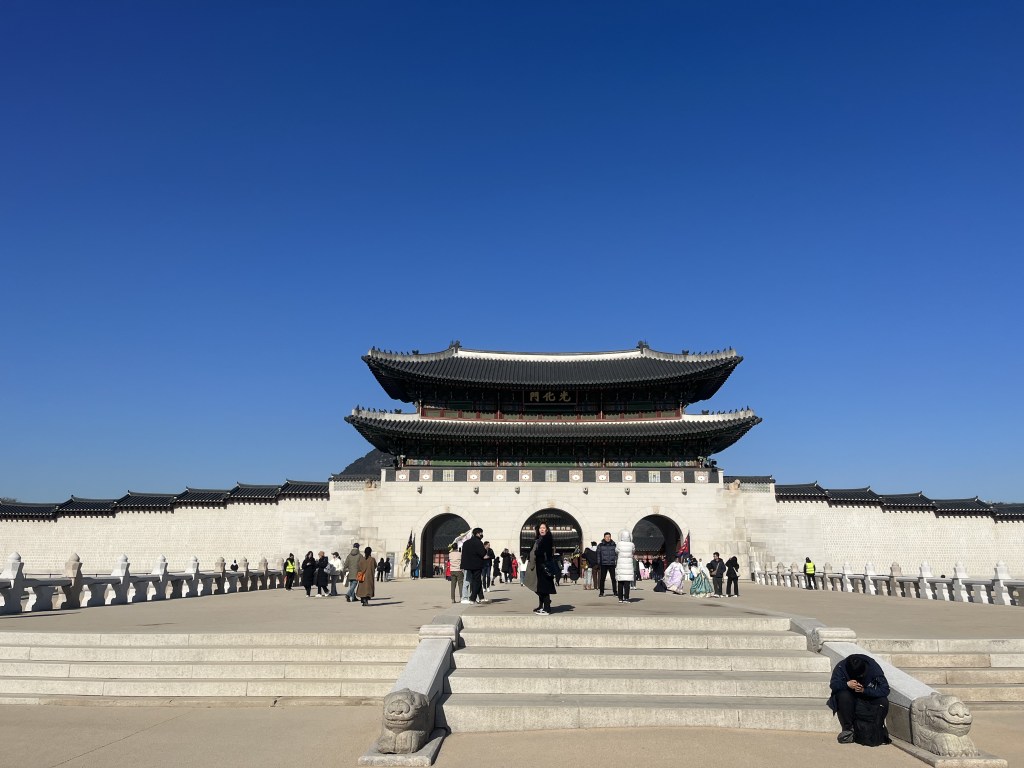
I’m back folks – cue the music. After an extended winter break where I did a lot of cooking and a lot of ivy-pulling, I have returned to the Asian continent. I’ll summarize my vacation cooking highlights briefly: I made a Sunday sauce, brisket, latkes, French onion soup, pickled persimmons, calamari, and a lot of focaccia. While I love cooking, I love eating even more, and I landed in the Korean metropolis of Seoul with that mindset. My good friend Henry, studying abroad at Seoul’s Yonsei University, generously agreed to accommodate me and show me around his adopted city. I happened to be visiting Korea at the same time as our mutual friend Ellis, who was visiting Henry as well as their sister who teaches English in Sokcho, a smaller town. Henry proposed that we visit Sokcho so I could see a different, less metropolitan side of Korea, and I concurred. He met me at the train station, and after a quick dinner, I managed to stay up decently late (AKA I bested my jet lag).
The following afternoon, Henry and I met up with my friend Will, a character you may remember from my previous Singapore tales. Will happened to be in Seoul at the same time as me, so Henry took us to a Michelin-guide bibimbap spot. I ordered a beef tartare bibimbap, and got a kimchi pancake for us to share.
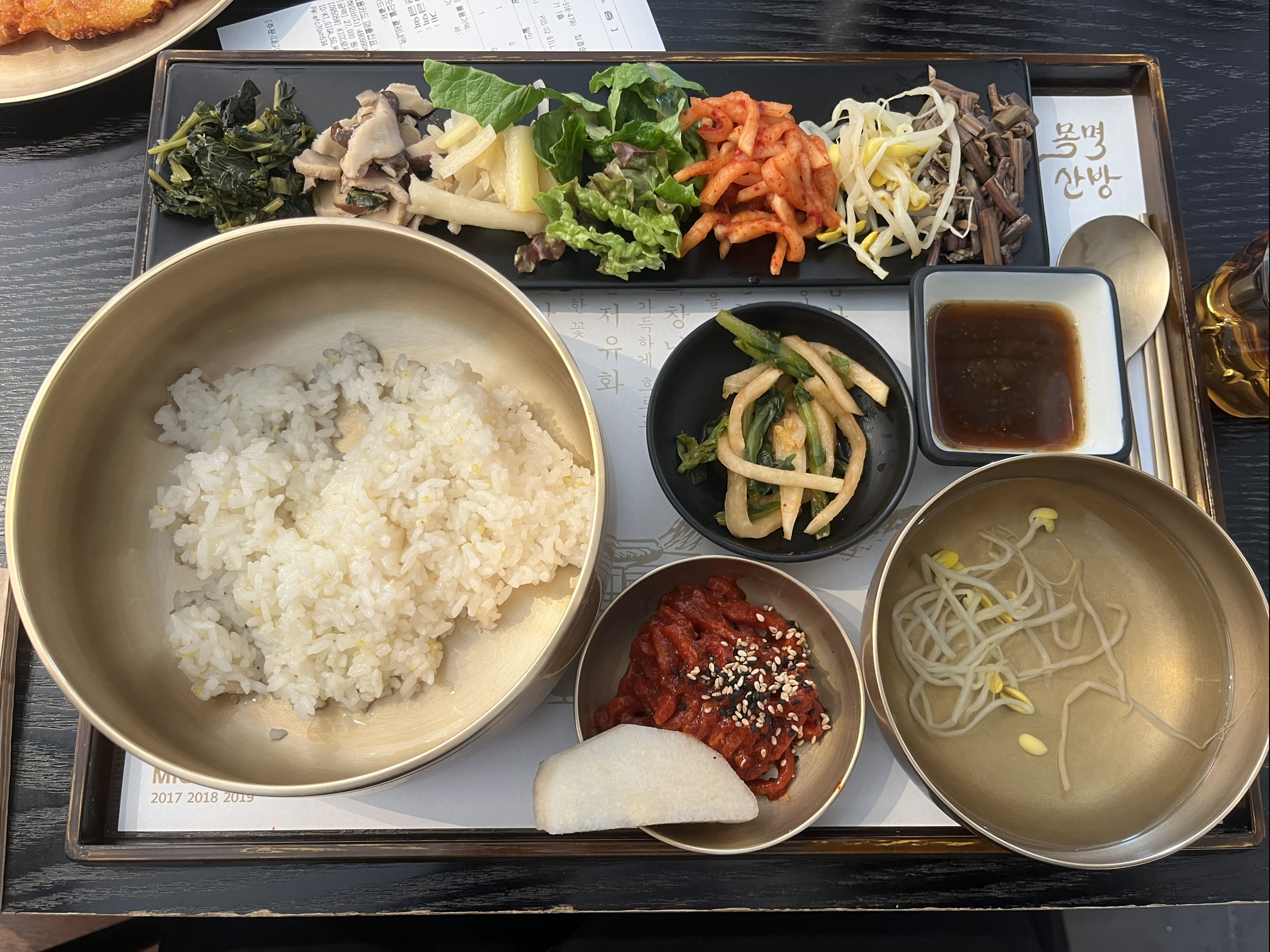


I always thought that bibimbap necessitated the hot stone bowl, but apparently that’s just one variety. Stone bowl or not, this was absolutely fantastic. The kimchi pancake, like a lot of food in Korea, was absolutely dripping with mozzarella. If you’re less familiar with Korean cuisine, you might be surprised by the fact that Koreans have a serious love affair with cheese. It’s an interesting decision for a people that I would assume are mostly lactose intolerant, but as someone who is not lactose intolerant (a miracle considering my ancestry), I’m a big fan. Presumably it’s a result of the occupation of Korea by America, and the decades of subsequent influence.
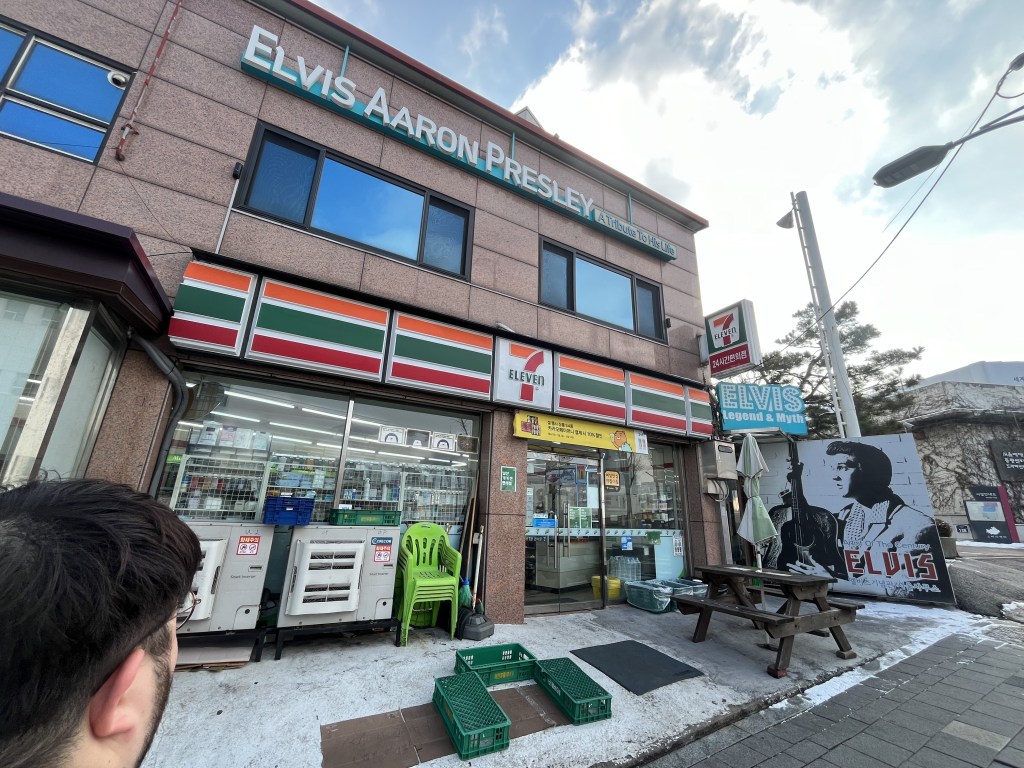
From there, we engaged in one of my favorite activities while traveling: aimless wandering. This area of Seoul, called Myeong-dong, is packed full of fancy department stores and foreign tourists. However, my feet found something that was a little more my speed.
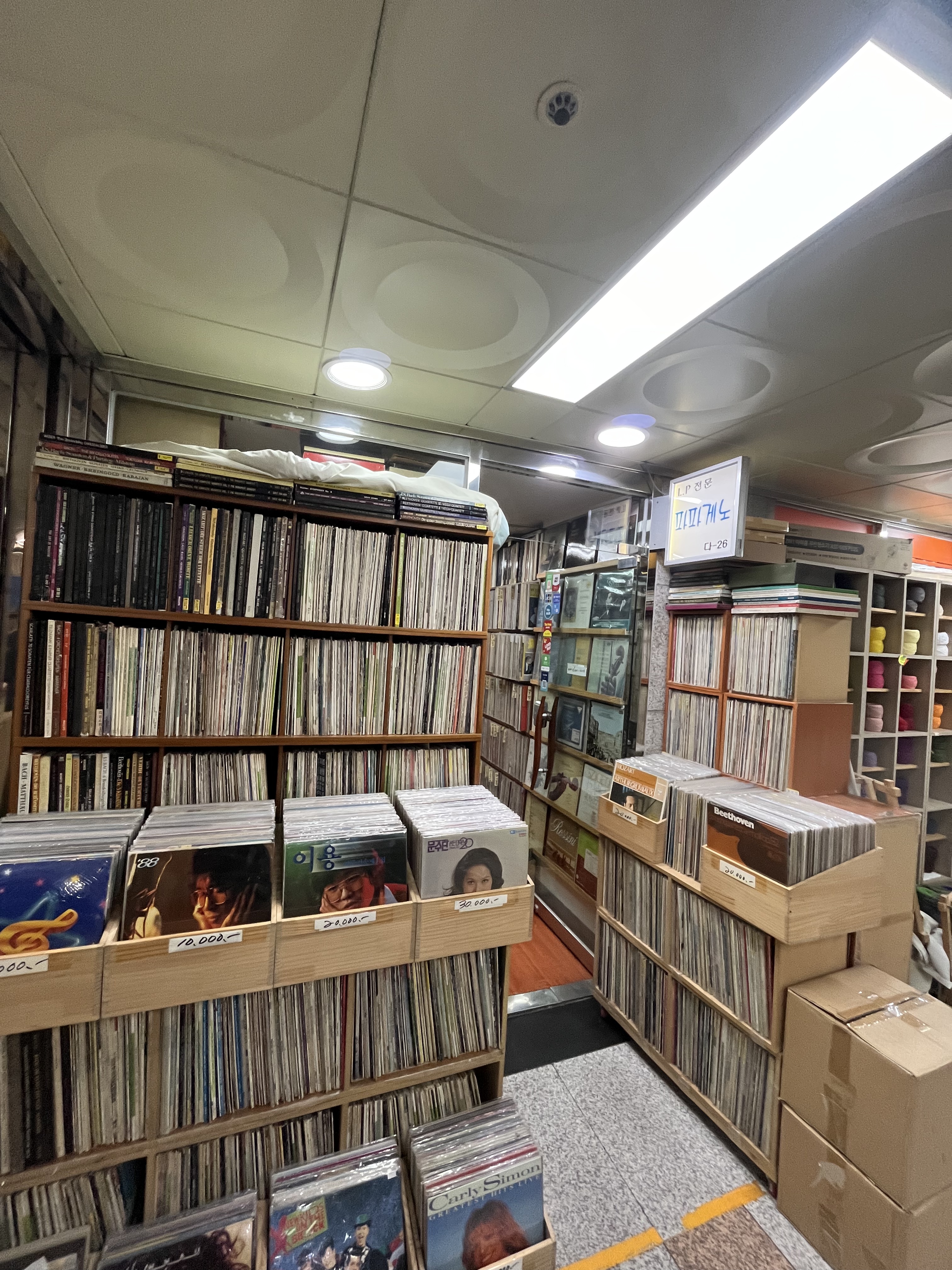
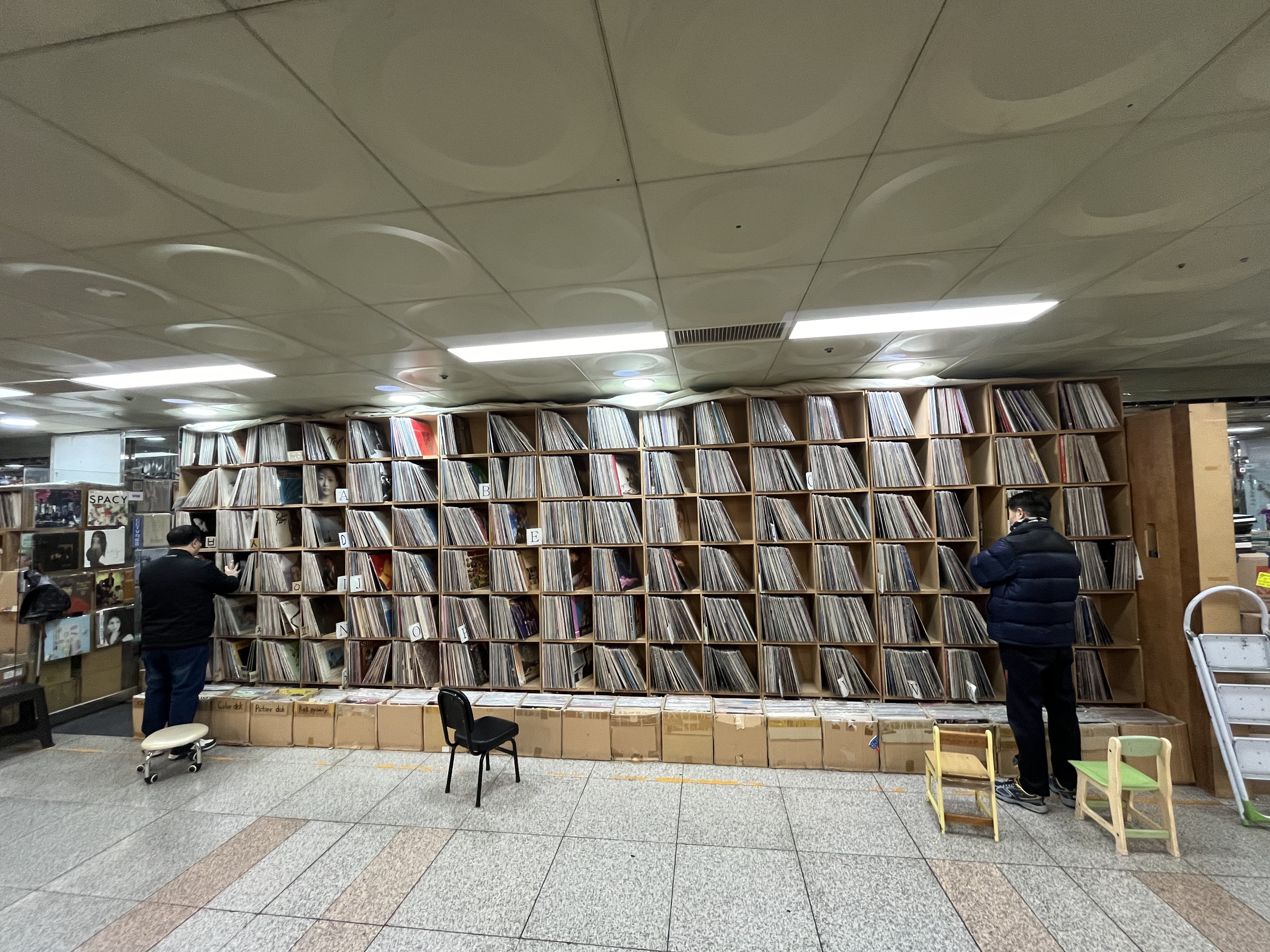
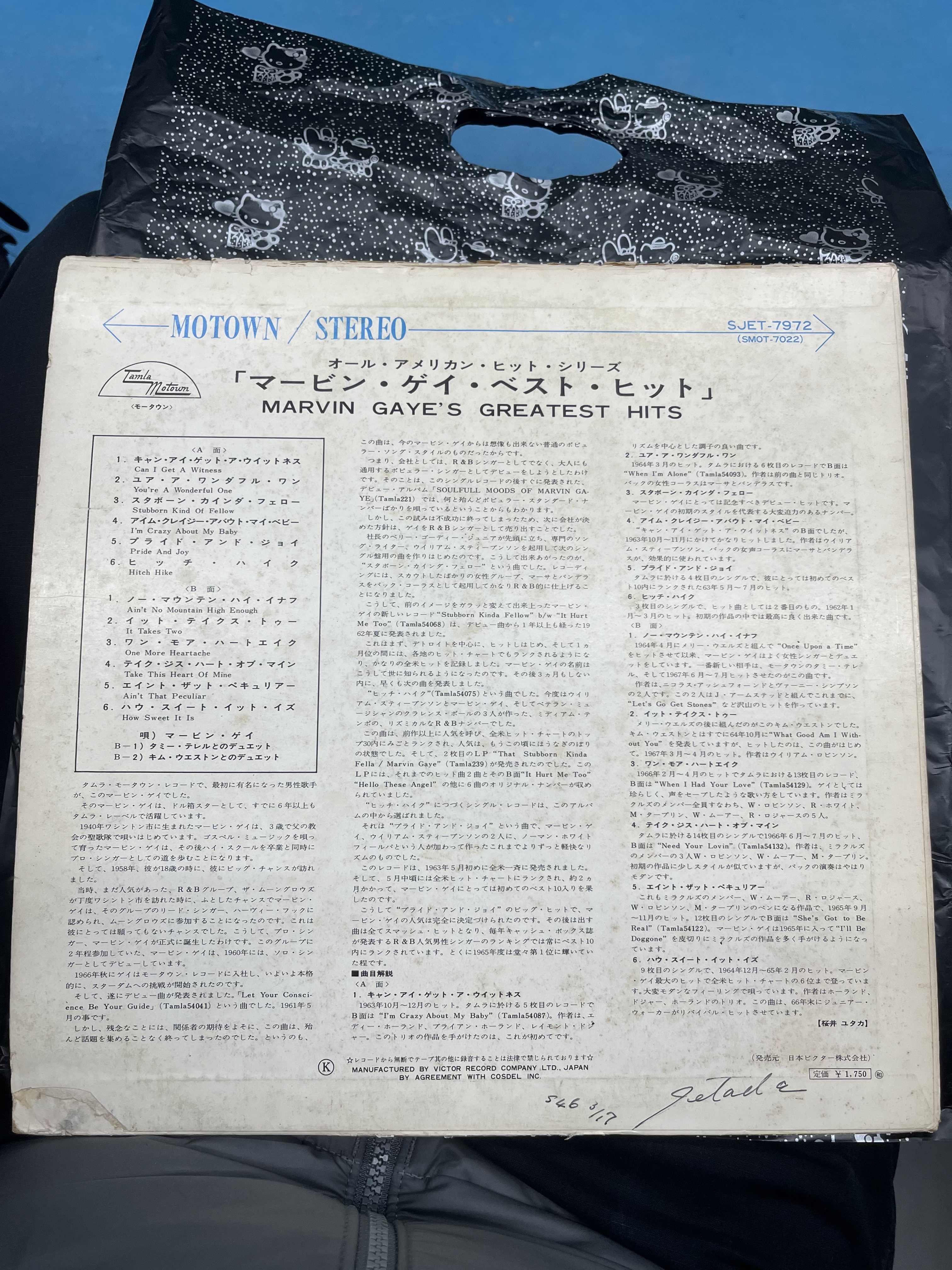
In a slightly dingy underground shopping center, we stumbled upon a well-stocked vintage record shop. Henry and I, being audiophiles (a term that is somehow more pretentious than it sounds) were drawn in as if attracted by a tractor beam. It appeared to be mostly American music, but there were plenty of Japanese and Korean records as well. Henry had the luxury of taking home a few diamonds in the rough (including what appeared to be a Japanese hip-hop album with a cover spoofing Spike Lee’s Do the Right Thing). I limited myself to one (1) record, a Japanese pressing of Marvin Gaye’s Greatest Hits, which judging by its tracklist, probably came out in the late 1960s. I don’t remember how much it cost, but I’m going to guess around $5.
We got so caught up in flipping through records, that we missed our bus. However, after rescheduling and hustling to the station in east Seoul, we rolled into Sokcho just in time to catch the sunset.

Sokcho is a smaller, seaside town on the east coast of the Korean peninsula. Our cheap hotel room provided a brief moment of confusion.
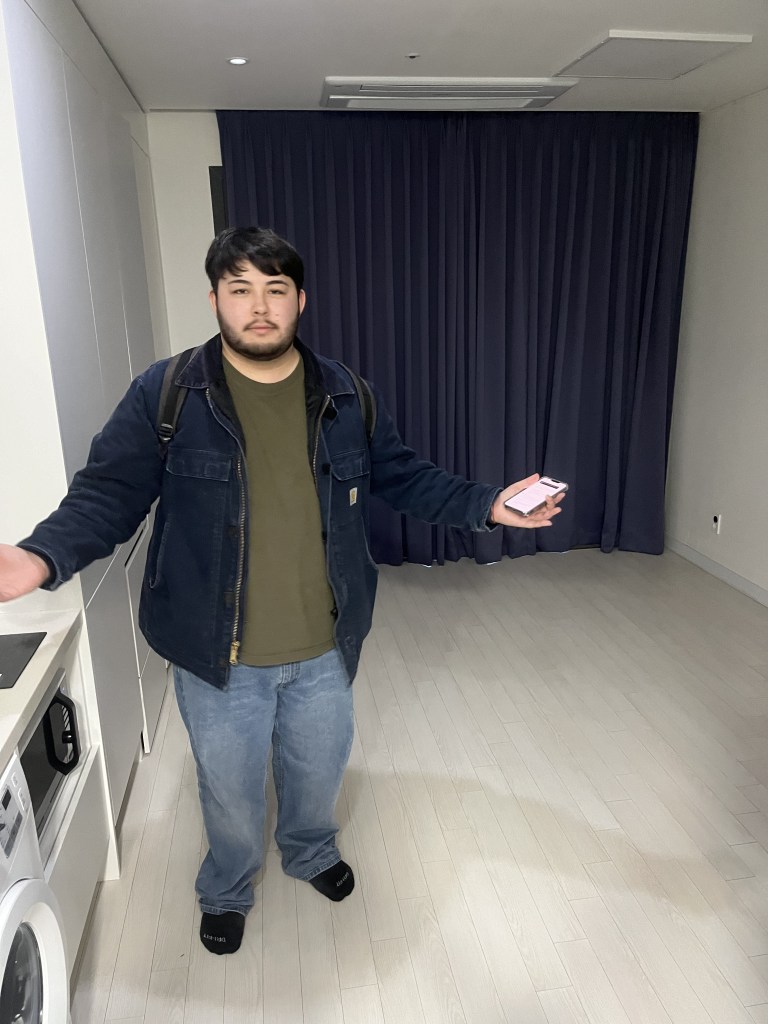
Initially, we thought our hotel was so cheap that it came without furniture. While it did, things made more sense once we discovered futons in a closet.
Once Ellis arrived, Henry and Ellis decided to introduce me to makgeolli, a Korean alcoholic rice wine. We picked up a cheap bottle of the cloudy fermented beverage from the convenience store adjoining our hotel.
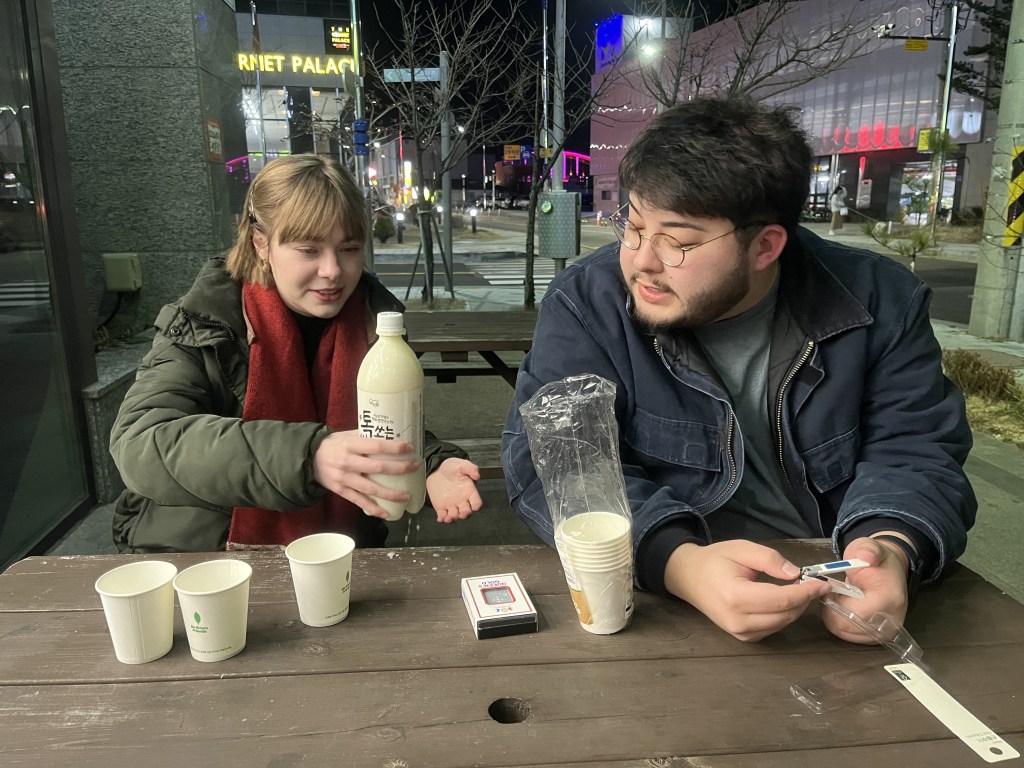
Now, I like to think that I have a pretty sophisticated palate, at least for someone my age. But I did not enjoy the makgeolli. To be honest, it smelled like sourdough starter, and probably tasted like it too (I have never tasted sourdough starter but I’m very familiar with it otherwise). Henry informed me that there was a lot of artisan makgeolli out there, so maybe part of the reason I disliked it was because this convivence store makgeolli was like the Olde English 800 of makgeolli. But I’m a trooper, so I drank two Dixie cup’s worth before our taxi arrived.
We were whisked away to a KBBQ spot, where I met Ellis’s mom Lara, their sister Aubrey, and two of Aubrey’s friends. Here are my thoughts on the differences between KBBQ in the States and in Korea. For one thing, in Korea there are more accoutrements. In addition to a variety of pickled vegetables, there were several dipping condiments including ssamjang, something very spicy, wasabi, something with soy sauce, something with scallions, salt, and wasabi. The serving of lettuce and sometimes perilla leaf (shiso) is ubiquitous, in contrast to the States. I’m a big fan of the lettuce wraps because you can trick your brain into thinking this is a healthy meal. In fact, it’s basically a salad.
We also had someone cook and cut up our meat for us, and then place it on a hot plate for us to pick at at our leisure. Our drink of choice for this meal was soju mixed with a cider that tastes pretty much like Sprite. This was a masterful spread.


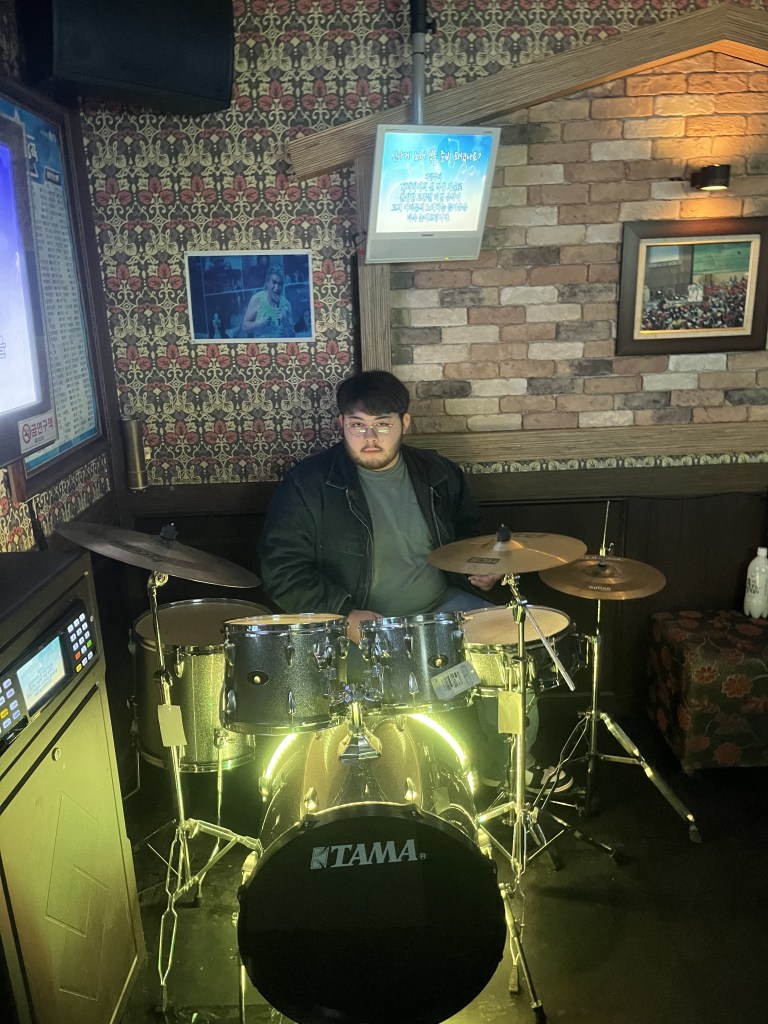
Afterwards, we ended up at a karaoke spot that absolutely reeked like cigarettes and had for some reason, a drum set in our very small room. I’m not the biggest fan of karaoke, but since I’ve adopted a “when in Rome” philosophy, I had a lot of fun with Ben E. King’s ‘Stand By Me.’
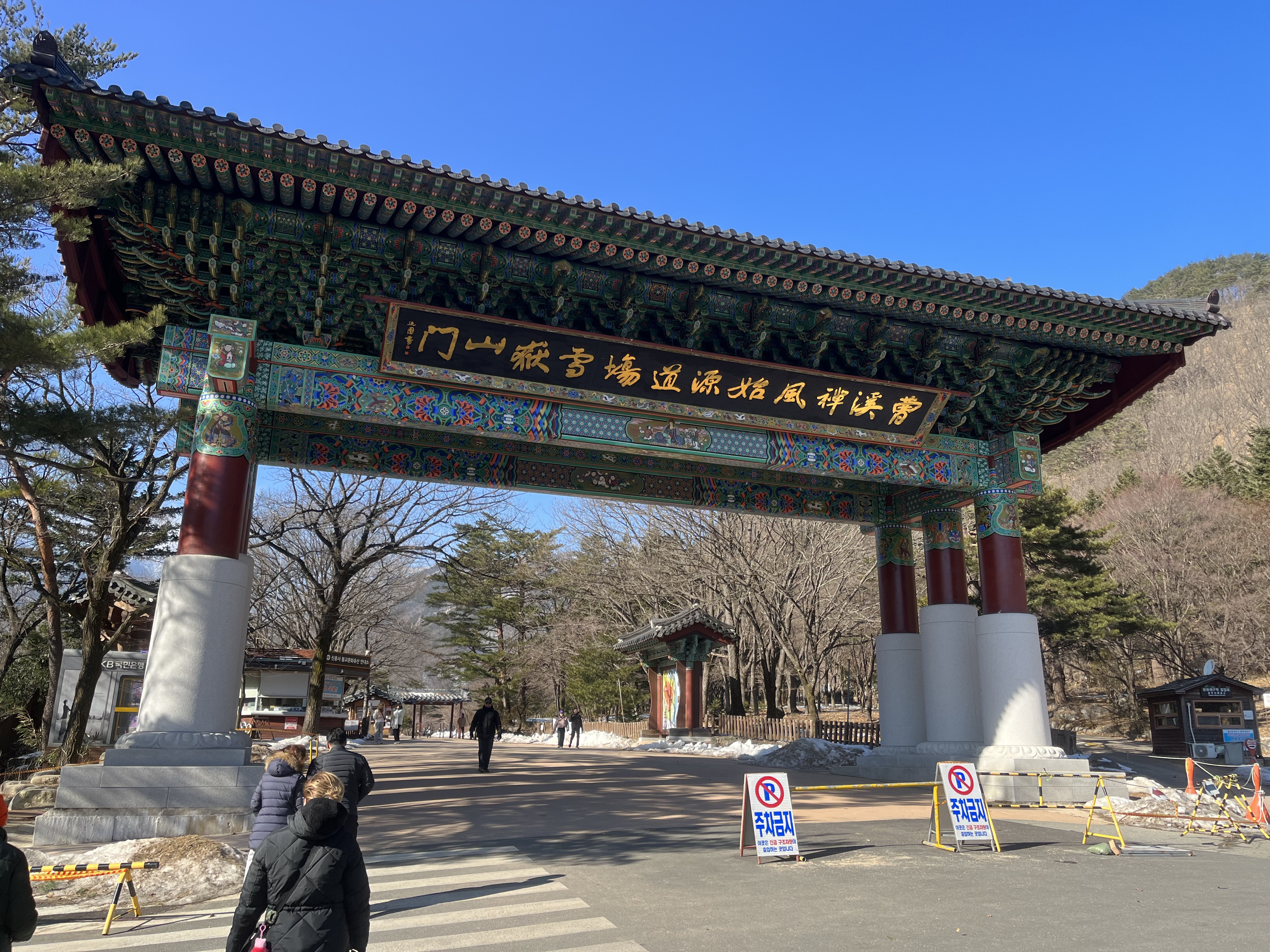
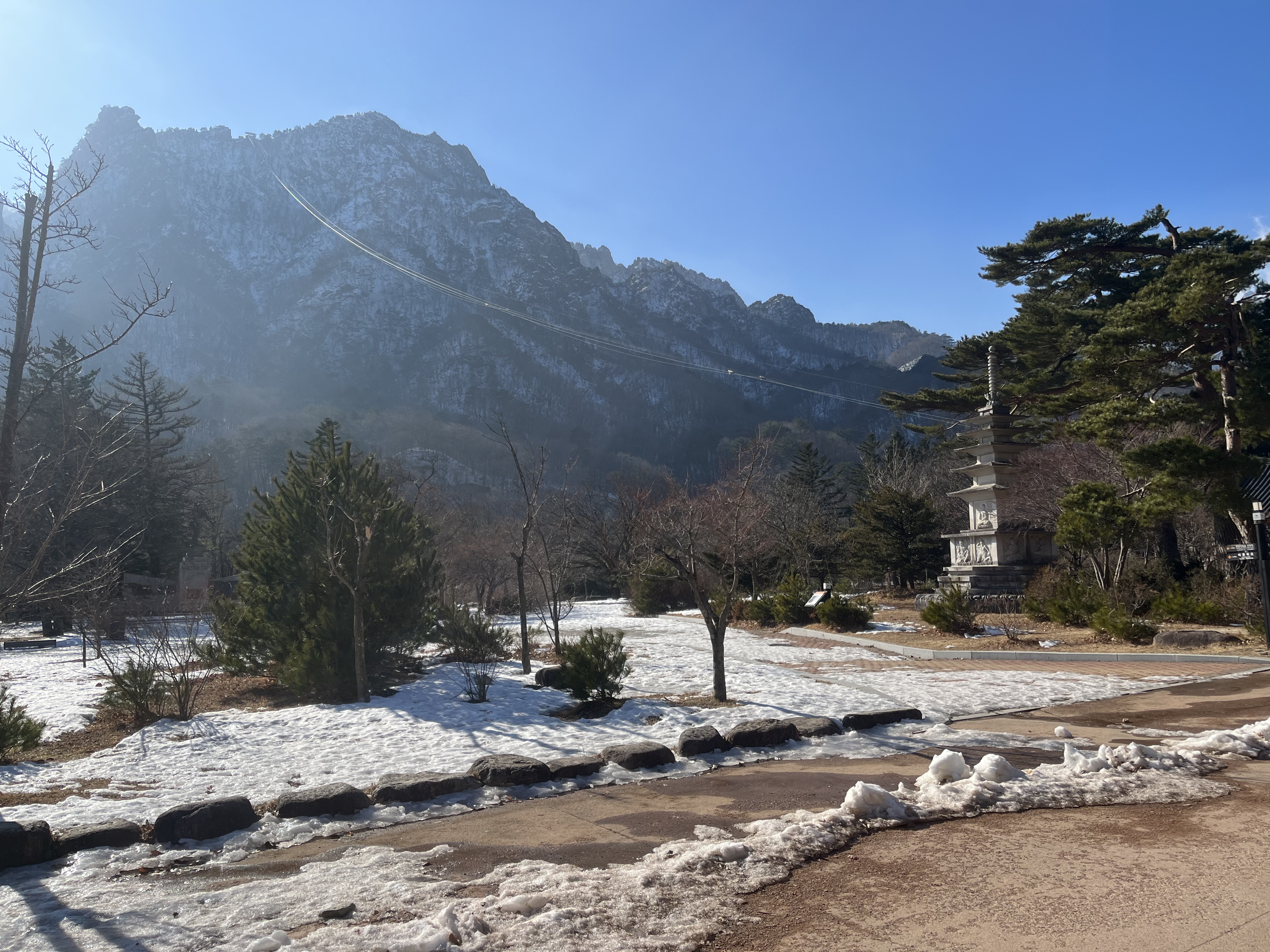
The next morning, we set out bright and early for Seoraksan, the third-highest peak in South Korea. There’s a big Buddha and a monastery nestled into the mountains. It was windy, freezing, and absolutely beautiful. Here I also inadvertently sampled some tea that tasted pretty much like bitter, fruity dirt and had some, let’s say, immediate impacts.
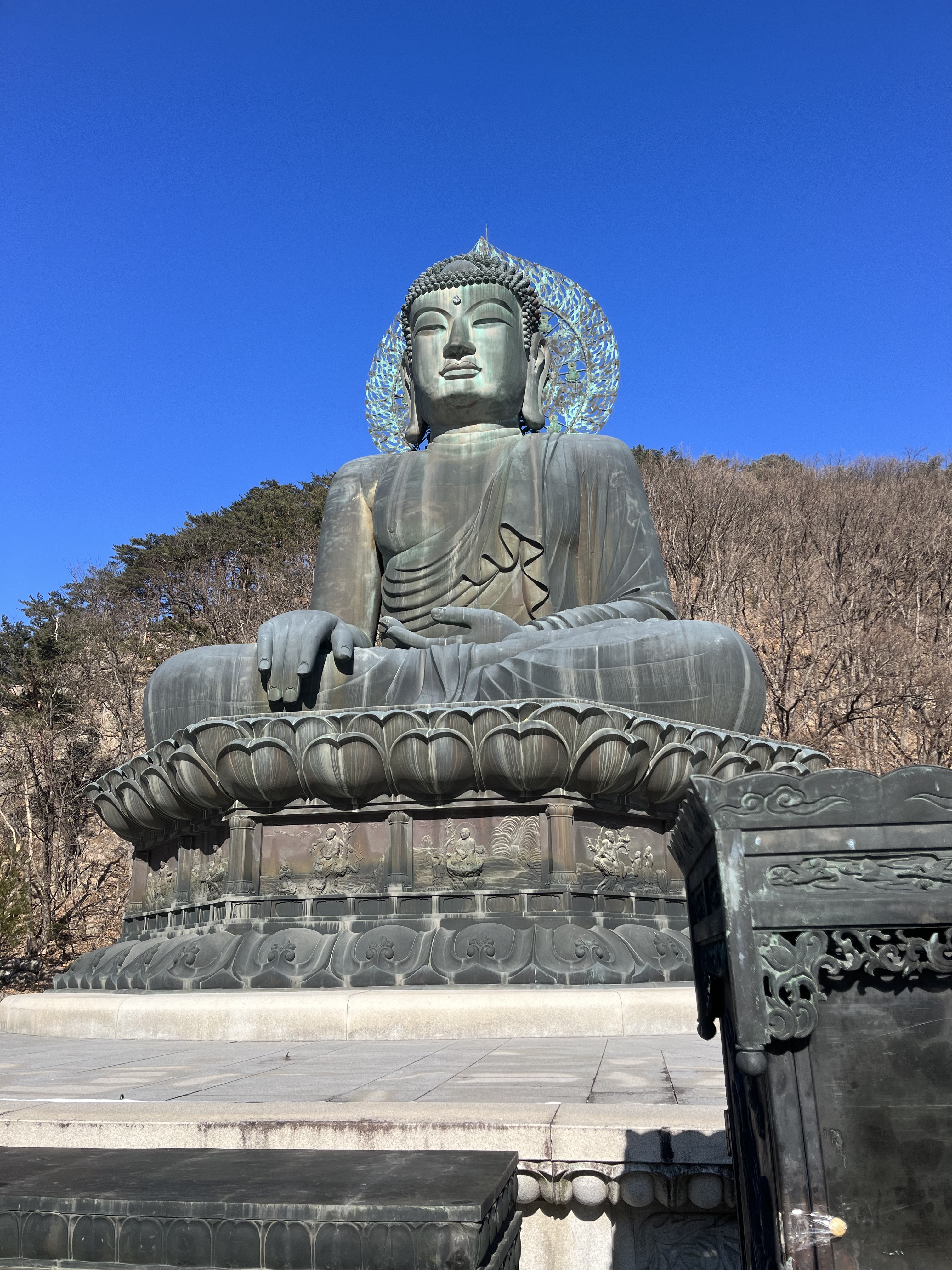
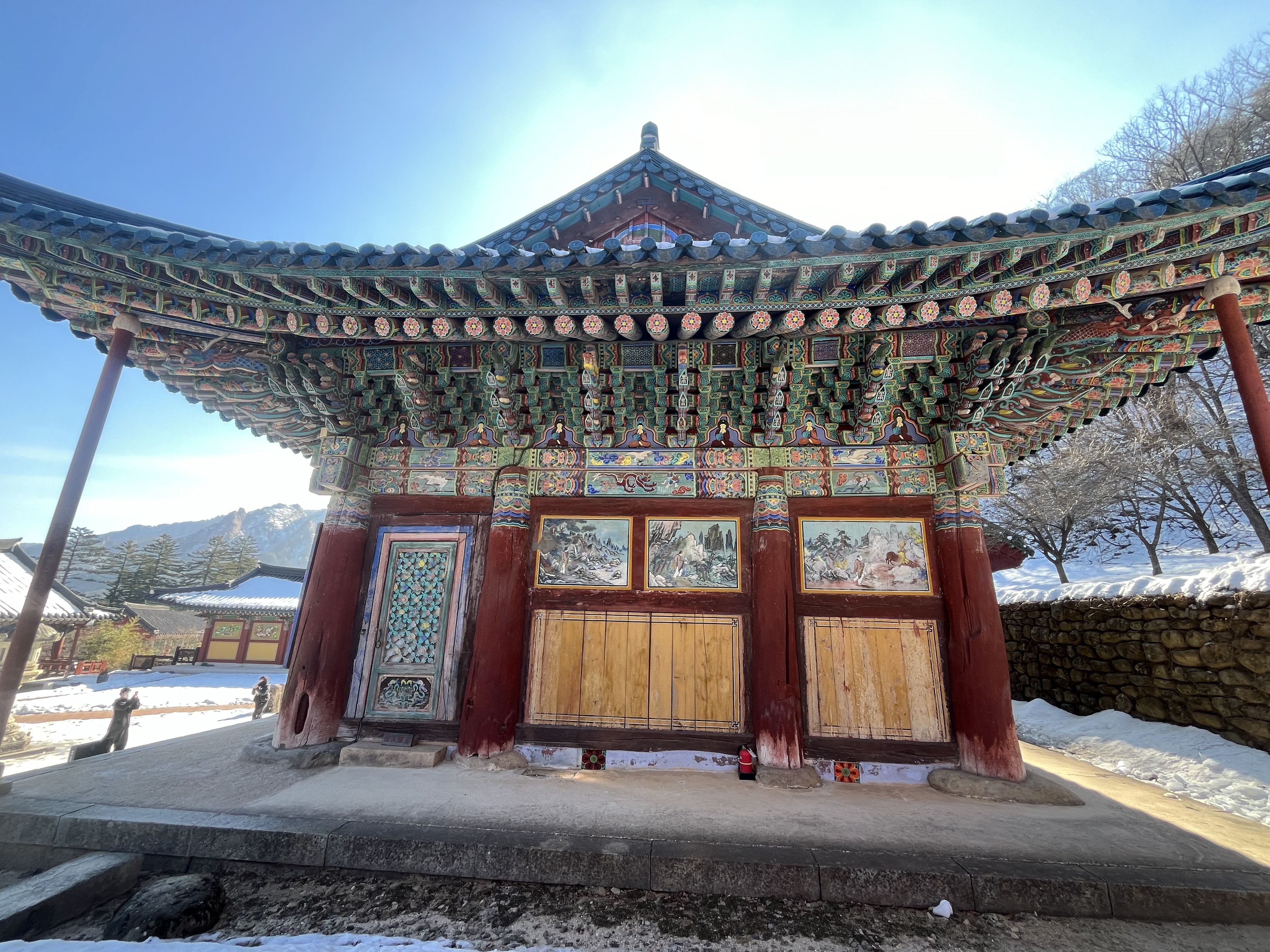
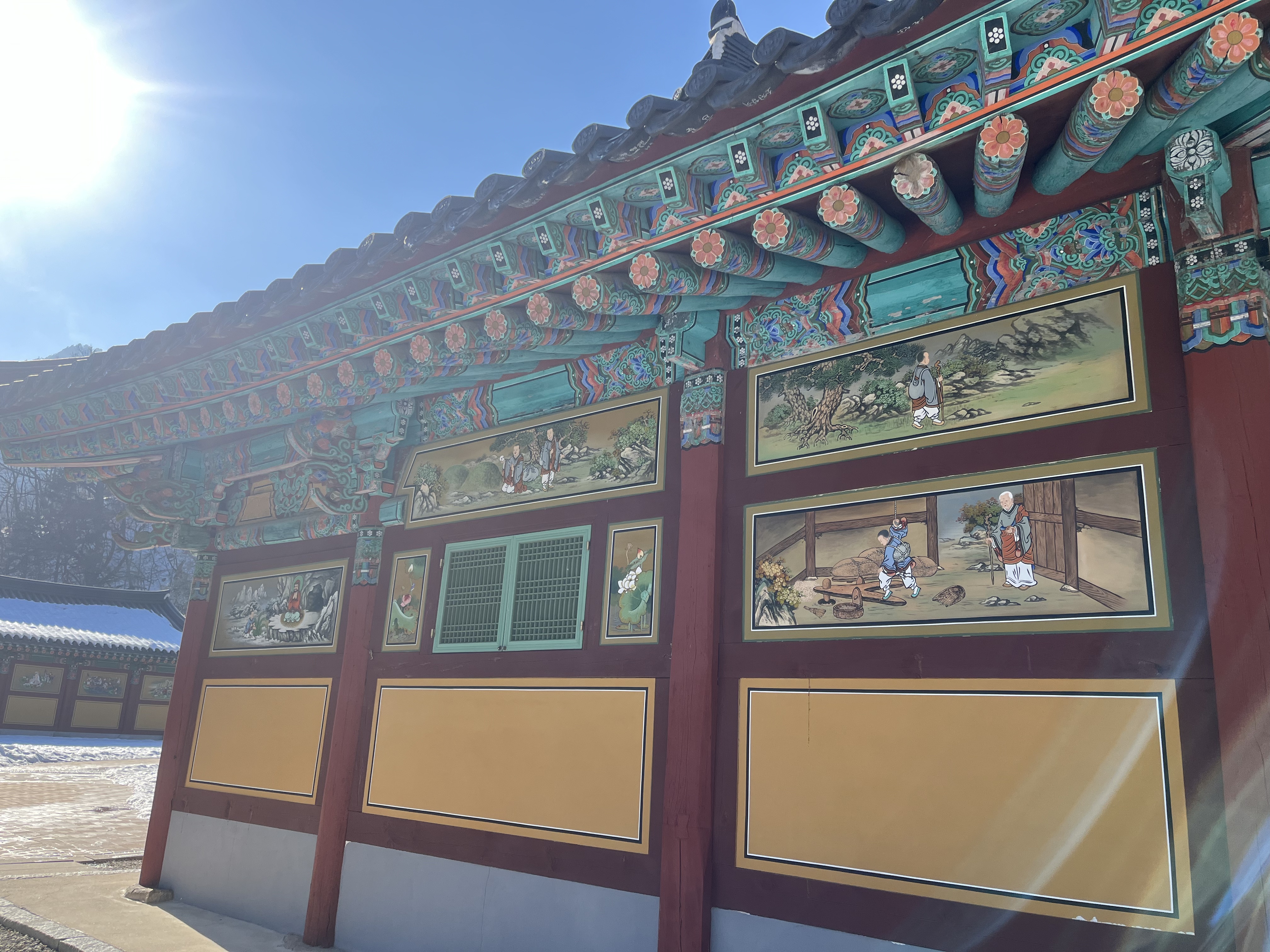
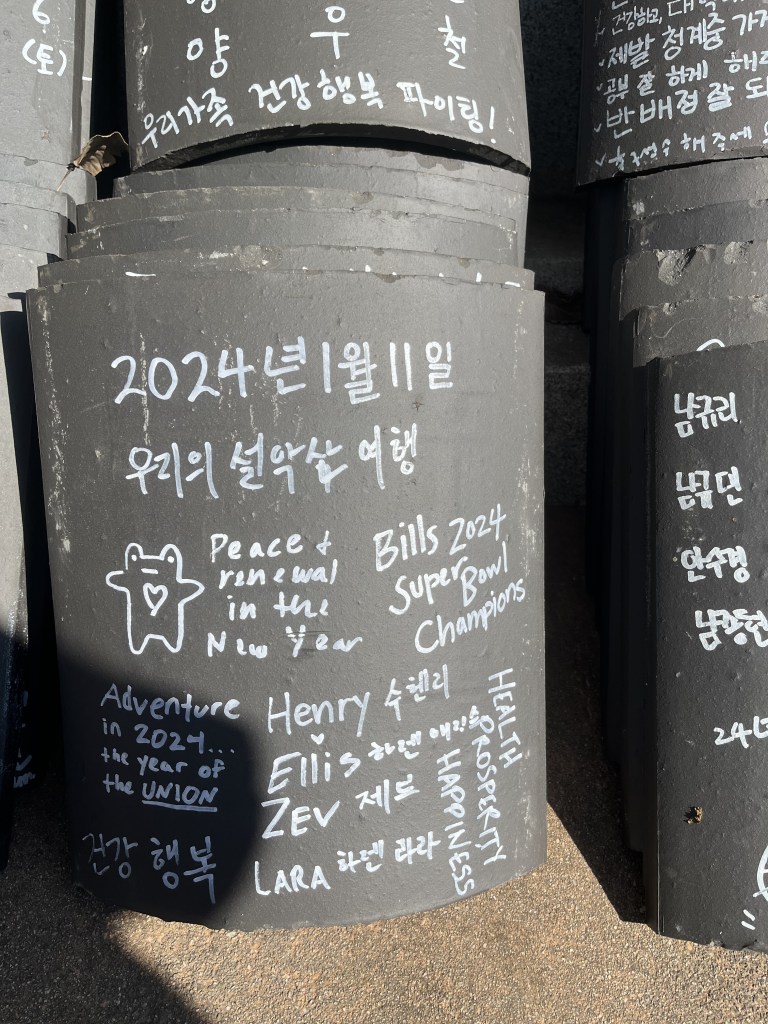
We found ourselves back in Seoul for dinner, and chose to indulge in some delicious stew.


This pork rib and kimchi stew was absolutely fantastic, and the banchan (side veg) were pretty good too.
While Lara and Aubrey retired to their hotel, the three college students decided to sample some of Seoul’s nightlife. Back home, I had done some various research on Seoul and expressed a desire to visit an LP bar. A phenomenon that originated in Japan but has now spread worldwide, LP bars are bars featuring large record collections, a kick-ass stereo, and bartenders that double as DJs. While several spots were recommended by the Lonely Planet, at around midnight we rolled into a random spot on the second floor of a nondescript building that was barely noticeable from outside. There was not another soul in there, but we sat down at the bar and once armed with whiskey highballs, started requesting music left and right.

While we started off with specific song requests – ‘Dirty Work’ by Steely Dan, ‘All Along the Watchtower’ by Jimi Hendrix, ‘As She Was’ by Talking Heads – the later it got, the requests devolved into stupid questions like “do you have Santana?” To which our DJ would pull about a dozen records off the shelf and let us flip through them. Of course he had Santana. After hearing our last song of the night around 2 AM – ‘Layla’ by Derek and the Dominoes – we stumbled into the mostly deserted Seoul streets and somehow made it back to our respective places of lodging.
After waking up at the crack of 11:30, we reconvened for a Michelin-guide bowl of chicken ramen.

To say this ramen was rejuvenating would be an understatement. Not only did it hit the spot, but I was blown away by the depth of flavor coaxed out of the humble chicken. You might be asking yourself if this was some sort of Korean ramen. The answer is no. Because of several decades of brutal colonization, and many more of strong influence, Korea is chock-full of Japanese cultural artifacts. I didn’t expect to have one of the best bowls of ramen of my life in Seoul, but I’m very glad I did.
After Ellis’s departure, a stuffy nose did not deter me from pounding the pavement in search of more good eats. At a local market, I enjoyed some Korean classics. From left to right we have tteokbokki (a chewy rice cake with a texture somewhere between mochi and gnocchi in a sweet and spicy sauce), kimbap (Korean sushi), japchae (stir-fried glass noodles with veg), and mandu (dumplings).
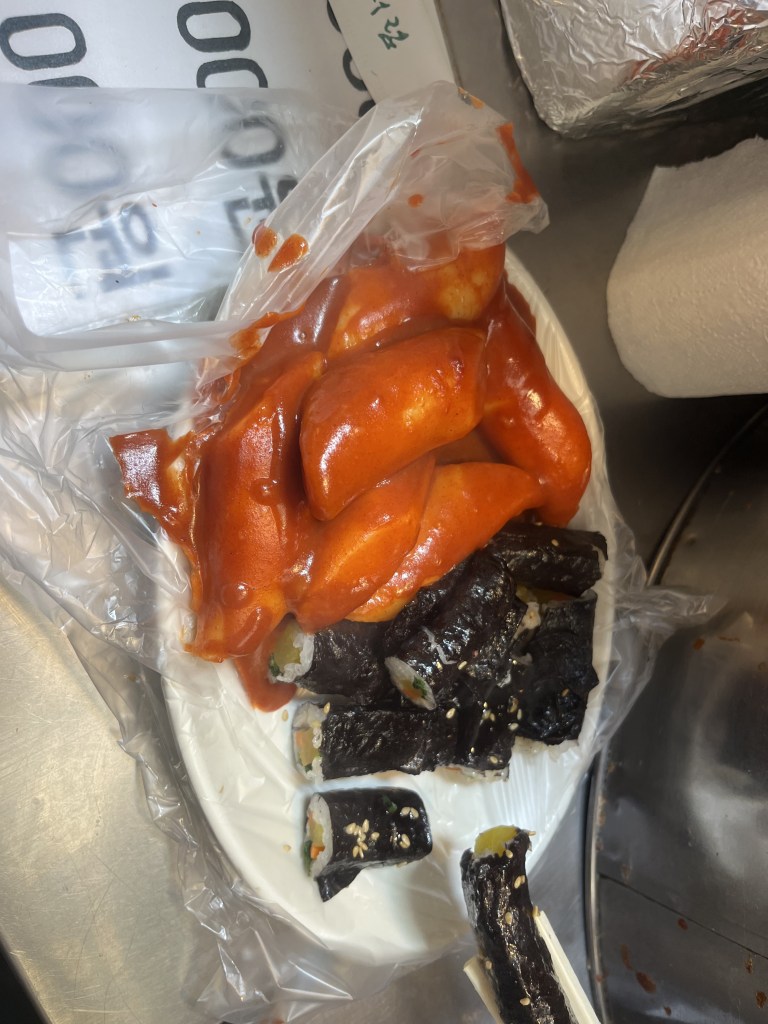

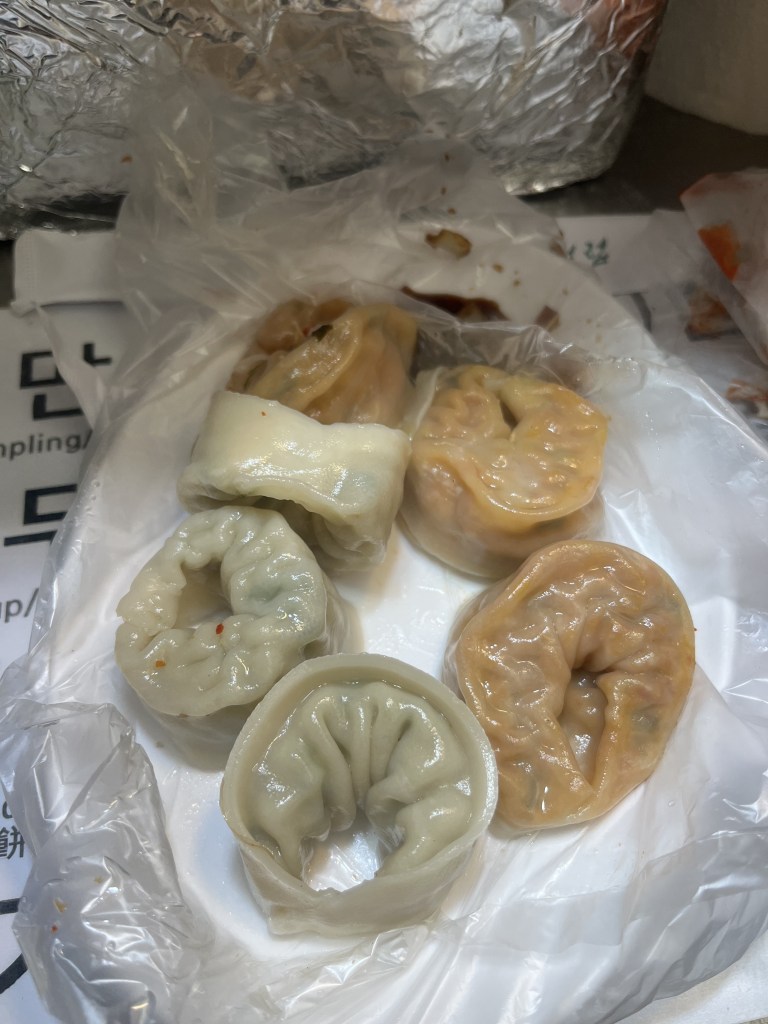
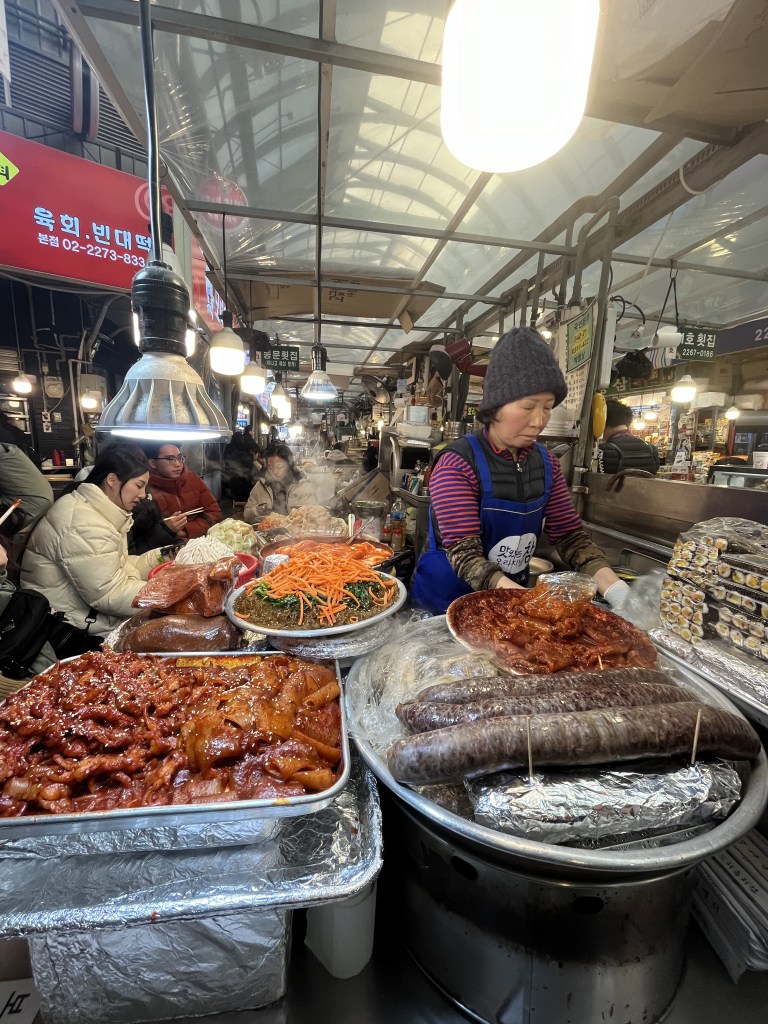
This market was so crowded, people were constantly walking past us on all sides while we were eating.

Nighttime found us at a very different type of market. This is the Noryangjin Fish Market. On the ground floor of this massive complex, vendors sell all kinds of live seafood, from massive tunas to clams and mussels. While you can certainly buy seafood to bring home and cook yourself, it can be tricky to cook a 10-pound lobster when you live in a studio apartment. Lucky for us, some genius came up with the idea to have restaurants on the upper floors of the market that will, for a modest fee, cook your seafood to your liking. After some strategic milling around and price comparing, Henry and I invested in some fresh sashimi (hwe in Korean) and a sizeable lobster. Our friendly seafood saleswoman threw in a few oysters and shrimps just to be nice.


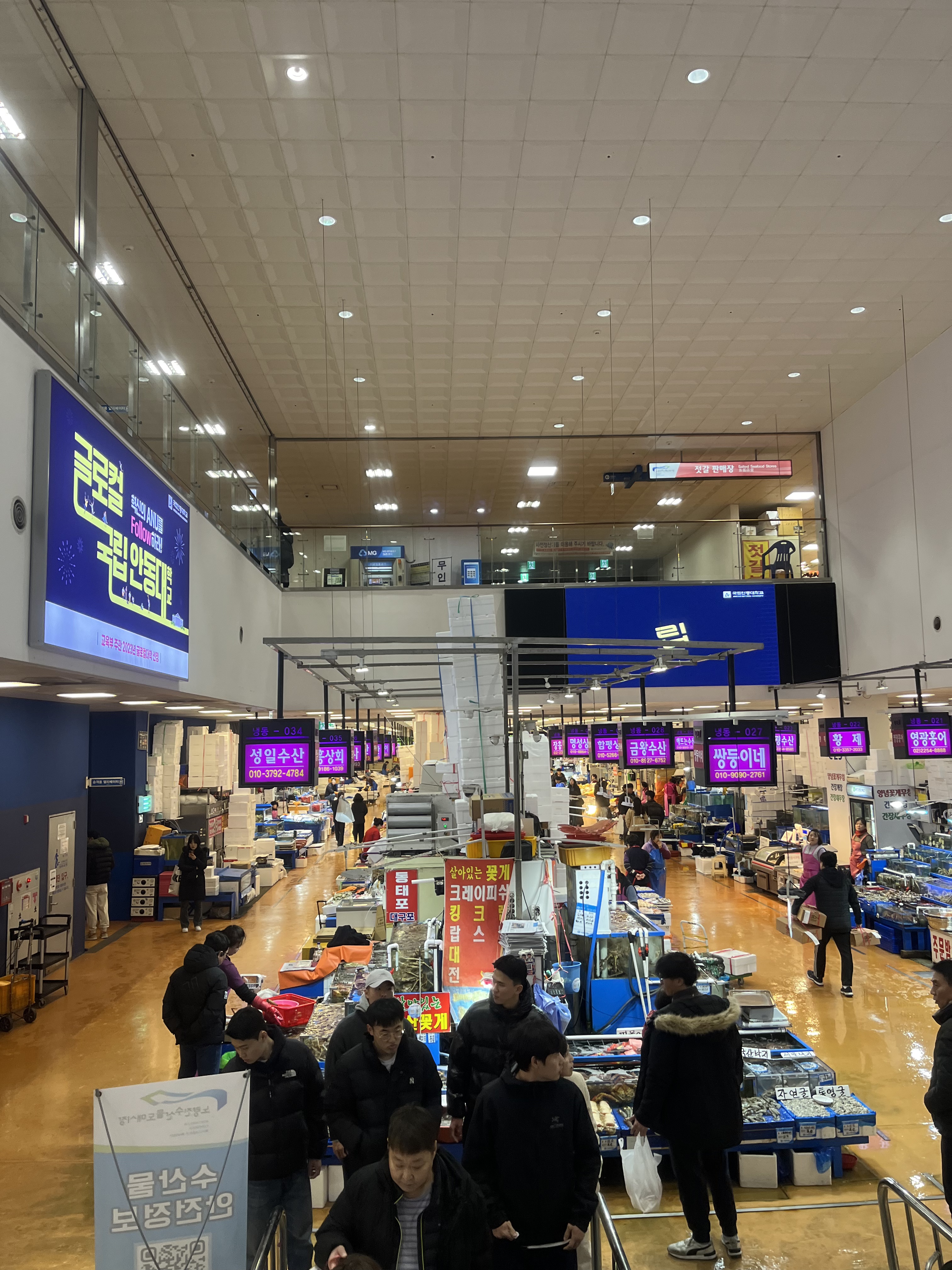
We had to hold our dinner (aka a live lobster named Josh) while we waited to be seated, which was a new experience for me.
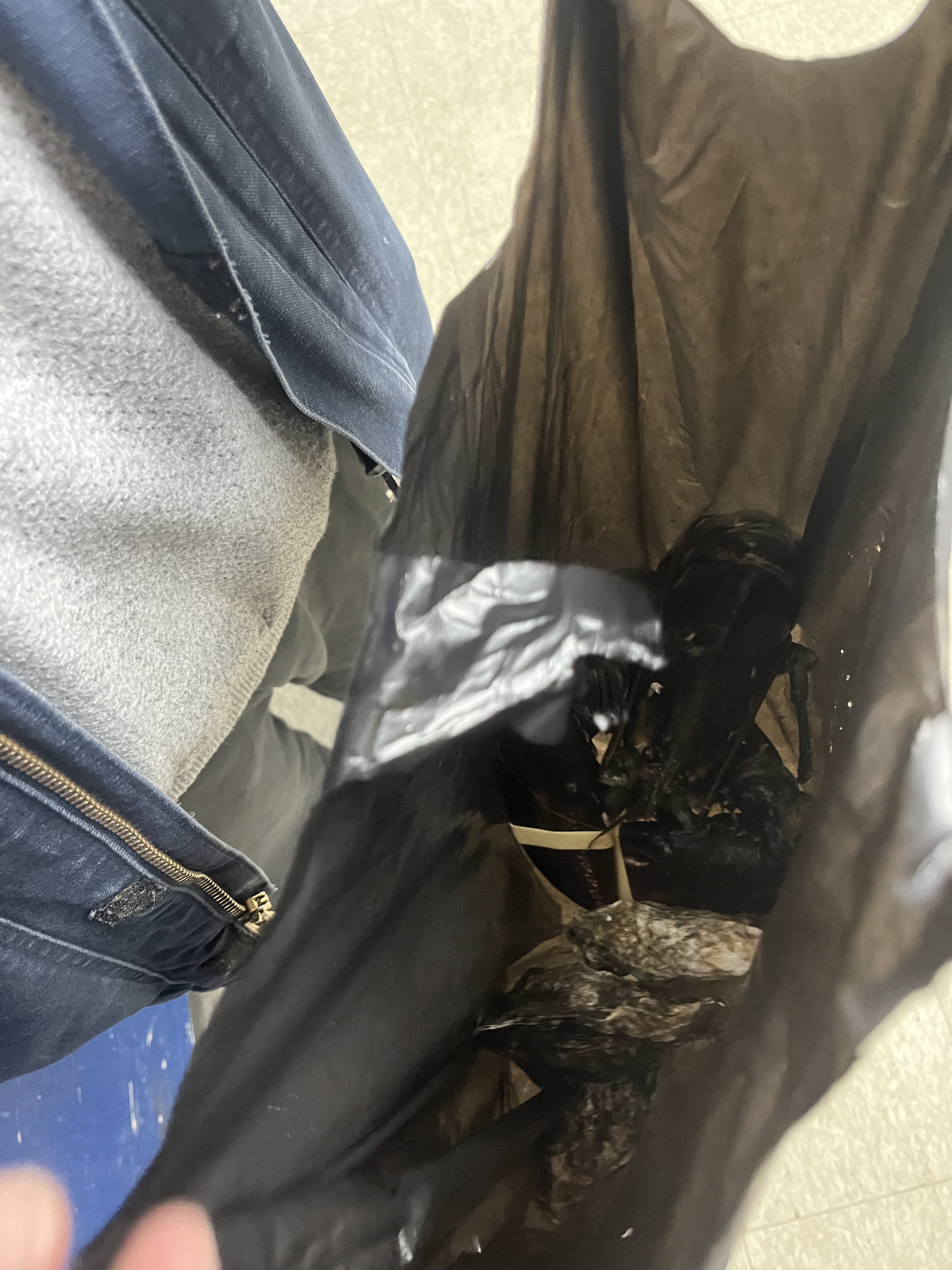
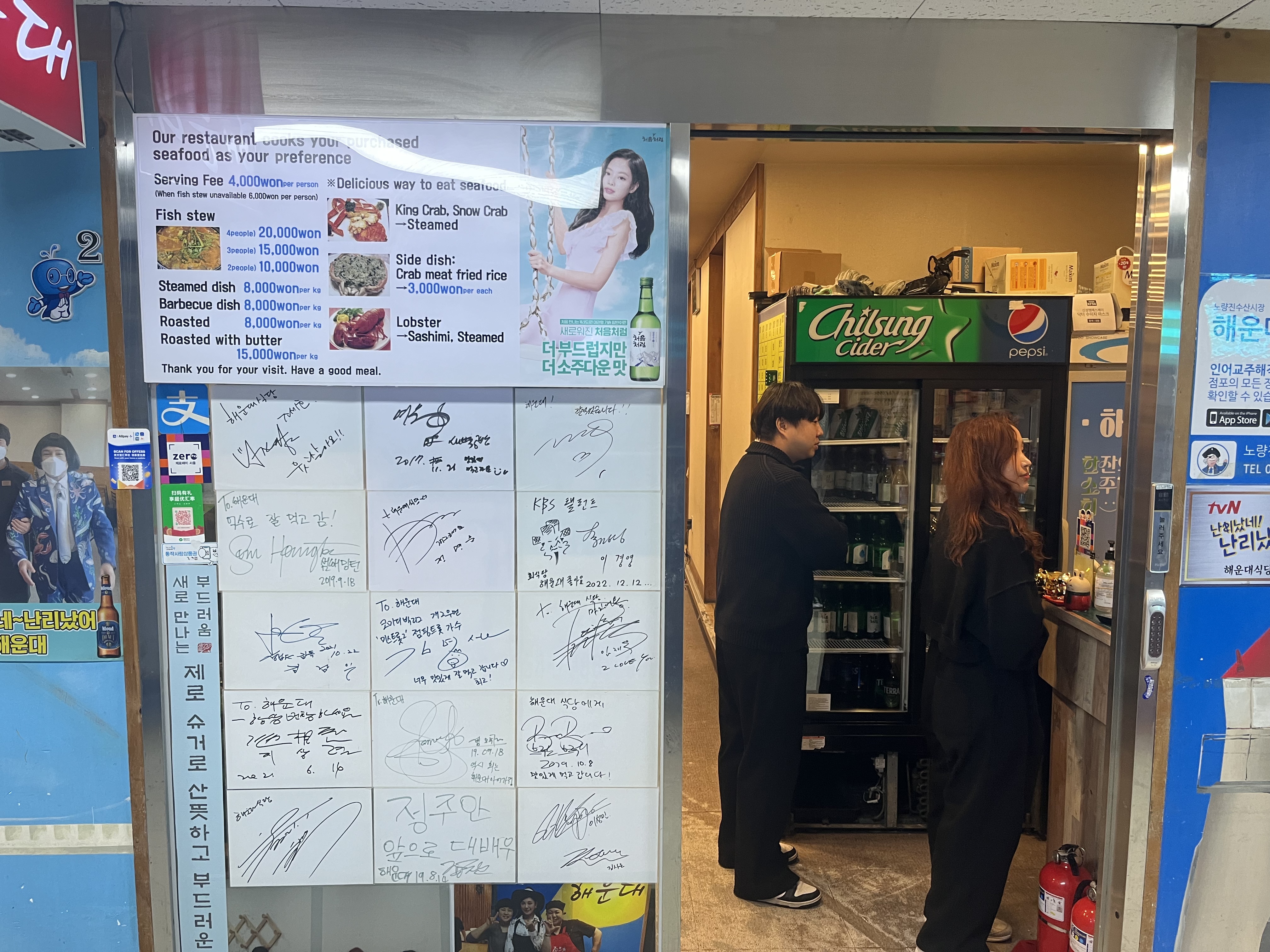
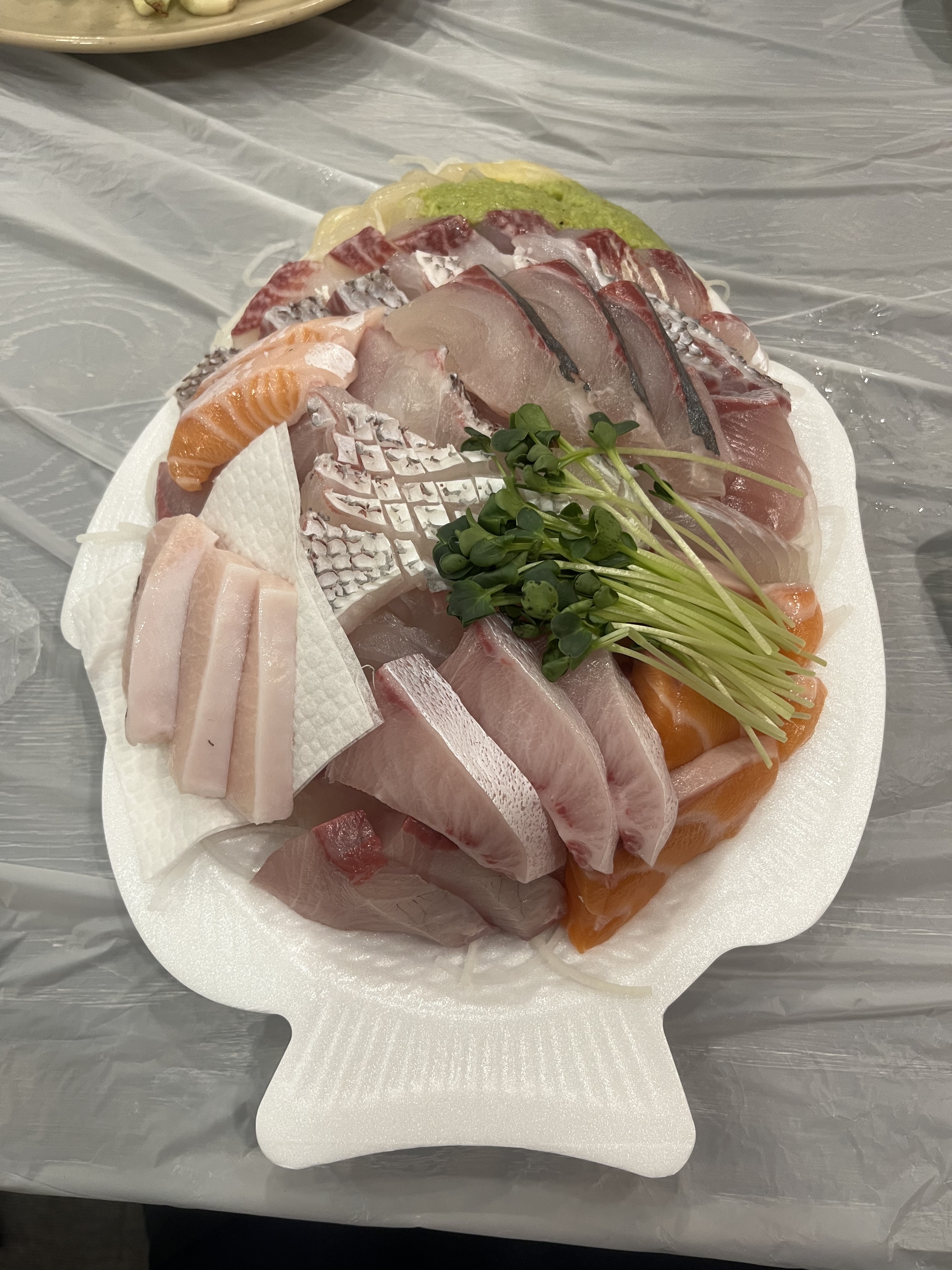
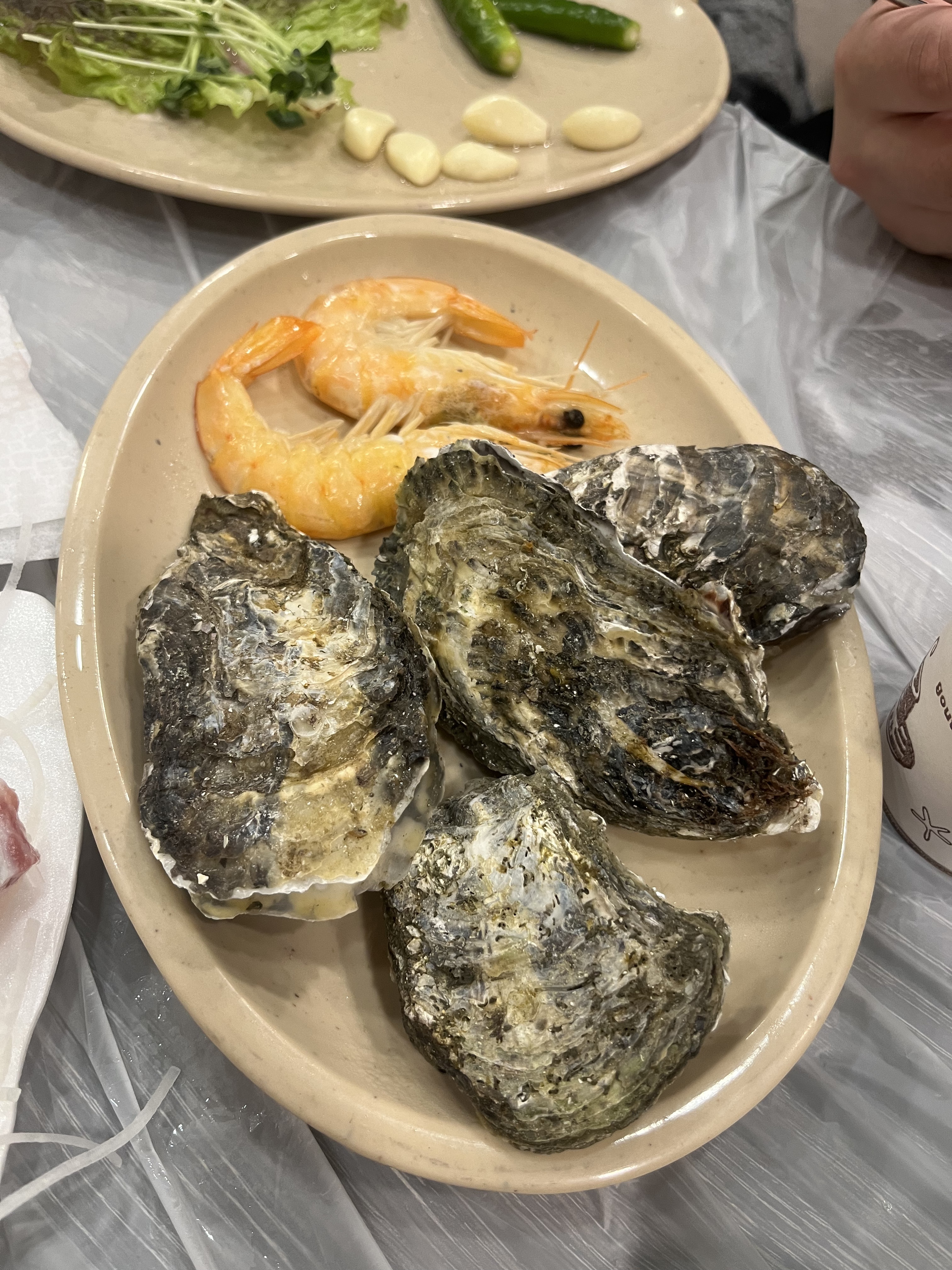
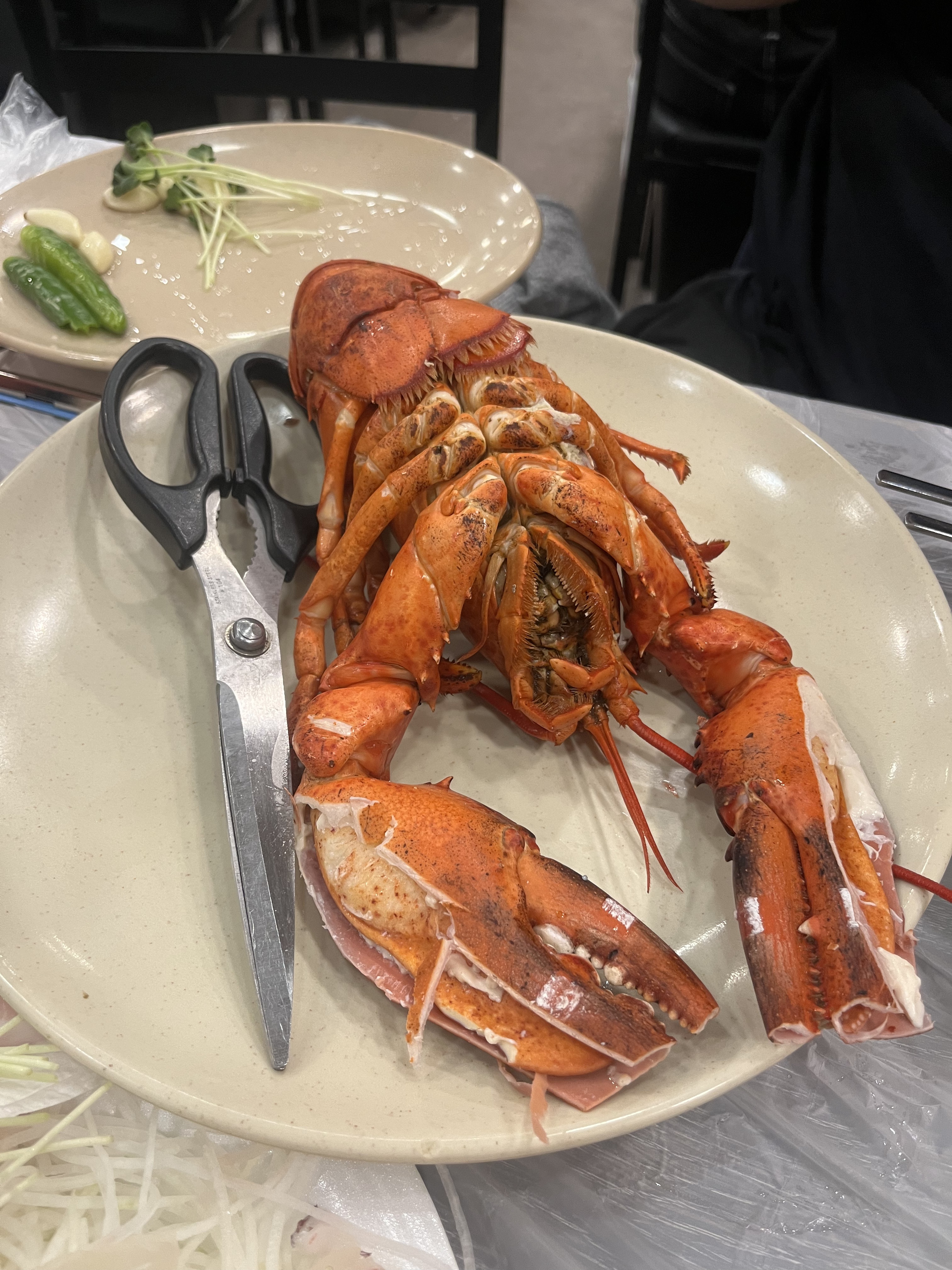
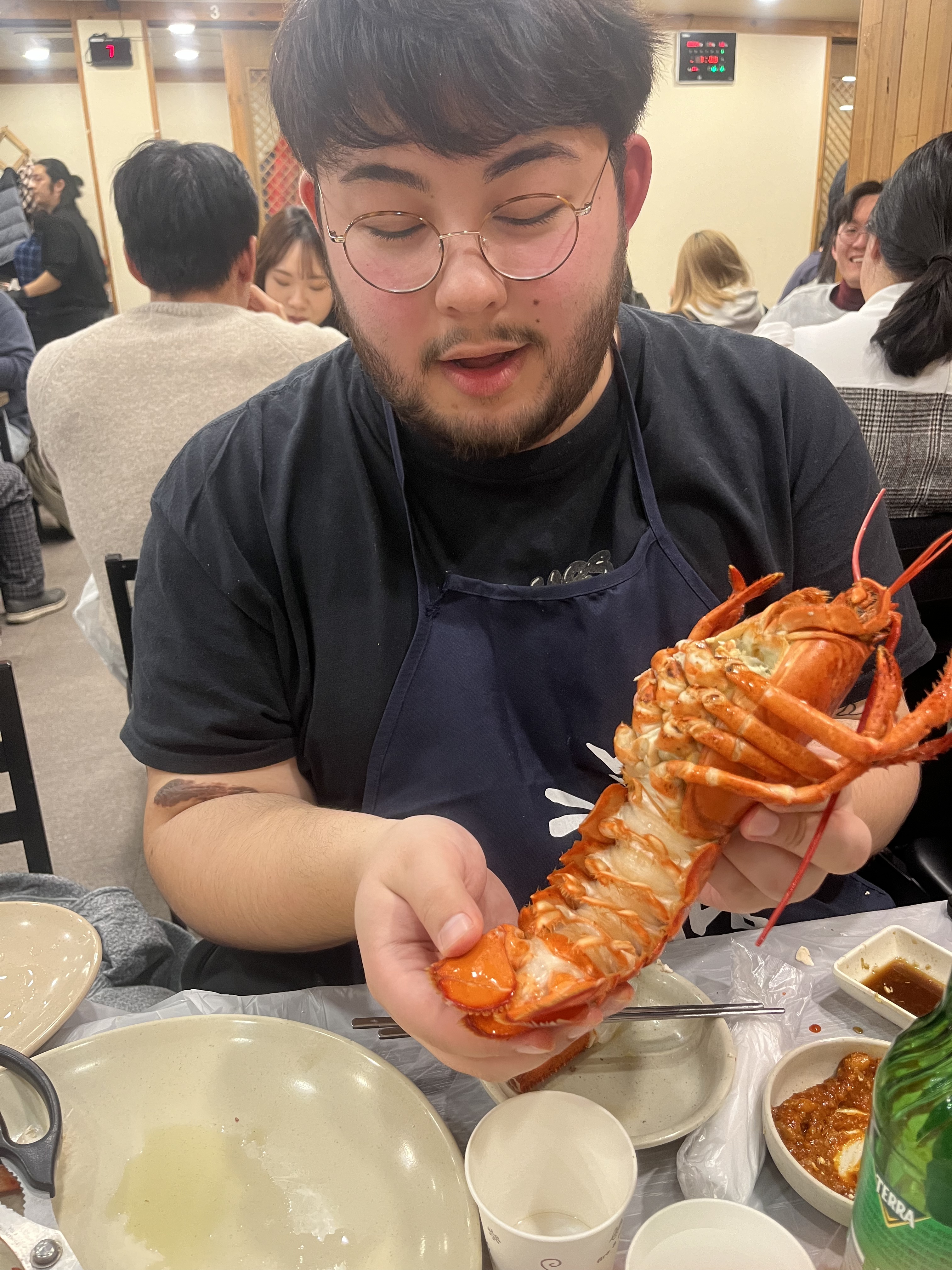
This was a veritable mountain of super-fresh sashimi. The restaurant steamed our lobster, oysters, and shrimps. They also brought us beer, lettuce wraps for the sashimi, and a variety of dipping sauces. This is what Pike Place Market could be, but instead its a tourist trap with overpriced salmon. Other highlights from this night included playing pop-a-shot in the outdoor smoking area of the market. It was a great way to cap off my first time visiting the great country of Korea. The next day, I arrived back at my dorm in Singapore around 1 AM, and was in class by 9 AM Monday morning. That’s what I call an efficient use of time.
So now I’m back in Singapore for another semester. As much as I enjoyed my R&R at home, I’m very glad to be back. And it’s time for some new adventures. Stay tuned! If you want to support my art and be the Medici to my Da Vinci, my Venmo is @Zev-Green.


 Eat It
Leave a reply to Matt Cohen Cancel reply