
On episode two of ‘Quarantine Cookin‘, I am pleased to present another Cohen-Green family favorite – karaage! For those who don’t know, karaage is essentially Japanese fried chicken, but it differs from the American fried chicken to which many of you may be accustomed. How is it different from your typical Popeyes, you may ask? Read on.
We started by cutting 4 pounds of chicken thighs into bite-sized pieces. By we, I mean Doug and me as Maya and Jo chose to spectate instead.
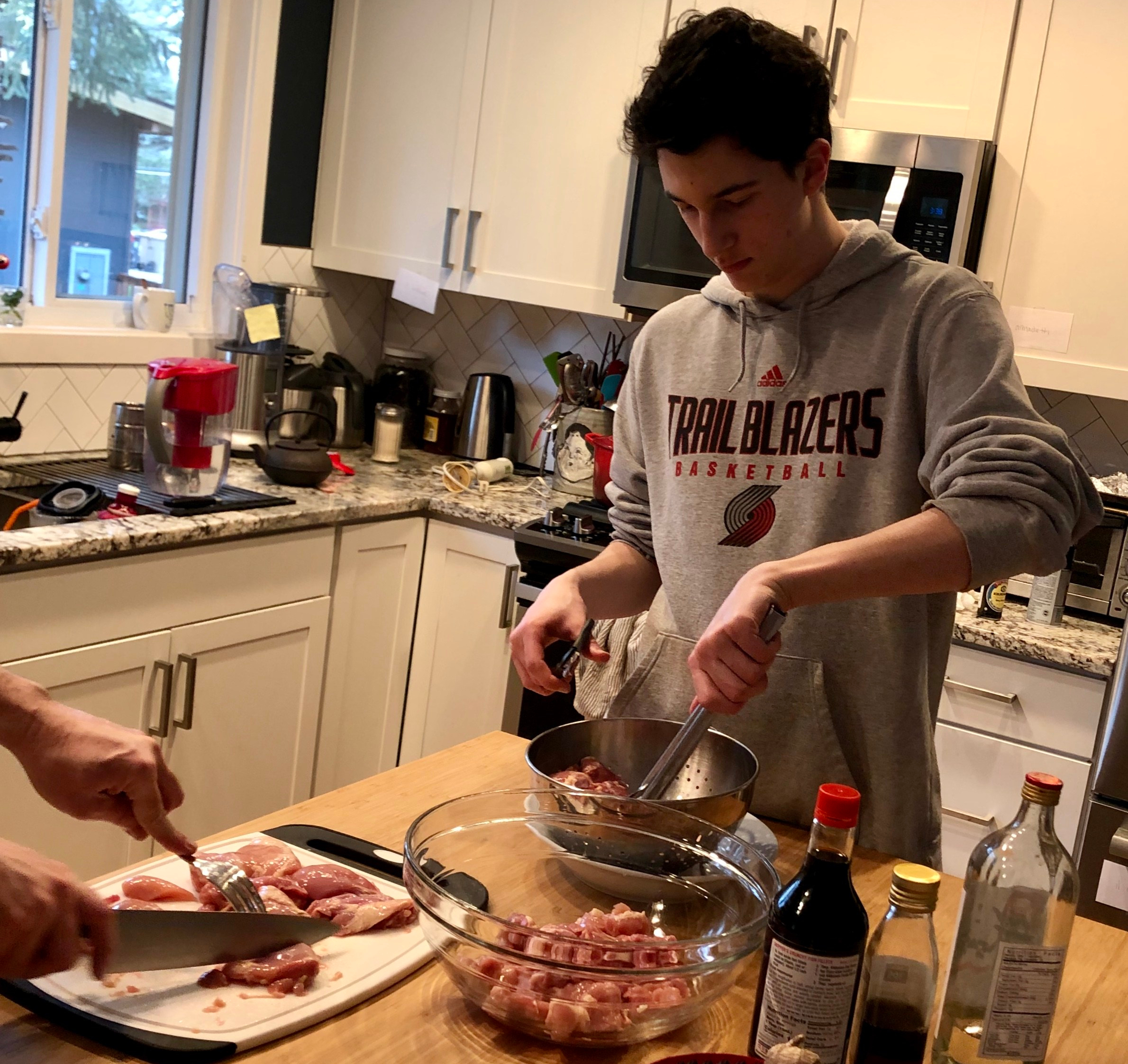
While many American fried chickens like those from Louisiana and Nashville are marinated in buttermilk and hot sauce as we saw in The Fried-Chicken Sandwich Showdown, karaage is a completely different animal. Let’s take a look at our marinade.

Note the tapioca flour. Karaage requires two types of starches – regular flour in addition to potato starch or tapioca flour. While the regular flour traps the marinade in the shell, the other starch makes for a crispy texture. The key to karaage is its crunchy yet light texture – another quality that sets it apart from its fried chicken contemporaries. Instead of marinating it in something heavy like buttermilk, we marinate karaage in:


Cooking sake, sesame oil, and soy sauce
Soy sauce is both lighter in richness and bolder in flavor than buttermilk, which helps to keep karaage light and airy without sacrificing flavor. This recipe is guaranteed to take you directly to Flavortown.


After adding heavy portions of ginger and garlic, as well as a generous sprinkling of salt and pepper, we’re ready to marinate. Side note: I might have developed carpal tunnel syndrome from the sheer quantity of cracked pepper that I produced.

After a night spent in the fridge, our chicken is ready to fry. If you’ve had Thanksgiving at our house, you’re probably familiar with our humungous deep fryer that is designed for turkeys. However, as always, we seem to have technical difficulties.

Our deep fryer is gas-powered and is hooked up to a propane tank. Of course, we ran into some issue with it, so I had to sit on a stool with my thumb jammed against a button so the gas flow wouldn’t shut off. I looked away for one second as I sipped a ginger beer, and when I set my drink down and looked at the deep fryer, the tube connecting the gas tank to the fryer was on fire.
After a long series of loud profanities by me and quick thinking by Doug, the fire was extinguished. We opted to fry the karaage inside after that.
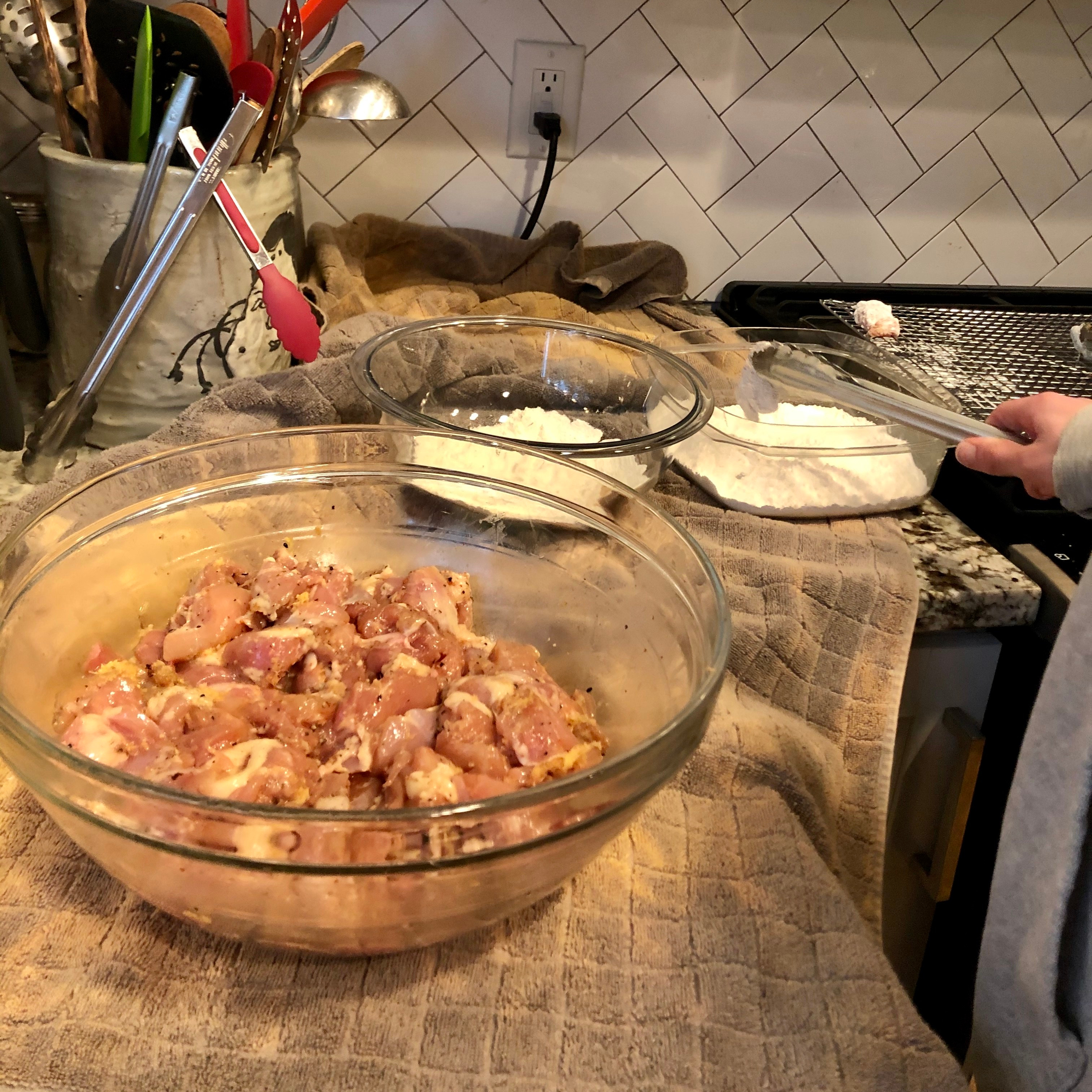
The key to cooking the karaage is double-frying it – that is, frying it for 5 minutes, taking it out and letting it rest, and then frying it again for another 5 minutes. This method ensures a crispy exterior and a perfectly cooked interior.


When they’re golden brown after two jaunts in the fryer, top them with a heavy squeeze of lemon and lightly dip in ponzu (a thinner, tarter soy sauce with yuzu flavor).


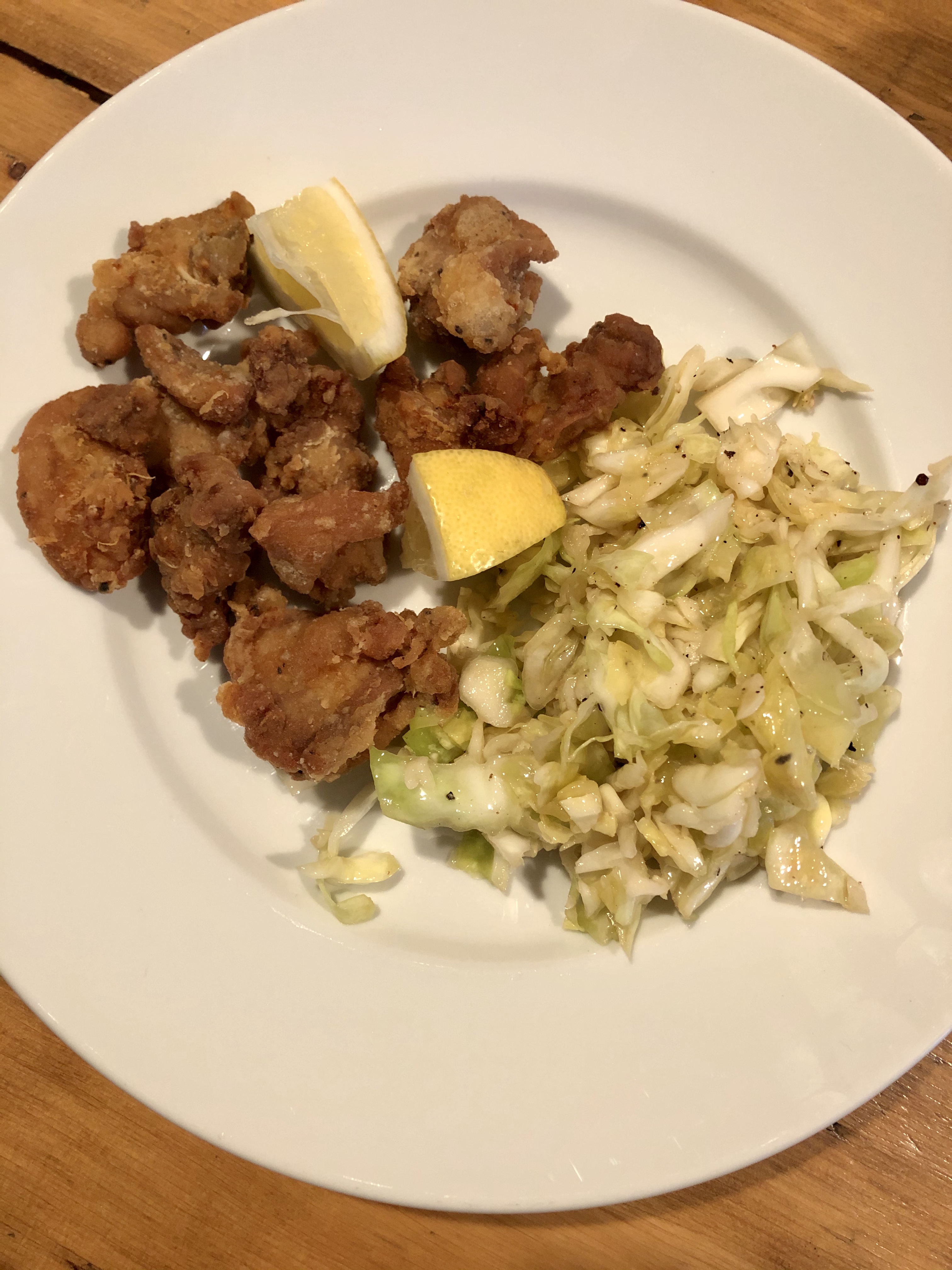


 Eat It
Leave a comment