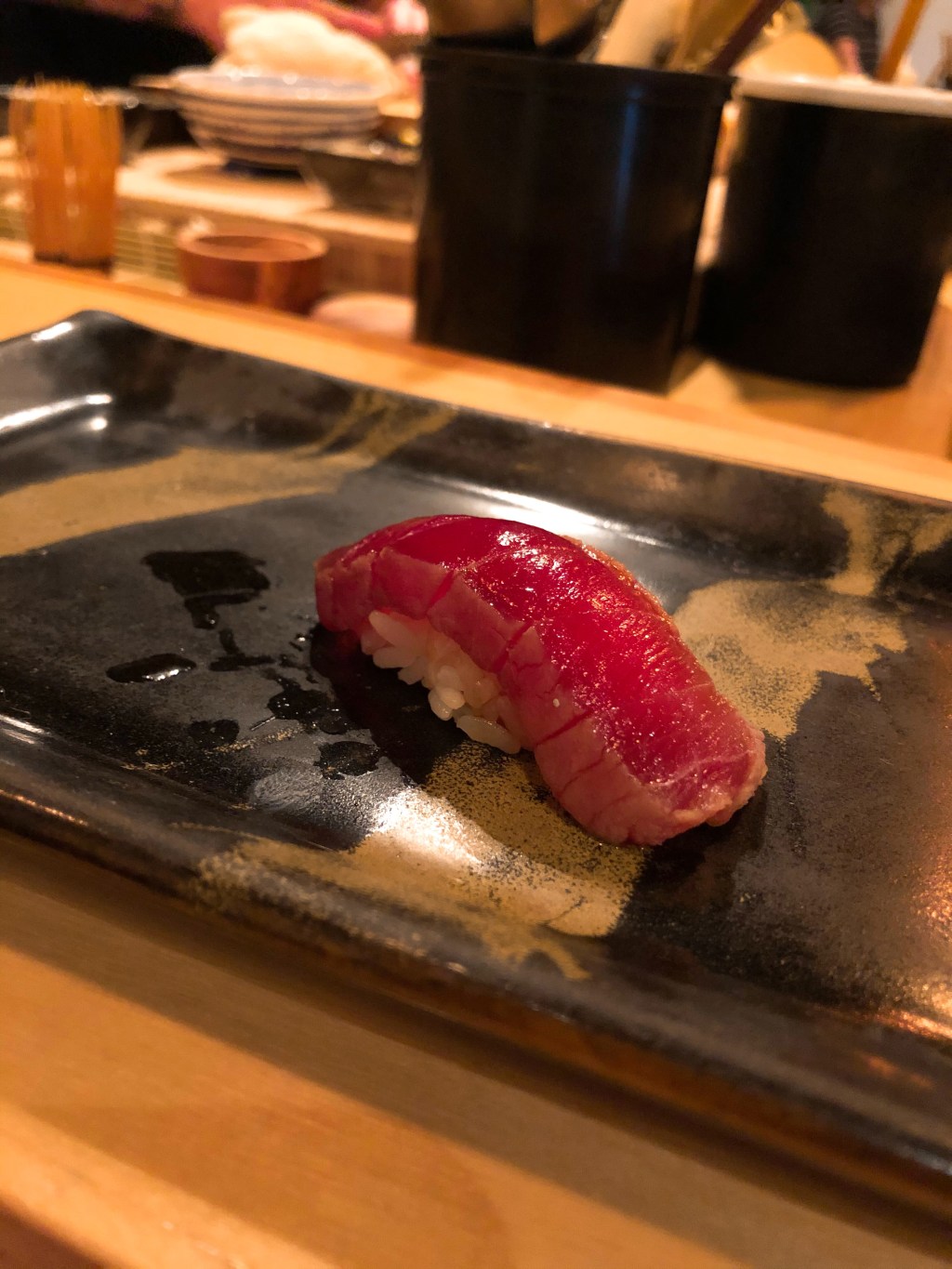
There’s no motivator quite like a bribe. From politicians to athletes, a bribe drives people to get something done, whatever that something is. In my case, my mom bribed me to get all A’s for the first semester of my junior year at Lakeridge. My reward? A trip to Nimblefish, one of Portland’s premier sushi restaurants. A few months later, Jo and I are off to Nimblefish (Doug, with his overdipping tendencies, is not invited).
On a Thursday evening, we arrive early as they don’t take reservations. We sit down at the sushi bar, take a quick peek at the menu and quickly decide to go with the omakase – otherwise known as ‘chef’s choice’.
We kick off our meal with two appetizers – the first is a classic Japanese dish known as kinpira gobo. It’s a small salad made with lotus roots and carrots, drizzled with soy sauce and mirin.

Everything is cooked perfectly – the lotus roots are crispy (almost like jicama) and the carrots add a dash of sweetness. Also, check out that beautiful pottery!
The other appetizer is an incredibly soft homemade tofu topped with scallions and ginger. I could barely pick it up with my chopsticks, but the subtle nuttiness of the tofu is enhanced by the grated ginger and dash of wasabi. Wow!

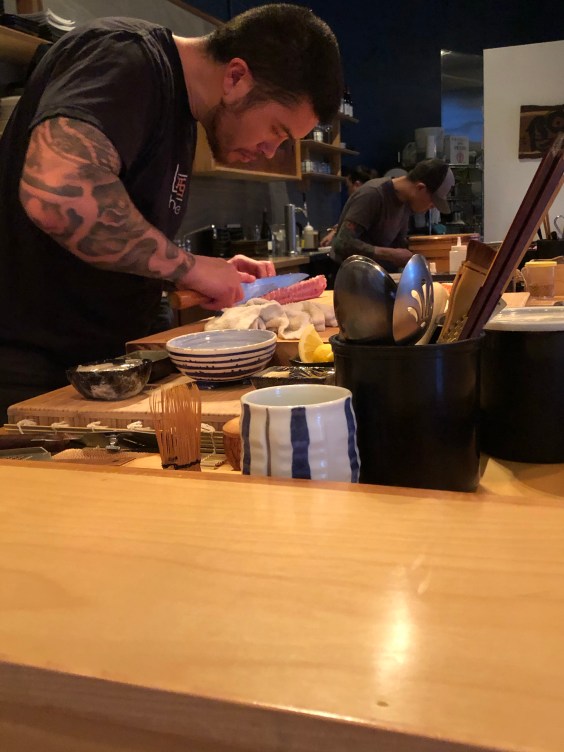
Our chef for the evening is Cody Auger, profiled by Eater and Bon Appetit, and trained by the Portland sushi legend Hiro Ikegaya. While slicing fish into incredibly thin strips, he chats with customers but never loses his intense focus. On my right, a pair of sushi snobs talk his ear off. They are regulars, who visit Nimblefish weekly and apparently can taste the difference between uni from Hokkaido and uni from Mendocino. Regardless, Cody is a wealth of knowledge who informs us of both what we are eating and where it comes from each time he puts a single nigiri on the plate in front of us.
Our first piece of fish is actually sashimi – a buttery hamachi (amberjack) from Kagoshima, a prefecture on the southern tip of Japan.
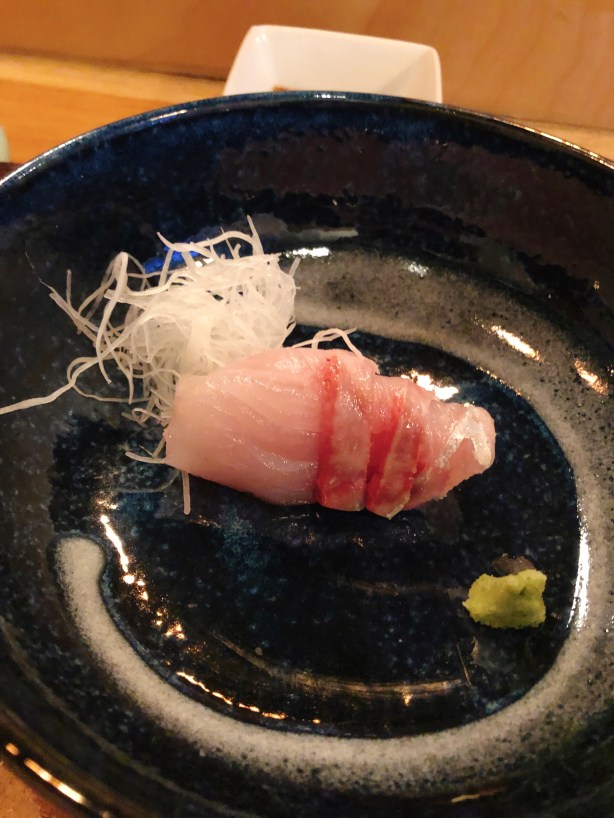
It is so smooth and so subtle, yet so rich that it leaves what feels like a film of butter in your mouth. That sounds weird but it’s delicious.
Next we are presented with a dish I’ve never encountered, much less eaten – a savory egg custard known as chawanmushi. It resembles a golden-yellow pudding, topped with a shiitake mushroom and a shrimp. The chawanmushi is like a creamy dashi-flavored Jello, the shiitake gives it umami, and the shrimp adds some textural variety. (I forgot to take a photo here, but I promise that there are plenty more photos to come.)
Next, how ’bout some salmon brushed with soy sauce? (No dipping allowed here.)

What can I really say? The salmon is rich and lucious, and the brushing of soy brings out its subtle undertones.
One note I want to make here is about the rice. At other sushi restaurants, the rice is often funneled into a large contraption that forms it into little sushi morsels. (I admit when I was younger, I’m pretty sure I wanted one of these. Then again, I also wanted a popcorn maker shaped like the Stanley Cup, so take that with a grain of salt.)
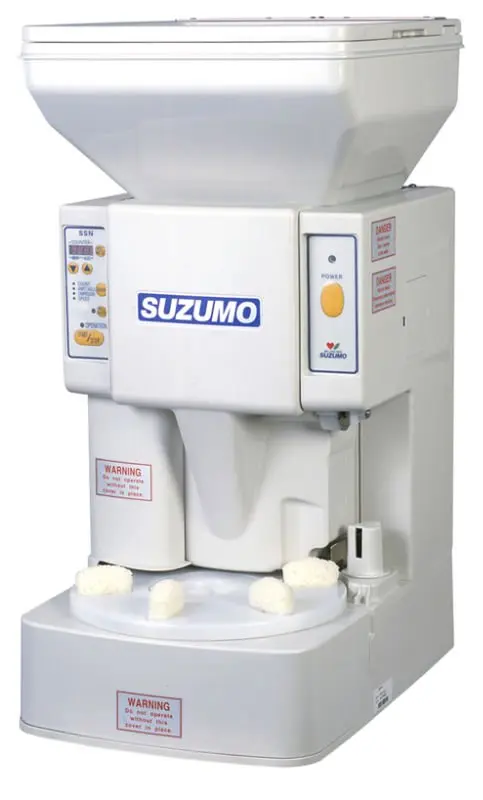
The end result of this is often sushi bases where the rice is so densely packed that it is impossible to discern individual rice kernels. This is not the case at Nimblefish – Cody forms each rice portion gently with his hands after a quick dip in gari-infused (ginger) water, and it simply falls apart in your mouth.
Cody places a new piece of nigiri in front of us. “Hotate (scallop) from Hokkaido,” he says. “With a yuzu spritz,” he adds. Of course.

Simple. Buttery. Soft. Good hotate is minimalistic, and this one fits the bill.
Sea bream (known as tai in Japanese) from Ehime is next, and I honestly can’t describe in words what I taste, so I’ll just show you.

That kick of wasabi make my eyes water slightly, but in a good way. Speaking of the wasabi, our waitress tells us that Nimblefish uses 95% real fresh wasabi (grated from the root), with 5% fake thrown in to improve the texture. This runs in sharp contrast to the wasabi you buy in the supermarket, which is really just horseradish with green food coloring.
Our next sushi is more of an acquired taste – Jo in particular is not a huge fan. It’s saba (mackerel) from Norway, and it carries a strong fishy flavor. In my haste to eat it, I forgot to snap a picture. I liken it to an incredibly flavorful sardine, without any of the nasty oil. Don’t worry, Jo was much happier with our next item.

We devour this skipjack tuna from Southern Japan in record time – it reminded me of bonito, and enhanced with a dash of citrus, it is basically perfection.
Next, Cody throws us a bit of a curveball. He sets this down in front of us, and I stare at it dumbfounded for a split second.
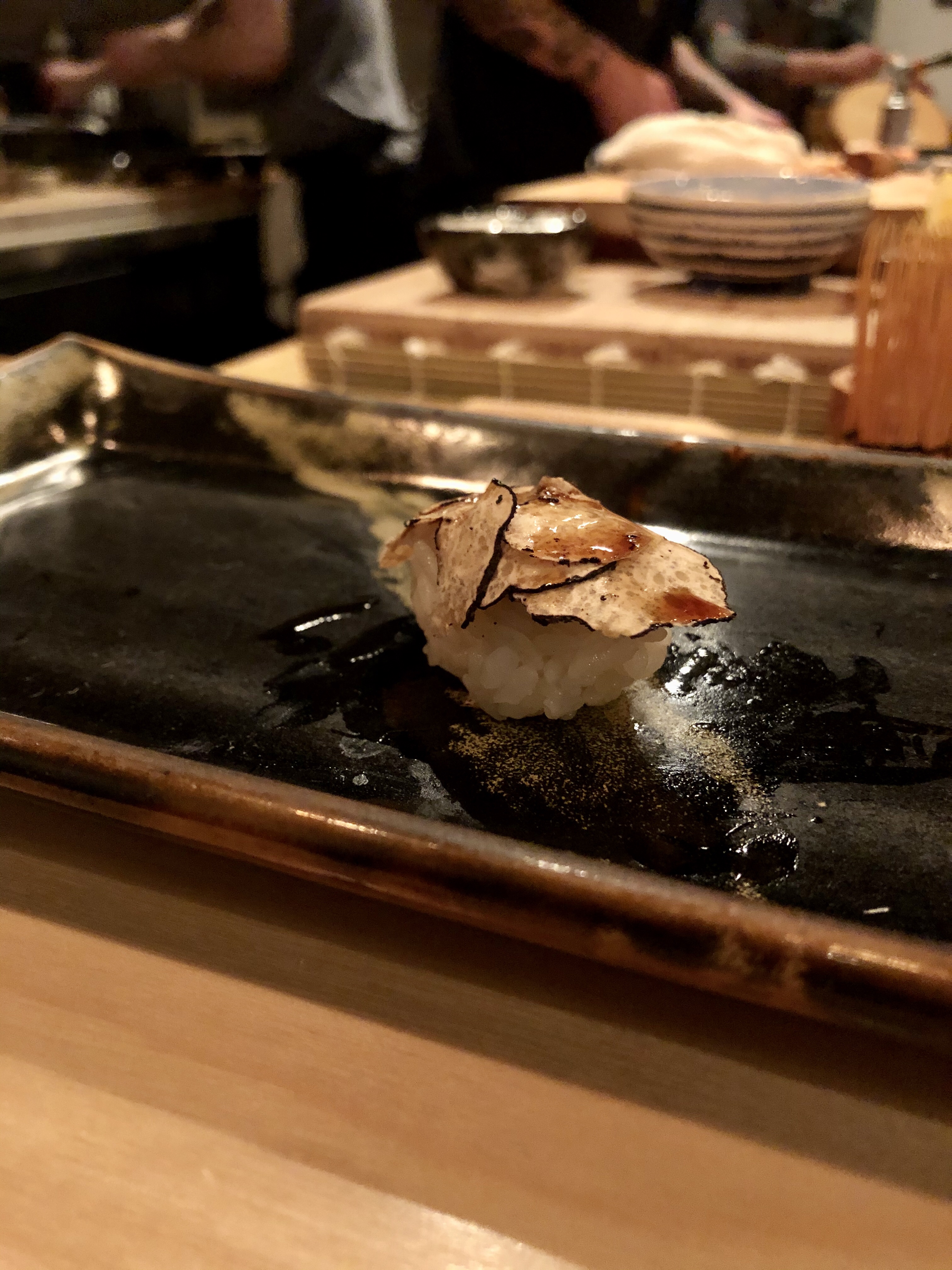
These are a few shavings of Oregon Black Truffle – which Cody quickly explains to alleviate our confusion. It’s an umami bomb that melts in your mouth, with a dash of wasabi to liven it up. This actually marks my first experience with pure truffles (as opposed to truffle oil) and now I actually understand the hype. Just three paper-thin shavings create an explosion of savoriness.
At this stage of our meal, it is time to transition away from nigiri and toward gunkan maki.
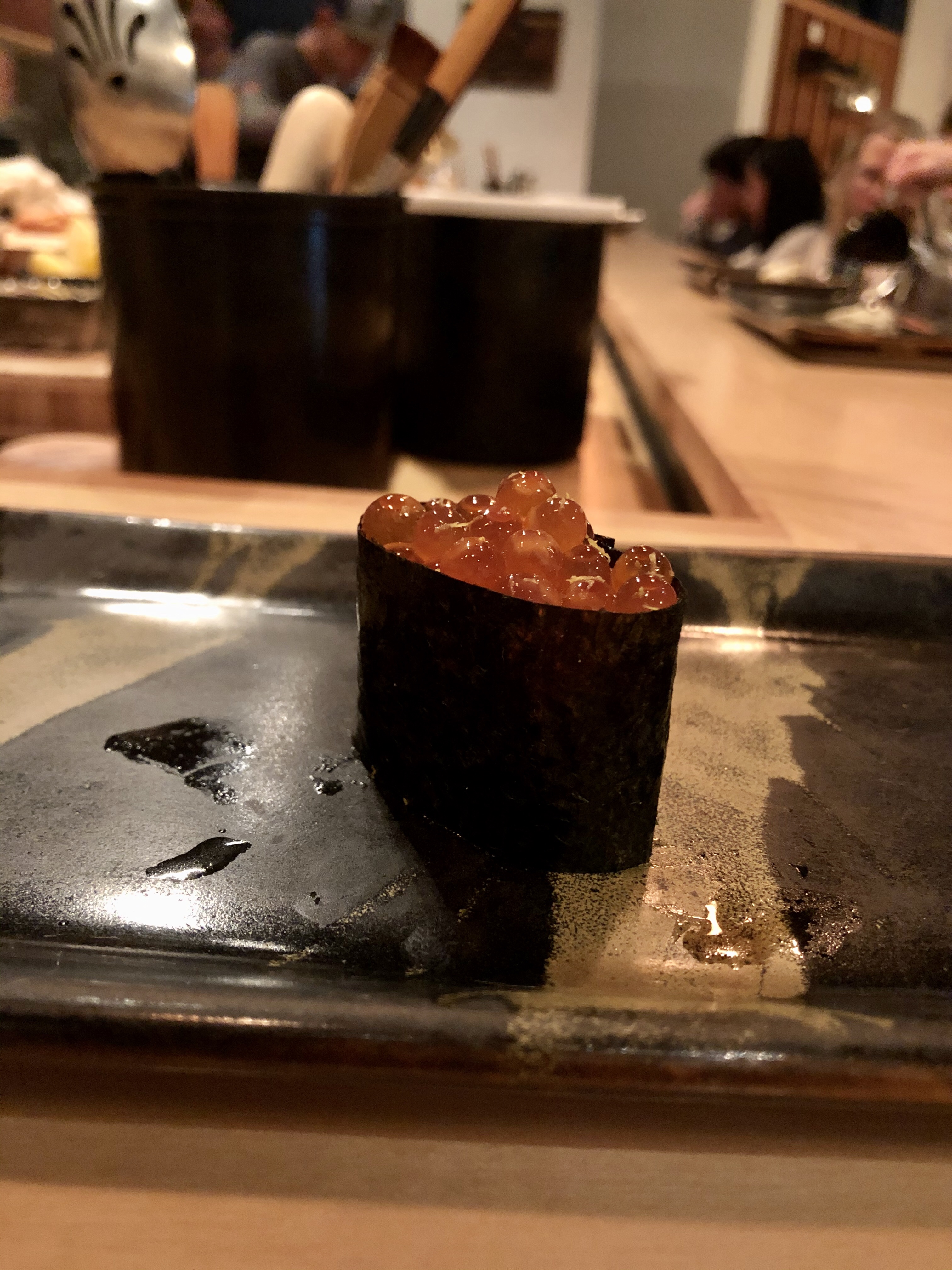
The ikura pops in your mouth, and the yuzu contrasts with the tinge of bitterness that the ikura brings.
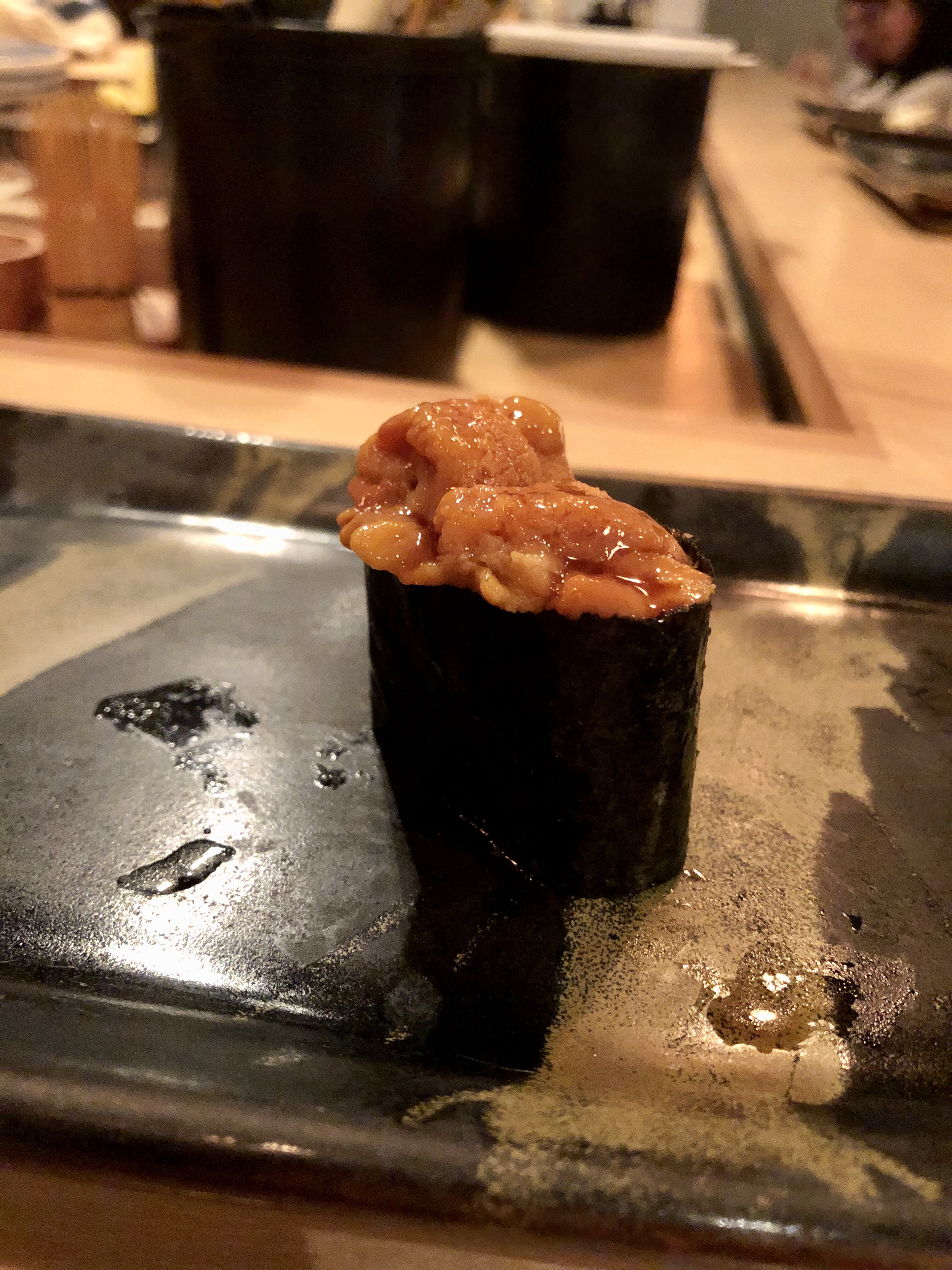
This is the only dish tonight that I didn’t absolutely love and Jo’s absolute fave. I’m still trying to like uni (sea urchin), but I’m not quite there yet. It tastes like the ocean, with a bit of sweetness and a creamy texture. It is not for the faint of heart. With that said, I like this uni better than prior uni I’ve had at other restaurants. Acquired taste works both ways, folks.
After a quick ume shiso handroll (fantastic, with crispy seaweed and a remarkably subtle ume), it is time for a quick bowl of miso soup to wrap things up.

This miso is unlike any other miso I’ve ever experienced. It has an amazing, smoky flavor that reminds me of a campfire. This is what I want to drink after hiking to the top of the hill on a cold, rainy day. Cody informs us that the smoky flavor is from the katsuobushi, and Nimblefish uses a greater quantity of it in their miso than most restaurants. The natural smoked flavor of the bonito flakes carries over into the soup quite strongly.
At long last, it is unfortunately time for dessert (which is not something I say very often). I chose a yuzu sorbet over a panna cotta and am rewarded with this.
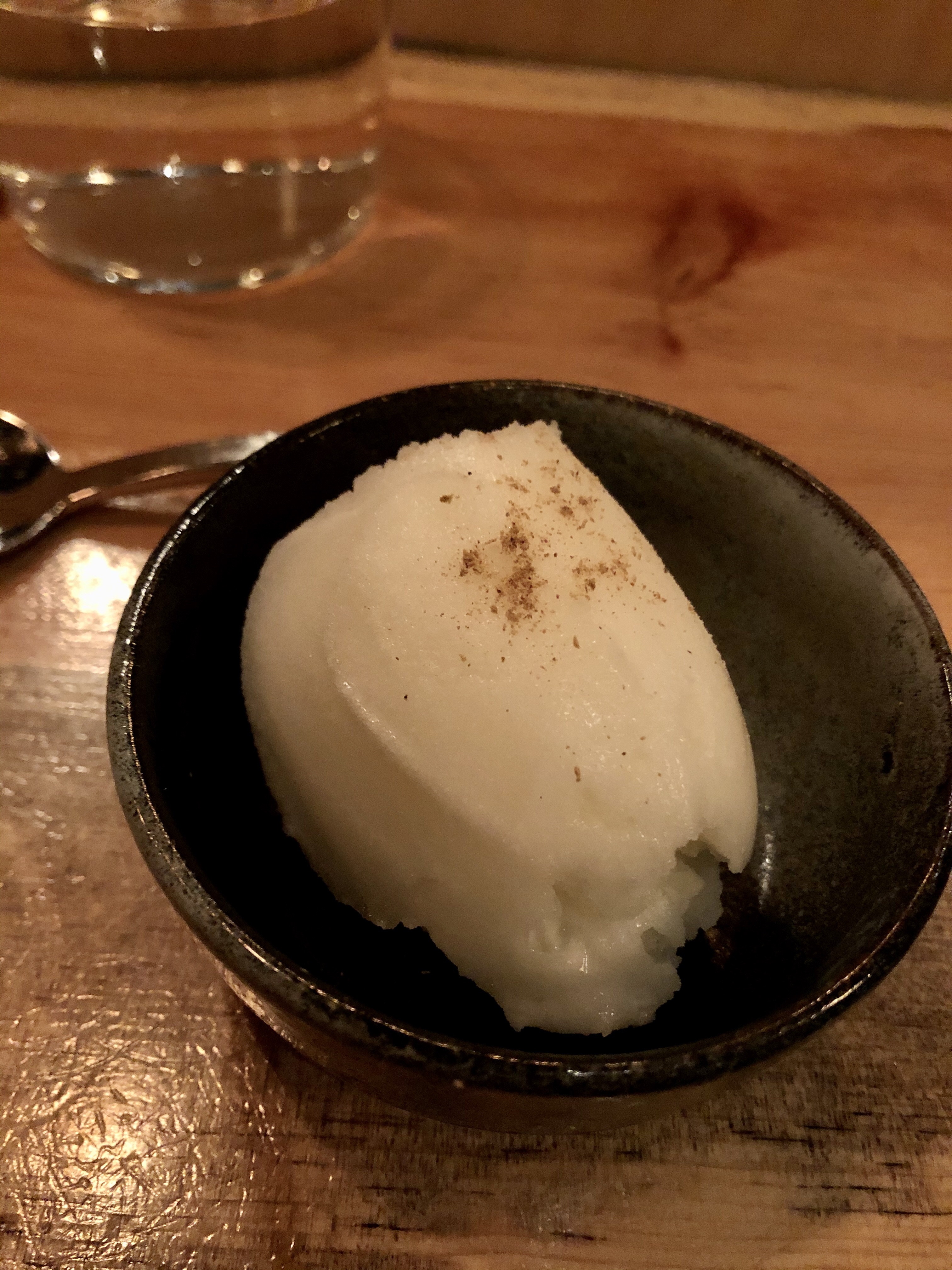
Deliciously icy, with a subtle yuzu flavor presumably sweetened with honey. Pity they don’t have Slurpees at 7-Elevens in Japan – this would make a phenomenal one.
And that’s a wrap from Nimblefish. An incredible meal that almost begins to make up for the traumatic experience that is junior year of high school.


 Eat It
Leave a reply to kellyw100 Cancel reply